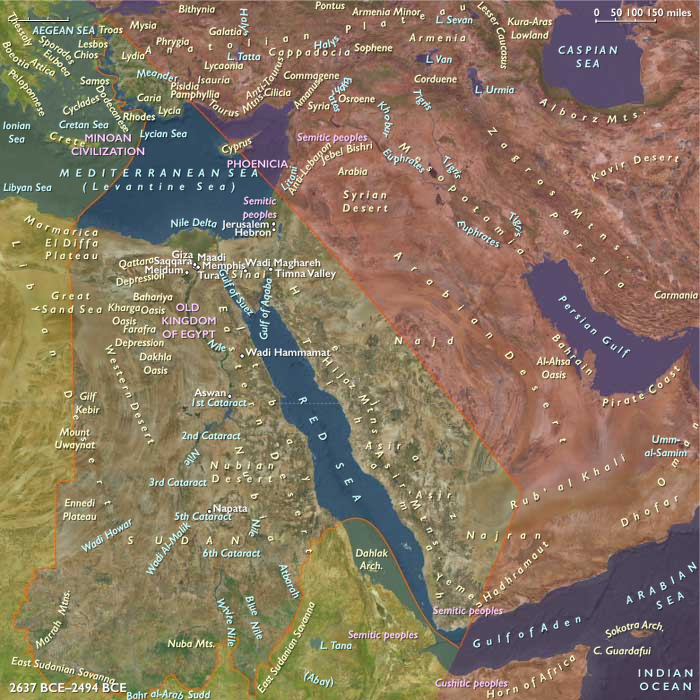
Egypt’s Old Kingdom period had begun with…
2637 BCE to 2494 BCE
Egypt’s Old Kingdom period had begun with the Third Dynasty in around 2686 BCE.
It is in this age that formerly independent ancient Egyptian states become known as nomes, under the rule of the pharaoh.
The former rulers are forced to assume the role of governors or otherwise work in tax collection.
The Old Kingdom is the name given to the period in the third millennium BCE, when Egypt attained its first continuous peak of civilization in complexity and achievement—the first of three so-called "Kingdom" periods, which mark the high points of civilization in the lower Nile Valley (the others being Middle Kingdom and the New Kingdom).
Nineteenth century historians coined the term itself and the distinction between the Old Kingdom and the Early Dynastic Period is not one that would have been recognized by Ancient Egyptians.
Not only was the last king of the Early Dynastic Period related to the first two kings of the Old Kingdom, but the 'capital', the royal residence, remained at Ineb-Hedg, the Ancient Egyptian name for Memphis.
The basic justification for a separation between the two periods is the revolutionary change in architecture accompanied by the effects on Egyptian society and economy of large-scale building projects.
The Old Kingdom is commonly regarded as spanning the period when the Third Dynasty through to the Sixth Dynasty (2686 BCE – 2134 BCE) ruled Egypt.
Third Dynasty kings had begun constructing elaborate stone funerary complexes for themselves, which (according to mainstream chronology) culminate in the five magnificent pyramids attributed to the kings of the Fourth Dynasty founded by Snefru.
Royal power expressed as divine kingship reaches its zenith under Sneferu’s great pyramid building successors Khufu, Khafre, and Menkaure; the spirits of dead kings are thought to inhabit their statues.
Locations
Topics
Commodities
Subjects
Regions
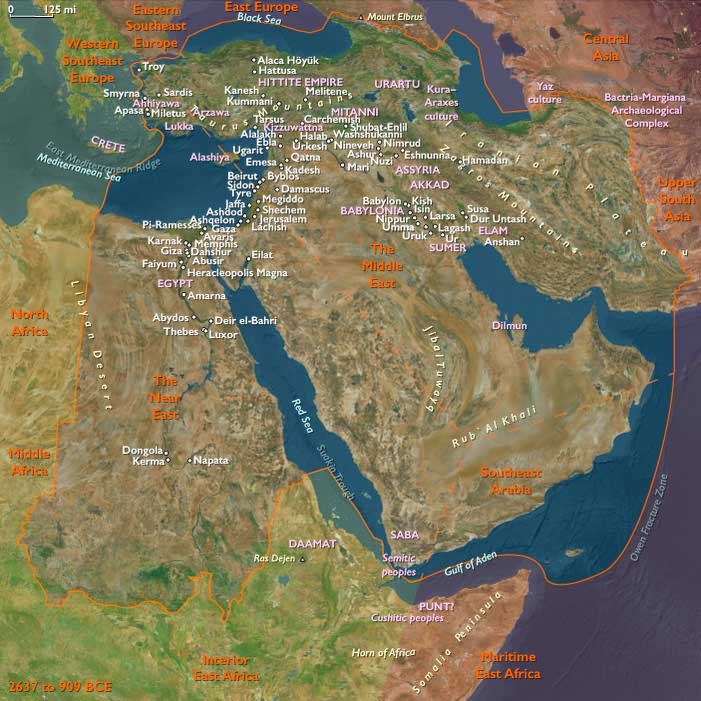
The Near and Middle East
View →Subregions