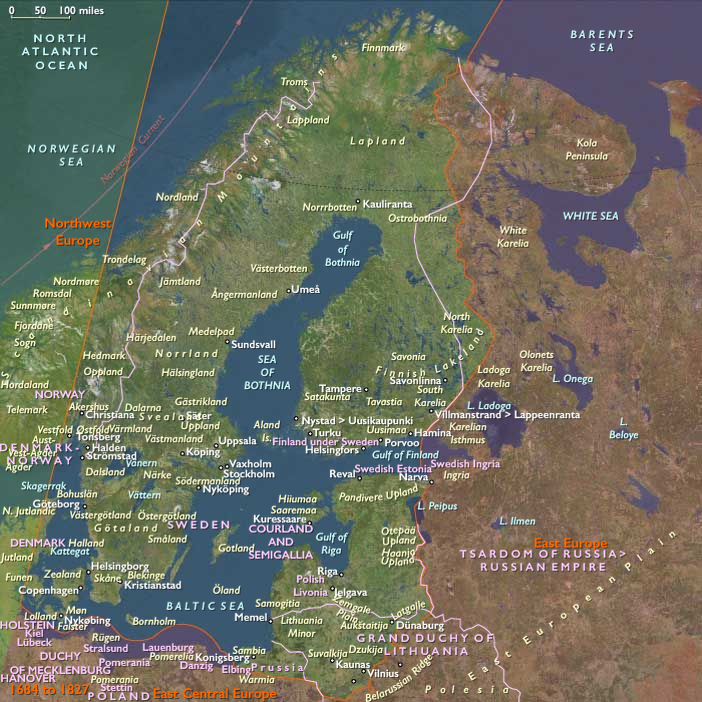
Denmark-Norway, possessing Jutland, Norway, Greenland, Schleswig-Holstein, Iceland,…
August 1807 CE
The majority of the Danish army, under the Crown Prince, is at this time defending the southern border against possible attack from the French.
There is concern in Britain that Napoleon might try to force Denmark to close the Baltic Sea to British ships, perhaps by marching French troops into Zealand.
The British believe that access to the Baltic is "vitally important to Britain" for trade as well as a major source of necessary raw materials for building and maintaining warships, and that it give the Royal Navy access to help Britain's allies Sweden and (before Tilsit) Russia against France.
The British had thought that after Prussia had been defeated in December 1806, Denmark's independence looked increasingly under threat from France.
George Canning's predecessor as Foreign Secretary, Lord Howick, had tried unsuccessfully to persuade Denmark into a secret alliance with Britain and Sweden.
The reports of French diplomats and merchants in northern Europe have made the British government uneasy, and by mid-July the British believe that the French intend to invade Holstein in order to use Denmark against Britain.
Some reports suggest that the Danes have secretly agreed to this.
The Cabinet had decided to act, and on 14 July Lord Mulgrave had obtaines from the King permission to send a naval force of twenty-one to twenty-two ships to the Kattegat for surveillance of the Danish navy in order to pursue "prompt and vigorous operations" if that seemed necessary.
The Cabinet had decided on 18 July to send Francis Jackson on a secret mission to Copenhagen to persuade Denmark to give its fleet to Britain.
That same day, the Admiralty had issued an order for more than fifty ships to sail for "particular service" under Admiral James Gambier.
On 19 July, Lord Castlereagh, the Secretary of State for War and the Colonies, had ordered General Lord Cathcart at Stralsund to go with his troops to the Sound where they will receive reinforcements.
During the night of 21/22 July, Canning had received intelligence from Tilsit that Napoleon had tried to persuade Alexander I of Russia to form a maritime league with Denmark and Portugal against Britain.
Spencer Perceval, the Chancellor of the Exchequer, has written a memorandum setting out the government's case for sending forces to Copenhagen.
The British had assembled a force of twenty-five thousand troops, and the vanguard had sailed on July 30; Jackson had set out the next day.
Canning has offered Denmark a treaty of alliance and mutual defense, with a convention signed for the return of the fleet after the war, the protection of twenty-one British warships, and a subsidy for how many soldiers Denmark keeps standing.
On 31 July, Napoleon had ordered Talleyrand to tell Denmark to prepare for war against Britain or else Jean-Baptiste Bernadotte will invade Holstein.
Neither Talleyrand nor Jackson persuade the Danes to end their neutrality, so Jackson goes back to the British fleet assembled in the Sound on August 15.
The British publish a proclamation demanding the deposit of the Danish fleet; the Danes responded with "what amounted to a declaration of war".
People
Groups
Topics
Regions
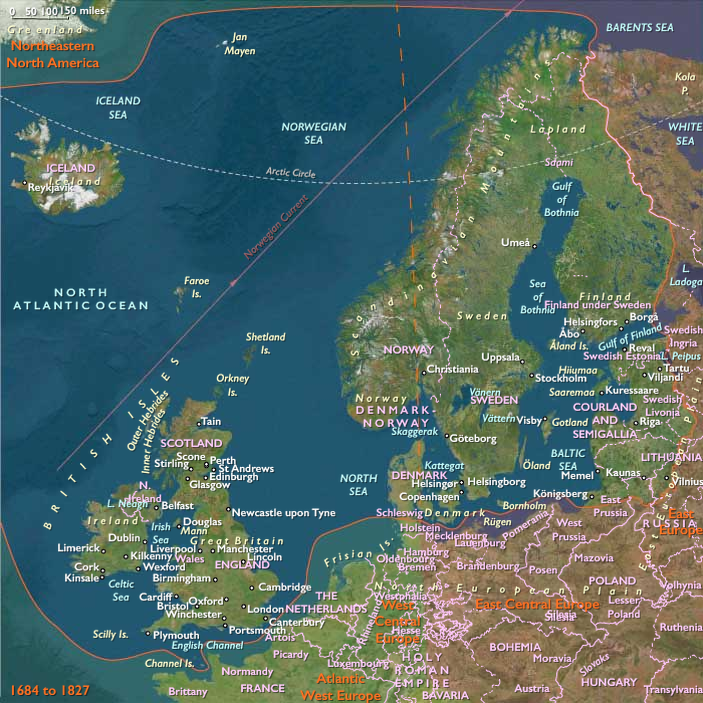
North Europe
View →Subregions