
Emperor Philippikos Bardanes is an advocate of …
Years: 712 - 712
Emperor Philippikos Bardanes is an advocate of the Monothelite heresy, the belief in a single will of Christ.
Even before entering Constantinople, he had ordered the picture of the Third Council of Constantinople (which had condemned Monothelitism in 680) to be removed from the palace and the names of those the council had condemned restored.
Patriarch Cyrus refuses to support the new policy and is deposed and replaced by the more compliant deacon John VI, a member of his own sect, early in 712.
Among the first acts of the new emperor is the summoning of a conciliabulum of Eastern bishops, which abolishes the canons of the Sixth Ecumenical Council.
In response, the Roman Church refuses to recognize the new Emperor and his patriarch.
In foreign policy, the reign of Philippikos is disastrous.
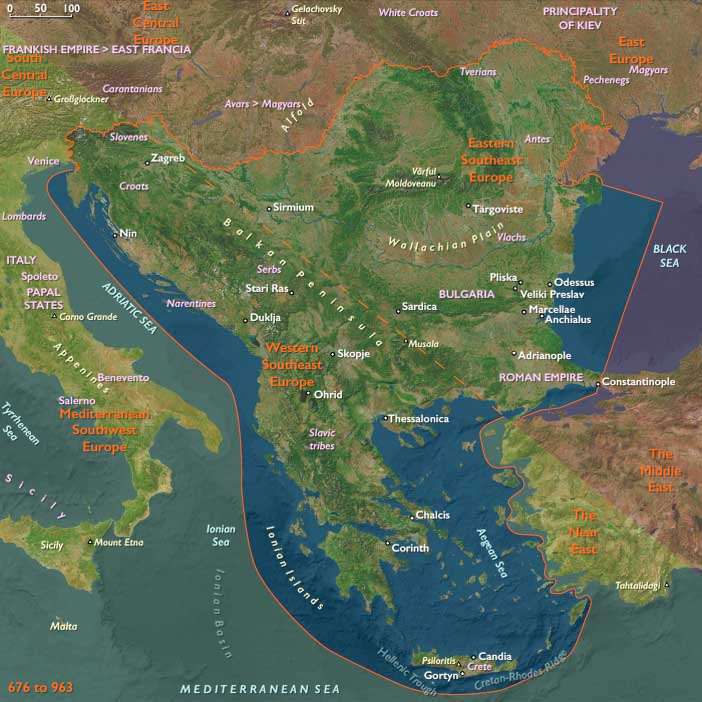
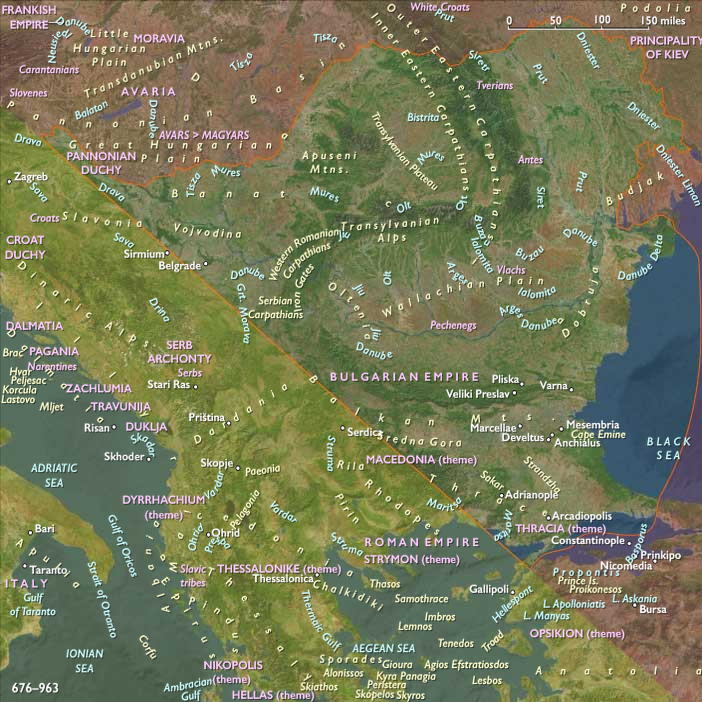
The Bulgarians, taking advantage of the disorders in the empire, raid through Thrace and plunder as far as the vicinity of Constantinople in 712.
When Philippikos transfers an army from the Opsikion theme to police the Balkans, the Umayyad Caliphate under Al-Walid I makes inroads across the weakened defenses of Asia Minor.
Locations
People
Groups
- Arab people
- Christianity, Chalcedonian
- Greeks, Medieval (Byzantines)
- Opsikian Theme
- Umayyad Caliphate (Damascus)
- Thrace, Theme of
- Roman Empire, Eastern: Heraclian dynasty
- Roman Empire, Eastern: Non-dynastic
- Khazar Khaganate
Topics
- Migration Period Pessimum
- Byzantine Papacy
- Arab-Byzantine Wars
- Arab-Khazar Wars
- Byzantine-Bulgarian Wars
- Byzantine-Muslim War of 692-718
Commodoties
Subjects
- Commerce
- Environment
- Labor and Service
- Conflict
- Mayhem
- Faith
- Government
- Technology
- Theology
- Christology
Regions
Subregions
Years: 712 - 712
Locations
People
Groups
- Arab people
- Christianity, Chalcedonian
- Greeks, Medieval (Byzantines)
- Opsikian Theme
- Umayyad Caliphate (Damascus)
- Thrace, Theme of
- Roman Empire, Eastern: Heraclian dynasty
- Roman Empire, Eastern: Non-dynastic
- Khazar Khaganate
Topics
- Migration Period Pessimum
- Byzantine Papacy
- Arab-Byzantine Wars
- Arab-Khazar Wars
- Byzantine-Bulgarian Wars
- Byzantine-Muslim War of 692-718
Commodoties
Subjects
- Commerce
- Environment
- Labor and Service
- Conflict
- Mayhem
- Faith
- Government
- Technology
- Theology
- Christology
Regions
Subregions