Nicholas Ridley, who in 1540-41 had been…
October 1550 CE
Nicholas Ridley, who in 1540-41 had been made one of the King's Chaplains, and had been presented with a prebendal stall in Canterbury Cathedral, had also been made Master of Pembroke College.
Accused of heresy in 1543, he had been able to beat the charge.
Cranmer has resolved to support the English Reformation by gradually replacing the old guard in his ecclesiastical province with men who follow he new thinking.
Ridley had been made the Bishop of Rochester in 1547, and shortly after coming to office, directed that the altars in the churches of his diocese should be removed, and tables put in their place to celebrate the Lord's Supper.
He had helped Cranmer compile the Book of Common Prayer in 1548, and in 1549, he had been one of the commissioners who had investigated Bishops Stephen Gardiner and Edmund Bonner, and had concurred that they should be removed from office.
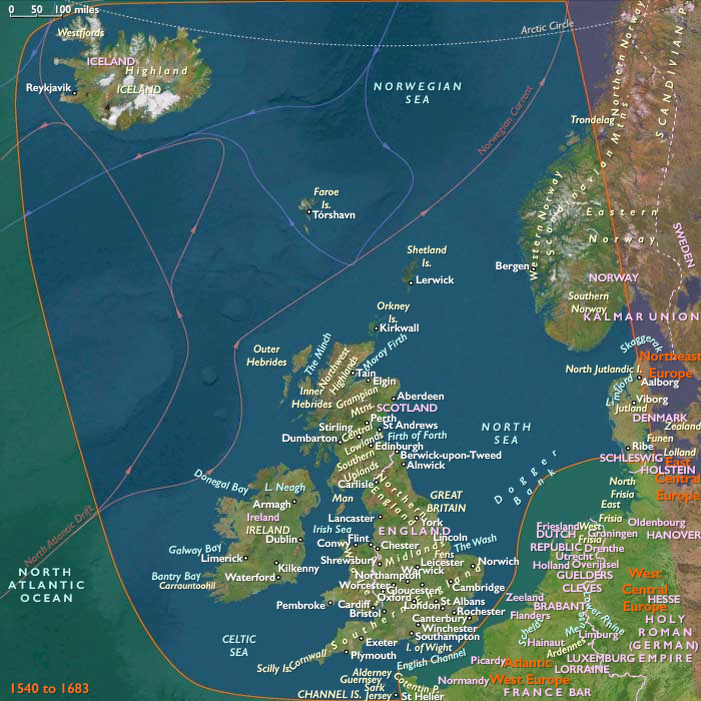
As Cranmer's former chaplain, Ridley is translated from the minor see of Rochester to the vacant diocese of London in 1550.
Incumbent conservatives are uprooted and replaced with reformers.
The partial translation of Vergil's Aeneid by Henry Howard, Earl of Surrey, posthumously published in 1550, brings blank verse from Italy to England, making Howard one of the founders of English Renaissance poetry.
Polydore Vergil, the Italian-born cleric, historian, and writer otherwise known as PV Castellensis, has for most of the time between 1502 and 1550 lived in England.
A major transmitter of the new Renaissance scholarship to England, he begins publishing his influential Anglicae historia libri XXVI ("Twenty-six Books of English History") in 1546.
Images

Description Nicholas Ridley, by unknown artist.
Locations
Regions
North Europe
View →Subregions