German liberals call for a national convention…
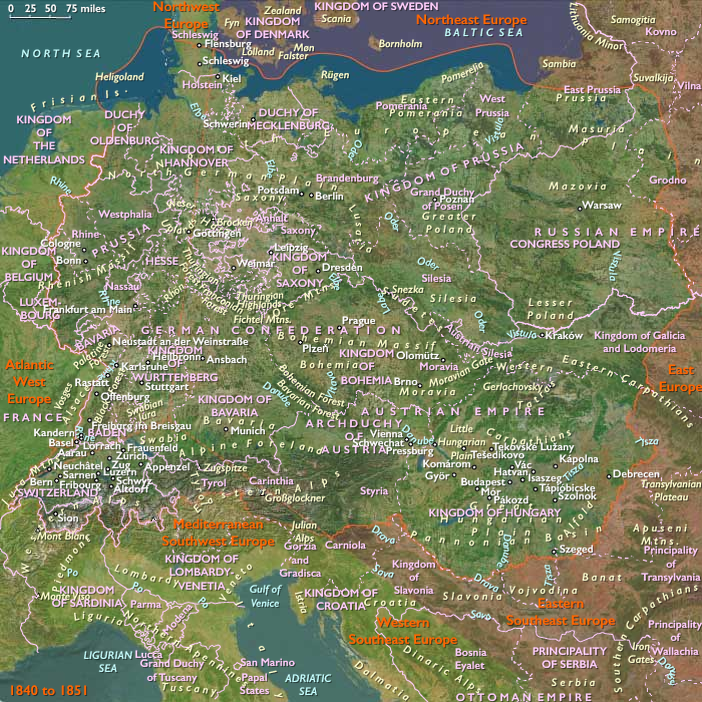
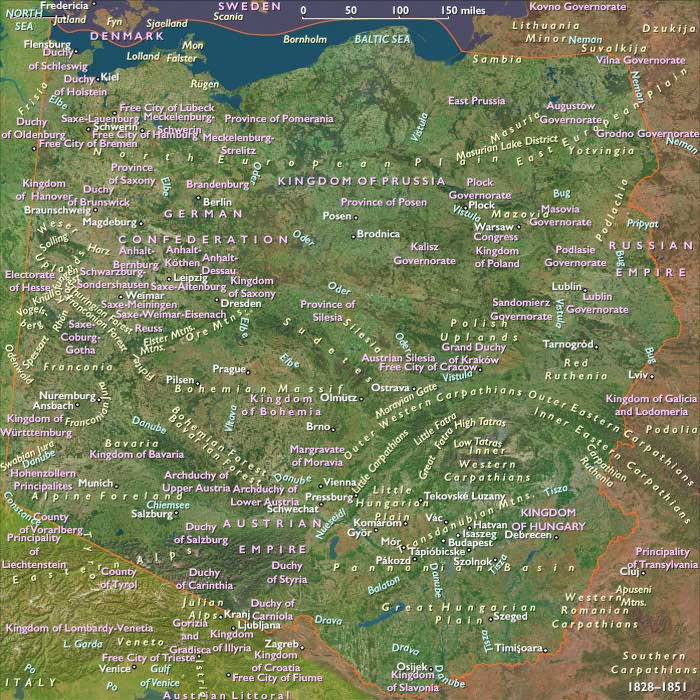
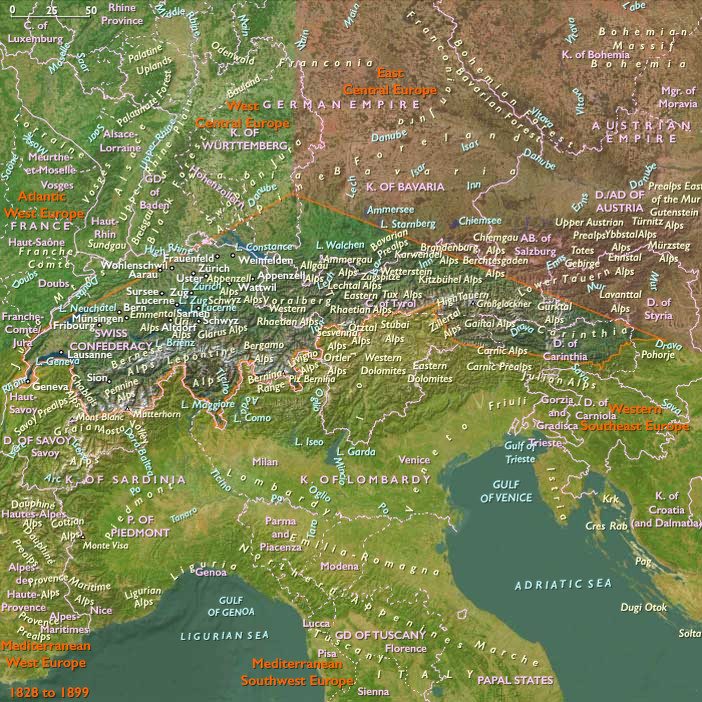
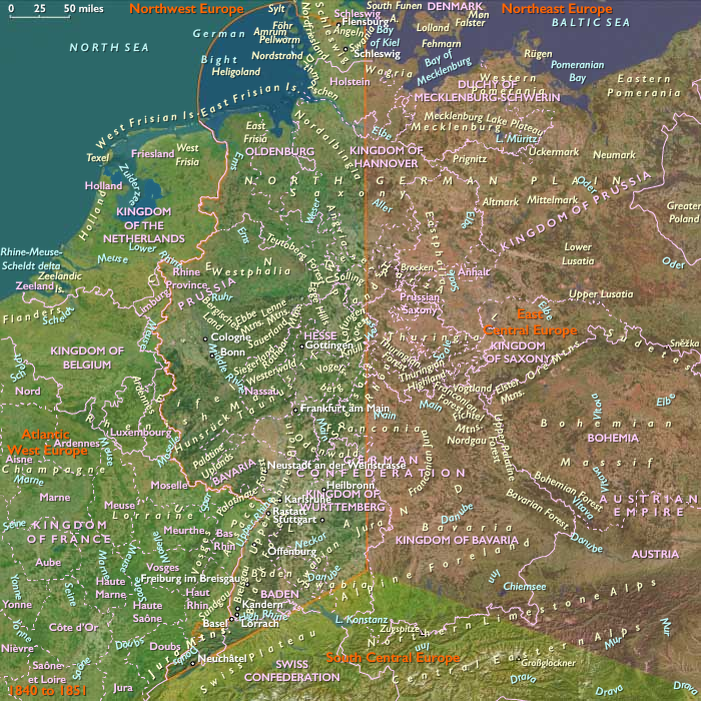
1840 CE to 1851 CE
The National Assembly, consisting of about eight hundred delegates from throughout Germany, meet in a church in Frankfurt, the Paulskirche, from May 1848 to March 1849 for this purpose.
Within just a few months, liberal hopes for a reformed Germany are disappointed.
Conservative forces see that the liberal movement is divided into a number of camps having sharply different aims.
Furthermore, the liberals have little support left among the lower classes, who had supported them in the first weeks of the revolution by constructing barricades and massing before their rulers' palaces.
Few liberals desire popular democracy or are willing to enact radical economic reforms that will help farmers and artisans.
As a result of this timidity, the masses desert the liberals.
Thus, conservatives are able to win sizable elements of these groups to their side by promising to address their concerns.
Factory workers have largely withheld support from the liberal cause because they earn relatively good wages compared with farmers and artisans.
Groups
Topics
Regions