General Henry Atkinson had promised the Ho-Chunks…
August 1828 CE
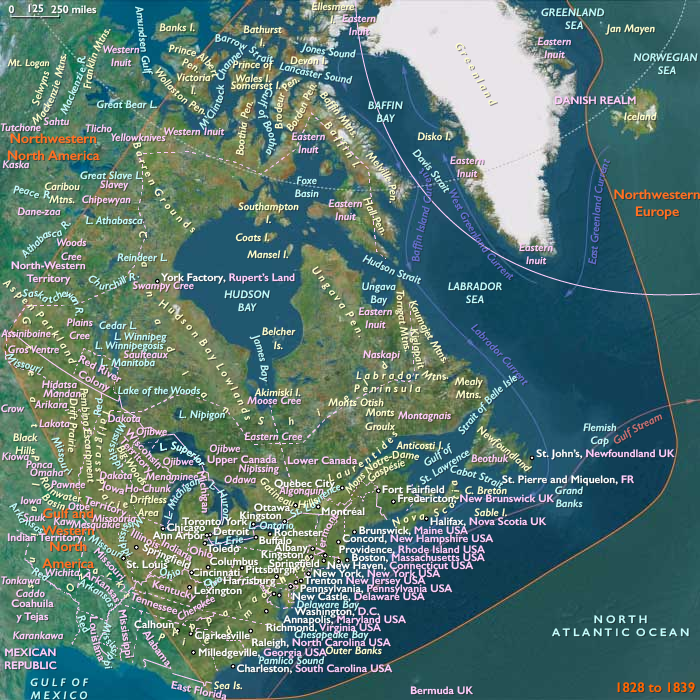
Thomas McKenney had requested military aid to evict American miners who are trespassing on Ho-Chunk land, but after the war, settlers have poured into the region in unprecedented numbers, and U.S. officials prove to be unable or unwilling to stem the tide.
By January 1828, there were as many as ten thousand illegal settlers on Ho-Chunk land, including militia general Henry Dodge, who had established a mining camp after the war and boasts that the U.S. Army cannot make him leave.
The Ho-Chunks, having no other options, sign a provisional treaty with the United States on August 25, 1828, agreeing to sell the land occupied by the miners in a more formal treaty to be held later.
Eight Ho-Chunks had been detained by the U.S. government at Fort Crawford for trial after the war.
American officials had most wanted to convict Red Bird, believing that he had been the leader of the uprising.
Red Bird was never tried; he had contracted dysentery and died in prison on February 16, 1828, before his trial got underway.
The trials had been delayed due to the difficulties in bringing together witnesses, prosecutors, defense attorneys, and interpreters.
The proceedings finally begin in August 1828, with Judge James Duane Doty presiding.
Wau-koo-kau and Man-ne-tah-peh-keh, the two warriors imprisoned for the 1826 murders of the Methode family, are released due to a lack of witnesses, as are three Ho-Chunks held for the attack on the keelboats.
Only two men, Wekau and Chickhonsic, are prosecuted.
According to historian Patrick Jung, it became clear during the trial that Red Bird had committed the murders at the Gagnier cabin, and that there was not enough evidence to convict Wekau and Chickhonsic.
Despite this, the white and métis jury found them guilty.
Judge Doty sentences them to hang, as he is required to do by law.
Their lawyer files a motion for a new trial, arguing that the jury had ignored the evidence, and so Doty suspends the death sentences.
Groups
Commodities
Regions
Northern North America
View →Subregions