
European discovery of the Galápagos Islands, a…
1535 CE
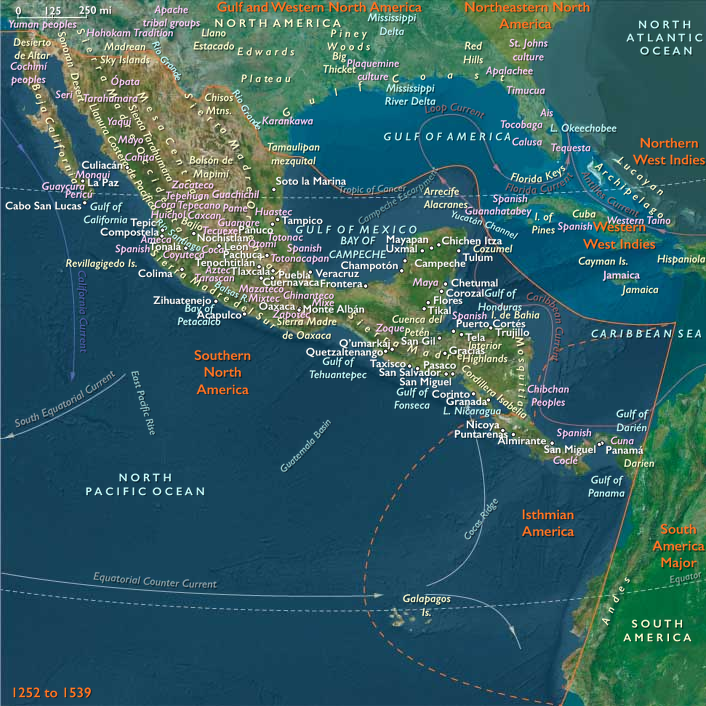
European discovery of the Galápagos Islands, a group of thirteen main volcanic islands and numerous islets in the Pacific Ocean about six hundred miles (nine hundred and sixty-five kilometers) off the coast of South America, occurs when Spaniard Fray Tomás de Berlanga, the fourth Bishop of Panama, sails to Peru to settle a dispute between Francisco Pizarro and Diego de Almagro over division of territory after the conquest of the Inca Empire.
De Berlanga's vessel drifts off course when the winds diminish, and his party reaches the islands on March 10, 1535.
Galapagos, in Spanish, means "tortoises:" the giant land tortoise, flightless cormorant, and marine iguana are three of the best-known of the archipelago’s unique animal species and distinctive varieties of species found elsewhere.
According to a 1952 study by Thor Heyerdahl and Arne Skjølsvold, remains of potsherds and other artifacts from several sites on the islands suggest visitation by South American peoples prior to the arrival of the Spanish.However, no remains of graves, ceremonial vessels and constructions have ever been found, suggesting no permanent settlement occurred at the time.
Groups
Topics
Commodities
Subjects
Regions
Middle America
View →Subregions
