
The People's Charter is drawn up in…
September 1838 CE
The People's Charter is drawn up in the United Kingdom, demanding universal suffrage.
Europe’s economic depression has stimulated the development of the working-class Chartist movement.
It takes its name from the People's Charter, which stipulates the six main aims of the movement as universal suffrage for all men age twenty-one and over, equal-sized electoral districts, voting by secret ballot, an end to the need for a property qualification for Parliament, pay for Members of Parliament, and annual election of Parliament.
When these demands are first published in May 1838, they receive a lukewarm response from Northern Star's Feargus O'Connor and other Radicals, being seen as too moderate.
It soon becomes clear, however, that the charter has struck a chord among common people.
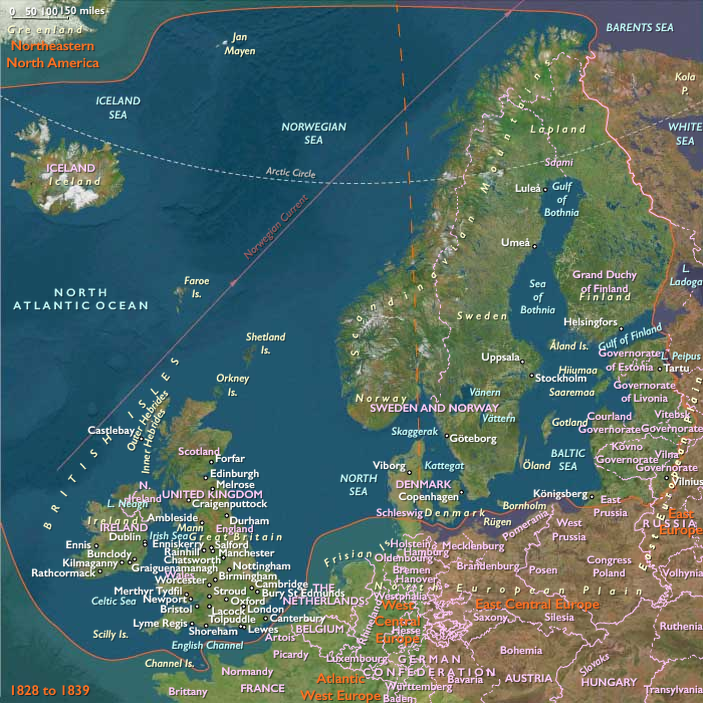
A large meeting is held on Kersal Moor, Salford, Lancashire on September 9, 1838, which attracts a large crowd to listen to speakers from all over the country.
Possibly the first mass working class movement in the world, the movement’s leaders will often be described as either "physical-" or "moral-force" leaders, depending upon their attitudes to violent protest.
Locations
Regions
North Europe
View →Subregions
