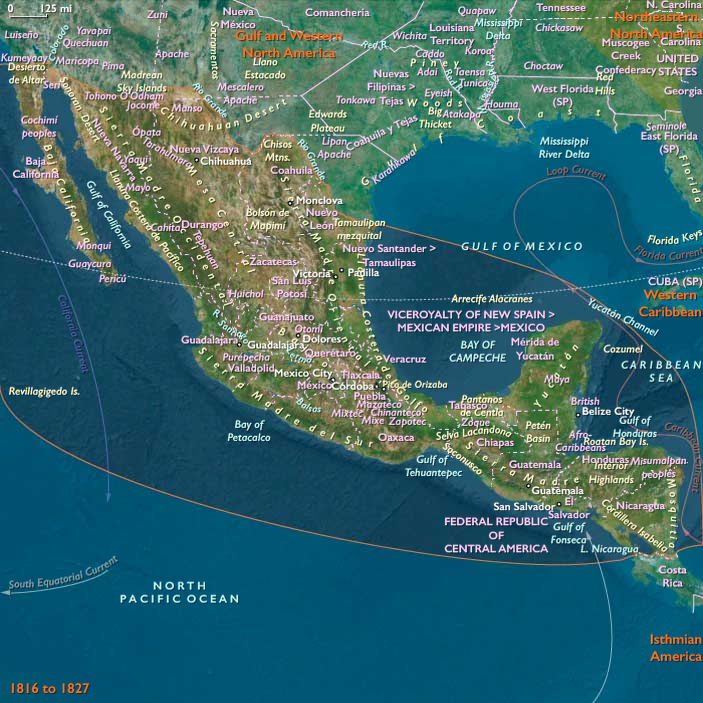
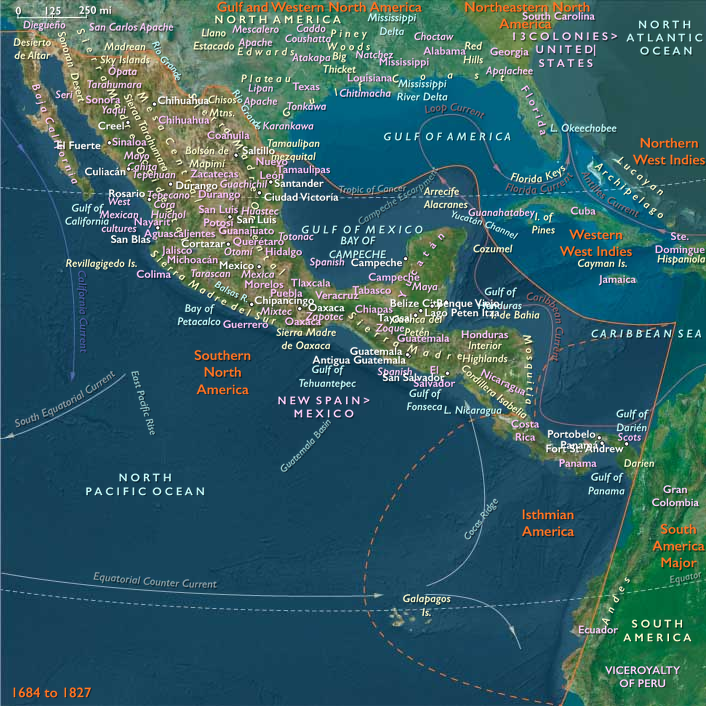
Throughout the captaincy general, cities come to…
1684 CE to 1827 CE
Typically, each of the five provinces of the captaincy general has one city that champions the liberal cause and another that spoke for the conservatives.
In Nicaragua, Leon is primarily involved in exporting animal products such as leather and tallow and soon becomes the center for free-trading liberalism.
The conservative elite in Granada, however, had made their fortunes under the old protectionist system and resist change.
Competition between the two cities over influence on colonial policy becomes violent at times, and each city supports armed groups in order to defend itself and its ideas.
In time, the hatred and violence between the two cities and the two factions becomes institutionalized, and often the original ideological difference is forgotten.
Independence in the next century only exacerbates the struggle as it eliminates Spain as a referee.
The violent rivalry between liberals and conservatives is one of the most important and destructive aspects of Nicaraguan history, a characteristic that will last until well into the twentieth century.
Politicians frequently choose party loyalty over national interest, and, particularly in the 1800s, the nation is often the loser in interparty strife.
Locations
Groups
Sumo people
View →
Garifuna
View →
Spaniards (Latins)
View →
New Spain, Viceroyalty of
View →
Rama people
View →
Guatemala, Captaincy General of (Spanish Colony)
View →
Miskito people
View →
Spain, Bourbon Kingdom of
View →
British people
View →
Britain (United Kingdom of Great Britain and Ireland)
View →
Regions
Middle America
View →Subregions