
Every member of the rebellion wears a …
Years: 184 - 184
Every member of the rebellion wears a yellow headdress as an expression of their bond with the earth (yellow being the color representing earth in the Chinese “five-elements” system followed by the Taoists and others).
The rebellion becomes known by this symbol.
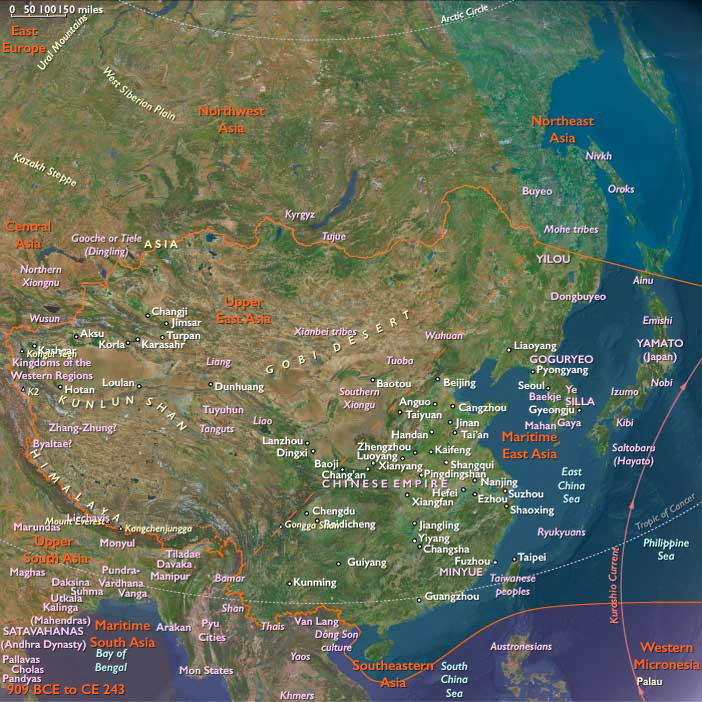
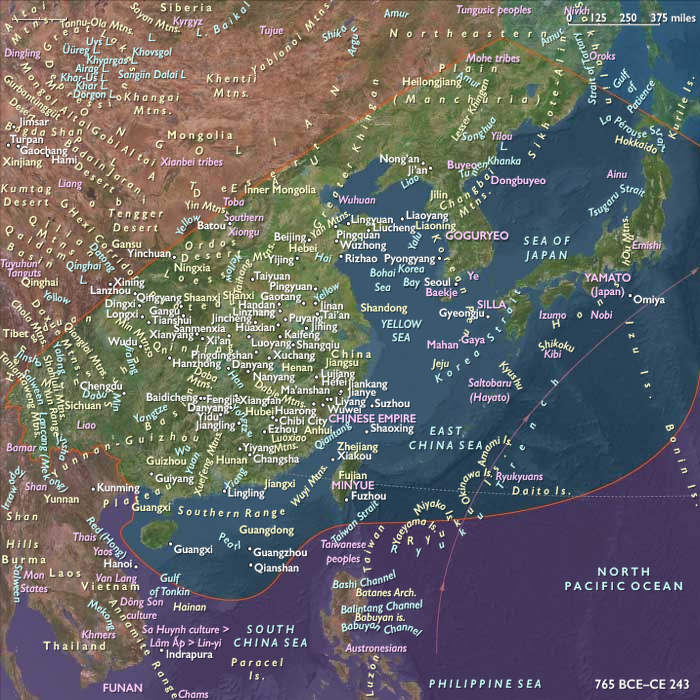
Within a month, Zhang controls large areas of territory.
Under suggestion by the eunuch Lü Qiang, who is sympathetic to the partisans, Emperor Ling pardons the partisans to ward off the possibility they would join the Yellow Turbans.
(Lü himself becomes a victim, however, when the other eunuchs, in retaliation, falsely accuse him of wanting to depose the emperor, and he commits suicide later this year.)
Emperor Ling sends out a number of military commanders against the Yellow Turbans, and in these campaigns several of them distinguish themselves—including Huangfu Song, Cao Cao, Fu Xie, Zhu Jun, Lu Zhi, and Dong Zhuo.
A key military development with significant implications for the future is that the Yellow Turbans are largely fought within battle-tested troops from Liang Province (modern Gansu), who have been accustomed to fighting the Qiang rebellions.
In late 184, Zhang Jiao is killed.
Locations
People
Groups
- Taoism
- Chinese (Han) people
- Chinese Empire, Tung (Eastern) Han Dynasty
- Way of the Five Pecks of Rice
Topics
- Han dynasty China
- Disasters of Partisan Prohibitions
- Five Pecks of Rice
- Yellow Turban Rebellion
- Liang Province Rebellion
- Three Kingdoms Period in China
Commodoties
Subjects
Regions
Subregions
Related Events
Showing 6 events out of 6 total
Years: 184 - 184
Locations
People
Groups
- Taoism
- Chinese (Han) people
- Chinese Empire, Tung (Eastern) Han Dynasty
- Way of the Five Pecks of Rice
Topics
- Han dynasty China
- Disasters of Partisan Prohibitions
- Five Pecks of Rice
- Yellow Turban Rebellion
- Liang Province Rebellion
- Three Kingdoms Period in China
Commodoties
Subjects
Regions
Subregions