
Zhang Jue
leader of the Yellow Turban rebels
145 CE to 184 CE
Zhang Jue (died 184) is the leader of the Yellow Turban rebels during the late Han Dynasty period of Chinese history.
He is said to be a follower of Taoism and a sorcerer.
His name is sometimes read as Zhang Jiao, since the Chinese character of Zhang's given name can be read as either "Jiao" or "Jue".
"Jue" is the traditional reading, while "Jiao" is the modern one.
World
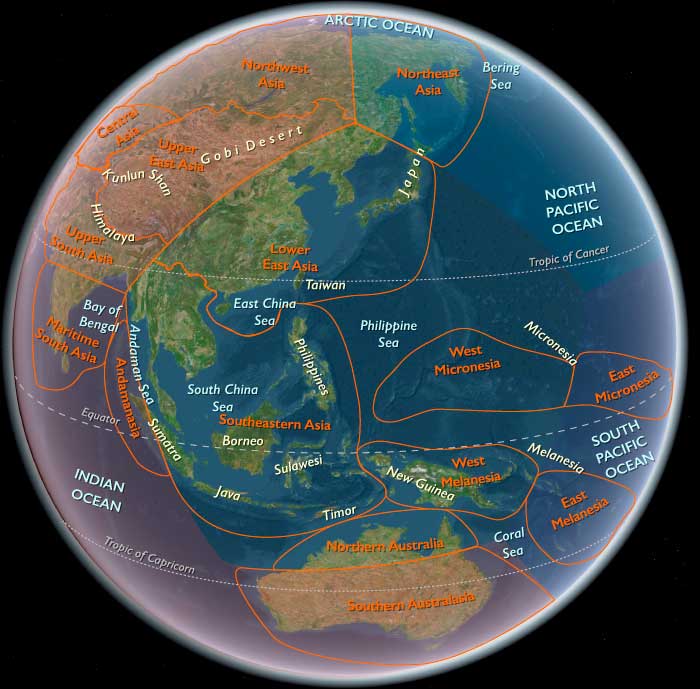
The Far East
View →Related Events
Showing 10 events out of 20 total
A Possible Connection Between the Antonine Plague and the Eastern Han Epidemics (2nd Century CE)
The Antonine Plague (165–180 CE) devastated the Roman Empire, while China’s Eastern Han dynasty suffered multiple outbreaks of disease during the reigns of Emperor Huan (r. 146–168) and Emperor Ling (r. 168–189). Some historians, including Rafe de Crespigny and Raoul McLaughlin, have suggested a possible link between these epidemics, proposing that a deadly contagion spread across Eurasia via trade routes, particularly the Silk Road and Indian Ocean networks.
1. The Han Dynasty’s Epidemics and the Yellow Turban Rebellion
- The Eastern Han Empire faced severe plagues, with outbreaks recorded in 151, 161, 171, 173, 179, 182, and 185 CE.
- These epidemics coincided with political instability, fueling popular unrest and millenarian movements, such as the Yellow Turban Rebellion (184–205 CE), led by Zhang Jue, a faith healer who promoted divine healing to counter the plague.
- De Crespigny speculates that these outbreaks may have been part of the same pandemic afflicting Rome, suggesting that disease played a role in destabilizing both empires.
2. The Roman Embassy to Han China (166 CE) and the Spread of Disease
- In 166 CE, a Roman embassy from "Daqin" (the Roman Empire) arrived at the Han court, claiming to represent "Andun" (安敦), possibly a reference to Marcus Aurelius Antoninus or Antoninus Pius.
- McLaughlin notes that this could have been the beginning of intensified Rome-Han trade, yet instead, it may have been a harbinger of something far more ominous—the spread of a deadly pandemic.
3. The Plague’s Possible Origins in Central Asia
- McLaughlin theorizes that the plague originated in Central Asia, potentially from an isolated nomadic population, before spreading to both China and Rome.
- The Silk Road and maritime trade routes facilitated the movement of goods, people, and diseases, creating a pathway for pandemics to spread across Eurasia.
- The plague’s transmission may have followed a westward route, affecting China first before reaching the Roman Empire through Parthia and Mesopotamia.
4. The Plague’s Impact on Rome’s Economy and Indian Ocean Trade
- The Antonine Plague killed roughly 10% of Rome’s population, weakening the empire’s military and economy.
- McLaughlin argues that the epidemic caused "irreparable" damage to Roman trade in the Indian Ocean, as evidenced by:
- Archaeological records showing a decline in Roman trade goods from Egypt to India.
- A significant drop in commercial activity in Southeast Asia, indicating reduced Roman maritime trade.
- This decline in long-distance commerce affected Rome’s ability to sustain wealth and maintain its eastern provinces, leading to further economic instability.
Conclusion: The Plague as a Eurasian Pandemic?
- While definitive evidence linking the Antonine Plague to the Han epidemics remains inconclusive, historians like de Crespigny and McLaughlin highlight the possibility of a shared pandemic that affected both Rome and China.
- The Roman embassy to China in 166 CE may have played a role in transmitting disease, demonstrating the unintended consequences of early global trade.
- The epidemic’s devastating impact weakened both empires, contributing to political instability in China and economic decline in Rome.
The plagues of the 2nd century CE may represent one of the earliest known instances of pandemics spreading across Eurasia via trade networks, shaping the trajectory of both the Roman and Han empires in ways that would affect world history for centuries to come.
Many Taoists in eastern China have begun to turn to magic and faith healing during the first century CE.
Sometime before 183, a major Taoist movement had emerged from Ji Province (modern central Hebei) -- the Taiping Sect, led by Zhang Jue (also known as Zhang Jiao), who claims he has magical powers to heal the sick.
It is said that Zhang Jue is a grandson of Zhang Daoling, founder of the Taoist sect Way of the Celestial Masters, or Way of Five Pecks of Rice (he is not, so far as is known.)
By 183, his teachings and followers had spread to eight provinces—Qing (modern central and eastern Shandong), Xu (modern northern Jiangsu and Anhui), You (modern northern Hebei, Liaoning, Beijing, and Tianjin), Ji, Jing (modern Hubei and Hunan), Yang (modern southern Jiangsu and Anhui, Jiangxi, and Zhejiang), Yan (modern western Shandong), and Yu (modern central and eastern Henan).
Several key imperial officials became concerned about Zhang's hold over his followers, and suggested that the Taiping Sect be disbanded.
Emperor Ling did not listen to them.
Zhang in fact plans a rebellion.
He commissions thirty-six military commanders and set up a shadow government, and he writes a declaration:
The blue heaven is dead.
The yellow heaven will come into being.
The year will be Jiazi.
The world would be blessed.
(Under China's traditional sexagenary cycle calendar method, the year 184 is the first year of the cycle, known as Jiazi.)
Zhang has had his supporters write Jiazi in large characters with white talc everywhere they can—including on the doors of many imperial offices in the capital Luoyang and other cities.
One of Zhang's commanders, Ma Yuanyi, enters into a plan with two powerful eunuchs, and they plan to start a rebellion to overthrow the Han Dynasty from inside.
Early in 184, this plot is discovered, and Ma is immediately arrested and executed.
Emperor Ling orders that Taiping Sect members arrested and executed, and Zhang immediately declares a rebellion.
A major cause of the rebellion is an agrarian crisis, in which famine has forced many farmers and former military settlers in the north to seek employment in the south, where large landowners exploit the labor surplus to amass large fortunes.
The situation is further aggravated by smaller floods along the lower course of the Yellow River, driving thousands of peasants from their farms; epidemics follow amid great discontent.
The peasants are further oppressed by high taxes imposed in order to fund the construction of fortifications along the Silk Road and garrisons against foreign infiltration and invasion.
In this situation, landowners, landless peasants, and unemployed former-soldiers had formed armed bands (from around 170), and eventually private armies, setting the stage for armed conflict.
At the same time, the Han Dynasty central government is weakening internally.
The power of the landowners has become a longstanding problem, but in the run-up to the rebellion, the court eunuchs in particular have gained considerably in influence over the emperor, which they abuse to enrich themselves.
Ten of the most powerful eunuchs have formed a group known as the Ten Attendants, and the emperor refers to one of them (Zhang Rang) as his "foster father".
The government is widely regarded as corrupt and incapable and the famines and floods are seen as an indication that a decadent emperor has lost his mandate of heaven.
Every member of the rebellion wears a yellow headdress as an expression of their bond with the earth (yellow being the color representing earth in the Chinese “five-elements” system followed by the Taoists and others).
The rebellion becomes known by this symbol.
Within a month, Zhang controls large areas of territory.
Under suggestion by the eunuch Lü Qiang, who is sympathetic to the partisans, Emperor Ling pardons the partisans to ward off the possibility they would join the Yellow Turbans.
(Lü himself becomes a victim, however, when the other eunuchs, in retaliation, falsely accuse him of wanting to depose the emperor, and he commits suicide later this year.)
Emperor Ling sends out a number of military commanders against the Yellow Turbans, and in these campaigns several of them distinguish themselves—including Huangfu Song, Cao Cao, Fu Xie, Zhu Jun, Lu Zhi, and Dong Zhuo.
A key military development with significant implications for the future is that the Yellow Turbans are largely fought within battle-tested troops from Liang Province (modern Gansu), who have been accustomed to fighting the Qiang rebellions.
In late 184, Zhang Jiao is killed.
Liu Bei, the future warlord and founding emperor of the state of Shu Han, was born in Zhuo County, Zhuo prefecture (present day Zhuozhou, Baoding, Hebei), according to the Records of the Three Kingdoms.
He was a descendant of Liu Zhen, the son of Liu Sheng, a son of Emperor Jing.
However, Pei Songzhi's commentary, based on the Dianlue, said that Liu Bei was a descendant of the Marquess of Linyi.
The royal title of Marquess of Linyi wqas held by Liu Fu and later his son Liu Taotu, respectively Liu Yan's grandson and great-grandson, who were all ultimately descended from Emperor Jing.
Liu Bei's grandfather Liu Xiong and father Liu Hong were both employed as local clerks.
Liu Bei had grown up in a poor family, having lost his father when he was still a child.
To support themselves, Liu Bei and his mother sold shoes and straw-woven mats.
Even so, Liu Bei was full of ambition since childhood: he once said to his peers, while under a tree that resembled the royal chariot, that he desired to become an emperor.
Sponsored by a more affluent relative who recognized his potential in leadership, Liu Bei at the age of fourteen had gone to study under the tutelage of Lu Zhi (a prominent scholar and, at the time, former Administrator of Jiujiang).
There he had met and befriended Gongsun Zan, a prominent northern warlord to be.
The adolescent Liu Bei was said to be unenthusiastic in studying and displayed interest in hunting, music and dressing.
Concise in speech, calm in demeanor, and kind to his friends, Liu Bei was well liked by his contemporaries.
He was said to have long arms and large earlobes.
In 184, at the outbreak of the Yellow Turban Rebellion, Liu Bei calls for the assembly of a volunteer army to help government forces suppress the rebellion.
Liu Bei receives financial contributions from two wealthy horse merchants and rallies a group of loyal followers, among whom include Guan Yu and Zhang Fei.
Liu Bei leads his army to join the provincial army.
Together, they score several victories against the rebels.
In recognition of his contributions, Liu Bei is appointed Prefect of Anxi in Zhongshan prefecture.
He resigns after refusing to submit to a corrupt inspector who attempted to ask him for bribes.
He then travels south with his followers to join another volunteer army to suppress the Yellow Turbans remnants in Xu Province (present day northern Jiangsu).
For this achievement, he is appointed Prefect and Commandant of Gaotang.
The conflict known as the Liang Province Rebellion begins in the winter of 183-184 with two groups of Qiang people causing disturbances in the outlying regions of northwestern China, with one group in the northwestern prefectures of Beidi and Anding, and another in at the counties of Fuhan and Heguan in the upper Yellow River valley.
Initially, the two groups were likely separate, each trying to seize the opportunity to resist the weakened Han rule after years of corruption and misrule.
The situation escalates in October or November 184 when the troops of the Auxiliary of Loyal Barbarians From Huangzhong, which consists of Qiang and Lesser Yuezhi recruits sent to suppress the disturbances, mutiny against their Han Chinese superiors in the military camp of Lianju (northwest of present-day Lanzhou) and join the insurgents, in the process killing the Colonel Protector of the Qiang Ling Zheng.
At this point, the two groups have joined together, with former Auxiliary soldiers Beigong Boyu and Li Wenhou as their leaders.
This union means that the rebels now have control of the band of territory along the Yellow River in present-day Lanzhou.
Within a few weeks, the rebels attack and capture Yuanya, the capital of Jincheng prefecture, making the prefecture their main stronghold for rebel operations.
The rebels are helped by the fact that the local governor Zuo Chang, Inspector of Liang Province), has embezzled the funds allocated for the defense force, making no relief possible.
The Grand Administrator Chen Yi goes to the rebels' camp to negotiate for the release of hostages, but the rebels kill him.
The hostages—which include Bian Zhang, the former Prefect of Xin'an; and Han Sui, Attendant Official of Liang Province—are then persuaded to join the rebels' cause.
The addition of such reputable and influential men gives the rebellion wider popular support, and the two men are to play more prominent roles in the rebellion as the course of events progresses.
The rebels now besiege Zuo Chang's headquarters in the county of Ji (south of present-day Gangu, Gansu).
Some outlying Han generals are initially reluctant to help Zuo Chang, but He Xun, a much-respected and successful general, applies his powers of persuasion to force these generals to come to Zuo Chang's aid.
The rebels, out of respect for He Xun, break off the siege.
After this episode, Zuo Chang is replaced by Song Nie, a devout Confucian who believes that the situation can be remedied only by teaching the people the Classic of Filial Piety.
He submits this proposal to the imperial court despite his junior officials' advice and is promptly dismissed in favor of Yang Yong.
Local situations do not improve with the appointment, however, and the local officials soon find themselves besieged by the rebels again.
The new Protector, Xia Yu, a man with some experience with Qiang rebellions, is attacked by a rebel contingent led by Qiang chieftain Dianyu at the Herding Office of Hanyang prefecture (present-day Tianshui) and He Xun once again leads troops for relief.
This time, however, He Xun is severely defeated at nearby Hupan.
While both Xia Yu and He Xun make their escape, it is clear at this point that provincial authorities cannot deal with the rebellion by themselves.
The rebels, now several tens of thousands in number, move towards the former Han capital of Chang'an in the spring of 185.
In response, the imperial court appoints Huangfu Song, the famed conqueror of the Yellow Turbans, as the General of Chariots and Cavalry on the Left in charge of defense of Chang'an.
However, Huangfu achieves no immediate success, and is dismissed in the seventh lunar month of 185 after a four-month tenure after being slandered by the eunuchs in the imperial court.
The continued rebellion in Liang Province takes its toll on the government treasury, and the imperial court has to call on the taxes and corvées to support the war.
A high official, the Minister Over the Masses Cui Li, proposes to abandon Liang Province altogether.
The Gentleman-Consultant Fu Xie makes an impassioned speech that condemns Cui Lie and emphasizes the importance of the frontier province.
Emperor Ling, impressed by this argument, rejects Cui Lie's proposal.
Fu Xie is later assigned to be the Grand Administrator of Hanyang and is sent to the frontier region.
The high minister Zhang Wen is given the military post of General of Chariots and Cavalry to assume Huangfu Song's responsibilities in the eighth lunar month of 185.
Assigned under him are Dong Zhuo, the new General Who Routs the Caitiffs, and Zhou Shen, the General Who Terrifies Criminals, among others.
Zhang's army, more than a hundred thousand in men and horses, travels to Meiyang (west of present-day Wugong) and sets up camp there.
Bian Zhang and Han Sui also bring their men to Meiyang to do battle, but the battles are inconclusive and Zhang Wen's army cannot gain advantage for some time.