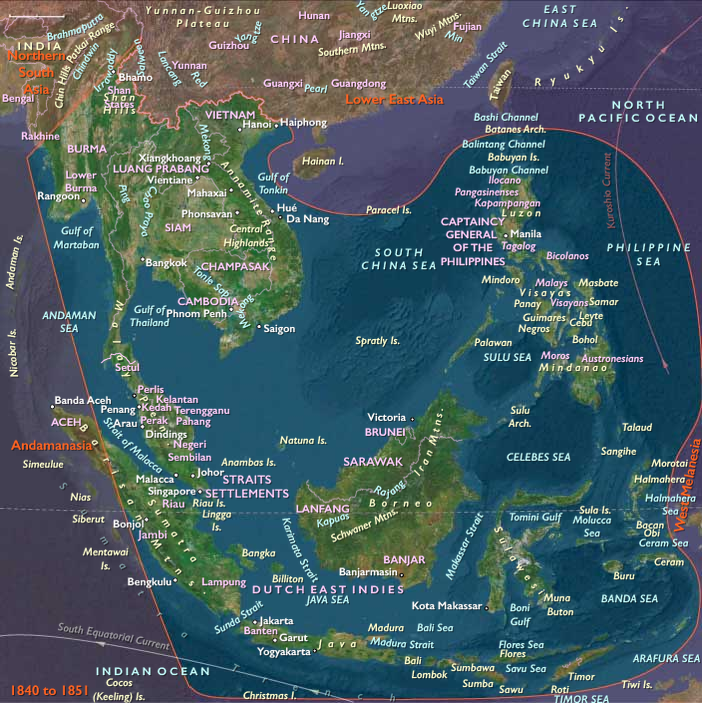
Nang Klao dies in 1851 and is…
1840 CE to 1851 CE
Mongkut's father, Loet La (Rama II, 1809-24), had placed him in a Buddhist monastery in 1824 to prevent a bloody succession struggle between factions loyal to Mongkut and those supporting Nang Klao (although Nang Klao was older than Mongkut, his mother was a concubine, whereas Mongkut's mother is a royal queen).
As a Buddhist monk, Mongkut has won distinction as an authority on the Pali Buddhist scriptures and has become head of a reformed order of the Siamese sangha.
Thai Buddhism has become heavily overlain with superstitions through the centuries, and Mongkut is attempting to purge the religion of these accretions and restore to it the spirit of Buddha's original teachings.
Mongkut's twenty-seven years as a Buddhist monk has not only made him a religious figure of some consequence but has also exposed him to a wide array of foreign influences.
Blessed with an inquiring mind and great curiosity about the outside world, he has cultivated contacts with French Roman Catholic and United States Protestant missionaries.
He has studied Western languages (Latin and English), science, and mathematics.
His lengthy conversations with the missionaries have given him a broad perspective that greatly influence his policies when he becomes king in 1851.
He is more knowledgeable of, and at ease with, Western ways than any previous Thai monarch.
Groups
Regions
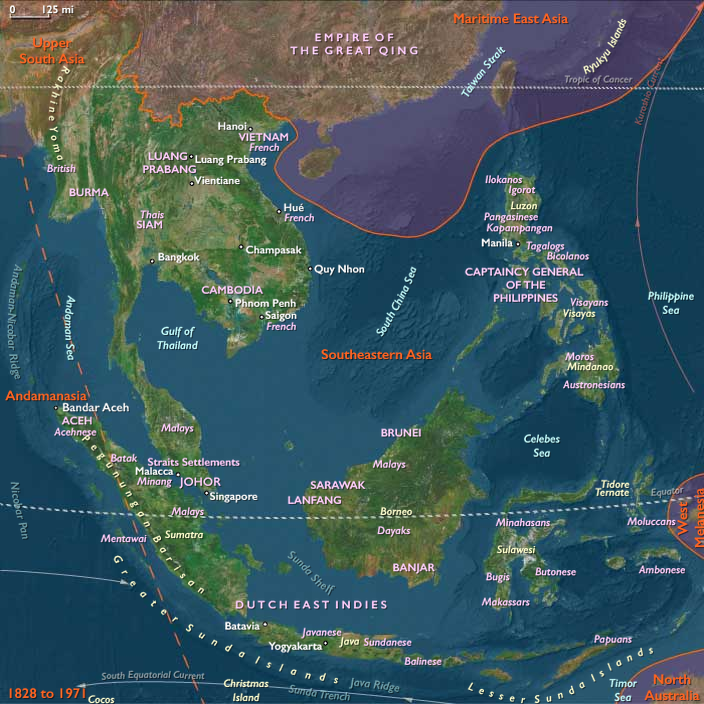
Southeast Asia
View →Subregions