The Hook and Cod Wars and the…
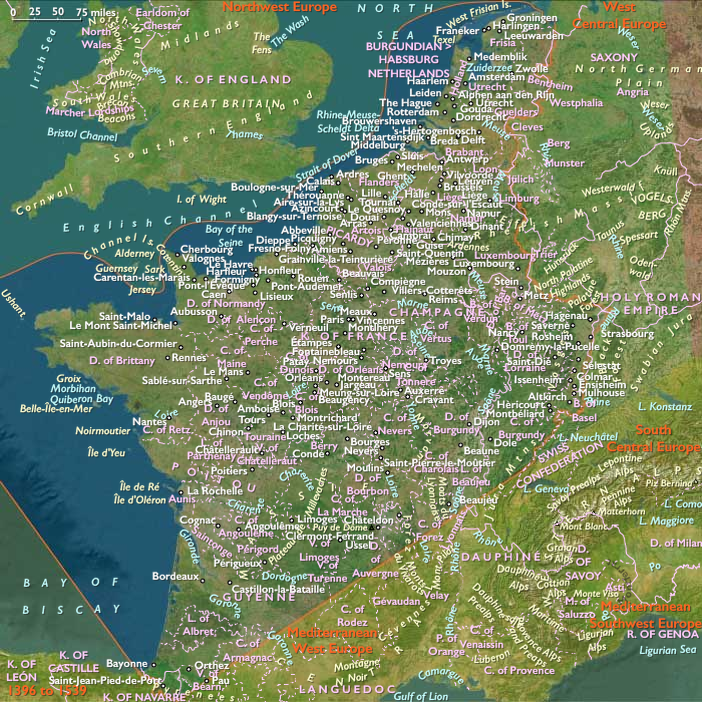
1396 CE to 1539 CE
The Hook and Cod Wars and the Burgundian Conquest of Holland (1350–1490)
The Hook and Cod Wars (1350–1490) were a long-running conflict over the title of Count of Holland, fought between two rival factions with opposing political and economic interests:
- The Cod faction (Kabeljauwen), consisting of progressive, trade-oriented cities, sought greater autonomy and urban influence.
- The Hook faction (Hoeken), composed of conservative noble families, aimed to preserve traditional feudal control.
This internal power struggle eventually paved the way for the Burgundian takeover of Holland, led by Philip the Good, Duke of Burgundy, who was also Count of Flanders.
Origins of the Conflict (1350–1354)
- The conflict began in 1350 as a succession crisis following the death of Count William IV of Holland.
- His daughter, Margaret of Bavaria, inherited the title, but her nephew, William V of Bavaria, opposed her rule.
- The Cod faction supported William V, while the Hook faction backed Margaret, leading to open war.
- In 1354, Margaret was forced to abdicate, but the rivalry between the factions persisted for over a century.
The Burgundian Involvement: Philip the Good’s Conquest of Holland (1433–1436)
- By the early 15th century, the House of Bavaria ruled Holland but faced continued unrest and factional conflicts.
- Seeking outside intervention, the Hook faction invited Philip the Good of Burgundy to seize control.
- In 1433, Philip successfully took over Holland, incorporating it into his growing Burgundian Netherlands.
- The Hook and Cod conflict did not immediately end, as nobles and cities continued to resist Burgundian authority, leading to further uprisings into the late 15th century.
Impact and Legacy
- The Burgundian conquest of Holland ended the independent rule of the Counts of Holland, integrating the region into the Burgundian Netherlands.
- The Hook and Cod Wars foreshadowed the broader struggle between urban autonomy and centralized rule, which would continue under the Habsburgs in the 16th century.
- The commercially dominant Cod faction ultimately prevailed, as Holland became one of the most prosperous regions in Europe under Burgundian and later Habsburg rule.
The Hook and Cod Wars (1350–1490) shaped the political landscape of the Low Countries, leading to the Burgundian consolidation of Holland and setting the stage for the later struggles between urban merchants and noble rulers in the Netherlands.
People
Groups
Topics
Subjects
Regions
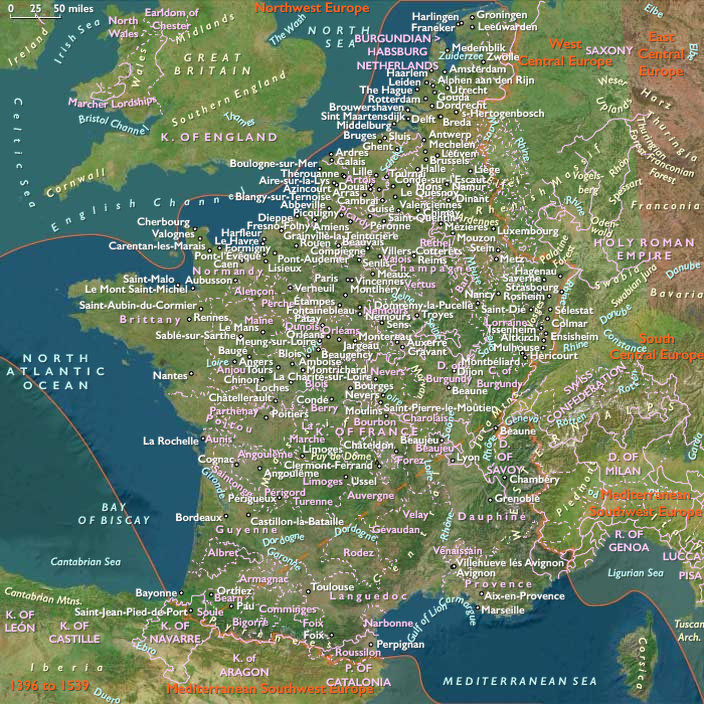
West Europe
View →Subregions