John Fitch was born to Joseph Fitch…
January 1787 CE
He received little formal schooling and eventually apprenticed himself to a clockmaker.
During his apprenticeship, Fitch was not allowed to learn or even observe watchmaking (he later taught himself how to repair clocks and watches).
He married Lucy Roberts December 29, 1767.
Following this apprenticeship in Hartford, he opened an unsuccessful brass foundry in East Windsor, Connecticut, and then a brass and silversmith business in Trenton, New Jersey, which succeeded for eight years but was destroyed by British troops during the American Revolution.
He served briefly during the Revolution, mostly as a gunsmith working for the New Jersey militia.
He left his unit after a dispute over a promotion but continued his work repairing and refitting arms in Trenton.
In the fall of 1777, Fitch provided beer and tobacco to the Continental Army in Philadelphia. During the following winter and spring, he provided beer, rum and other supplies to troops at Valley Forge.
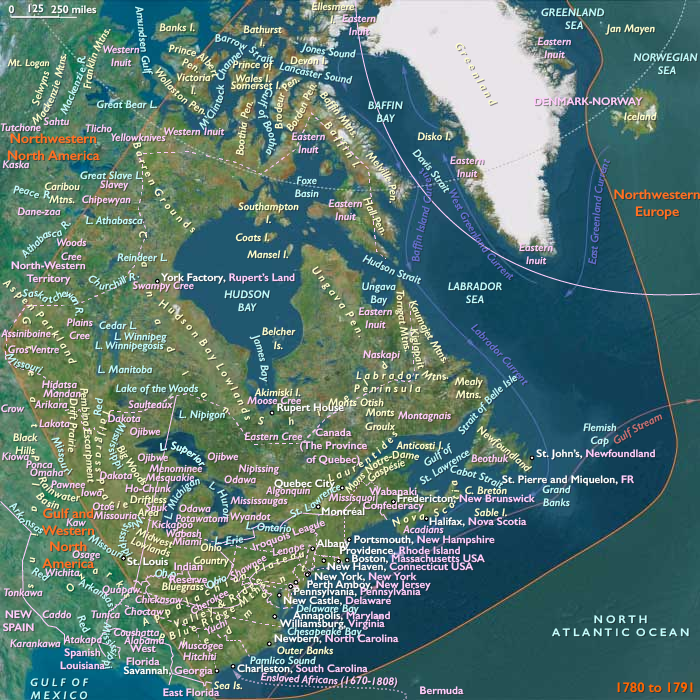
In 1780, he began work as a surveyor in Kentucky where he recorded a land claim of sixteen hundred acres (six and a half square kilometers) for himself.
In the spring of 1782, while surveying in the Northwest Territory, he was captured by natives and turned over to the British, who eventually released him.
By 1785, Fitch was done with surveying and settled in Warminster, Pennsylvania, where he began working on his ideas for a steam-powered boat.
Unable to raise funds from the Continental Congress, he persuades various state legislatures to award him a fourteen-year monopoly for steamboat traffic on their inland waterways.
With these monopolies, he is able to secure funding from businessmen and professional citizens in Philadelphia.
Groups
Subjects
Regions
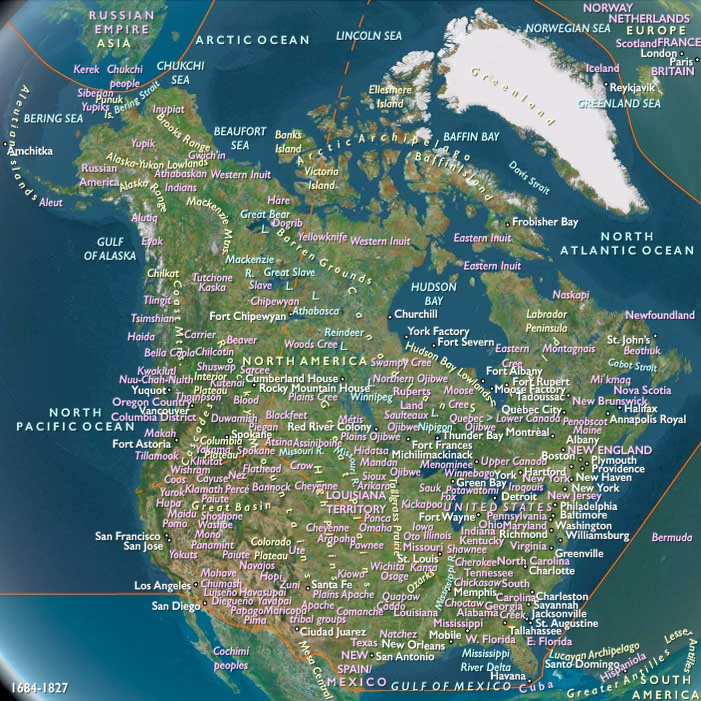
Northern North America
View →Subregions