
The Noble Uprising Against Floris V and…
1274 CE
The Noble Uprising Against Floris V and His Shift in Alliances (1274–1279)
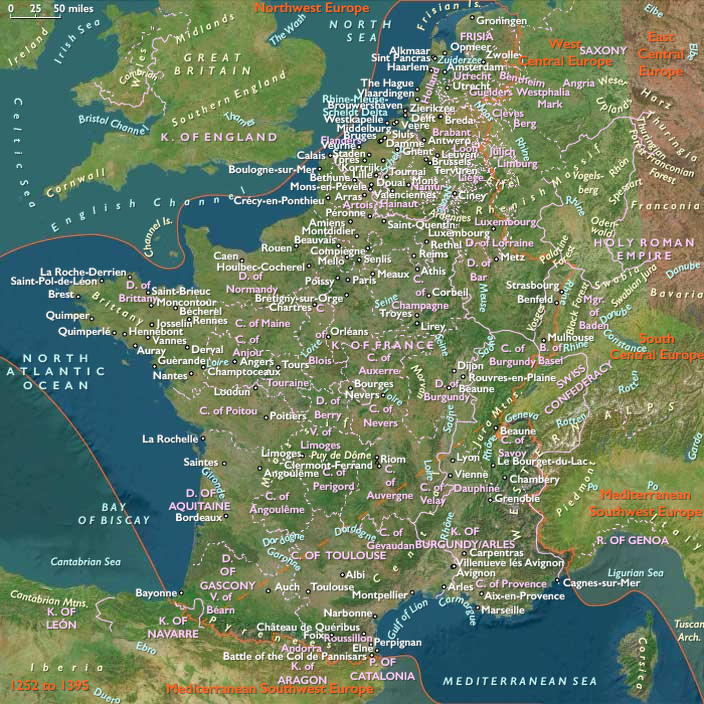
In 1274, Floris V, Count of Holland and Zeeland, faced a major uprising led by a coalition of powerful nobles in the bishopric of Utrecht and surrounding territories. These lords, including Gijsbrecht IV of Amstel, Zweder of Abcoude, Arnoud of Amstel, and Herman VI van Woerden, challenged Floris’s authority and sought to expand their own power at the expense of the bishop of Utrecht, John I of Nassau.
The Uprising and Its Supporters
- The rebellious lords controlled lands in the regions of Amsterdam, Abcoude, IJsselstein, and Woerden, all of which bordered the bishopric of Utrecht.
- They found strong support from urban craftsmen in Utrecht, as well as from peasant groups in:
- Kennemerland (Alkmaar, Haarlem, and surrounding areas).
- Waterland (north of Amsterdam).
- Amstelland (Amsterdam and its surroundings).
- West Frisia, which had long resisted Holland’s control.
Floris V’s Strategy and the Bishop’s Dependency
Recognizing that the bishop of Utrecht, John I of Nassau, was too weak to resist the rebellious lords, Floris intervened militarily and diplomatically:
- He made a treaty with the Utrecht craftsmen, ensuring their support against the rebellious lords.
- His assistance made the bishop dependent on Holland, gradually shifting control of Utrecht’s affairs into Floris’s hands.
- By 1279, Floris had successfully incorporated the lands of the defeated rebel lords into the County of Holland, expanding his territorial influence.
Peasant Concessions in Kennemerland
- Floris also granted concessions to the peasants of Kennemerland, who had far fewer rights than those in the reclaimed polder regions.
- This strategic compromise allowed him to weaken the power of the nobles while securing the loyalty of the peasantry, strengthening his regional authority.
Floris’s Shift from Avesnes to Dampierre
- Previously allied with the House of Avesnes (his political patrons in the County of Hainaut), Floris now shed their influence.
- He switched allegiance to the House of Dampierre, aligning himself with Guy of Dampierre, Count of Flanders.
- This realignment with Flanders was a significant political move, as it distanced Floris from Avesnes influence and shifted Holland’s focus toward cooperation with Flanders instead of Hainaut.
Legacy of the Conflict
- By 1279, Floris had not only defeated his noble opponents but also expanded Holland’s territorial influenceinto former rebellious lands in Utrecht.
- His concessions to peasants and craftsmen helped secure his rule by weakening the noble class, a strategy that would later shape the political landscape of medieval Holland.
- His defection from Avesnes to Dampierre further altered the balance of power in the Low Countries, fueling tensions between Holland, Hainaut, and Flanders in the coming decades.
Floris V’s response to the 1274 uprising demonstrated his political acumen, enabling him to subdue internal threats, expand his domain, and reposition Holland in the shifting alliances of the Low Countries.
Groups
Commodities
Subjects
Regions
West Europe
View →Subregions
