
Another Jurchen invasion across the Yangtze River …
Years: 1129 - 1129
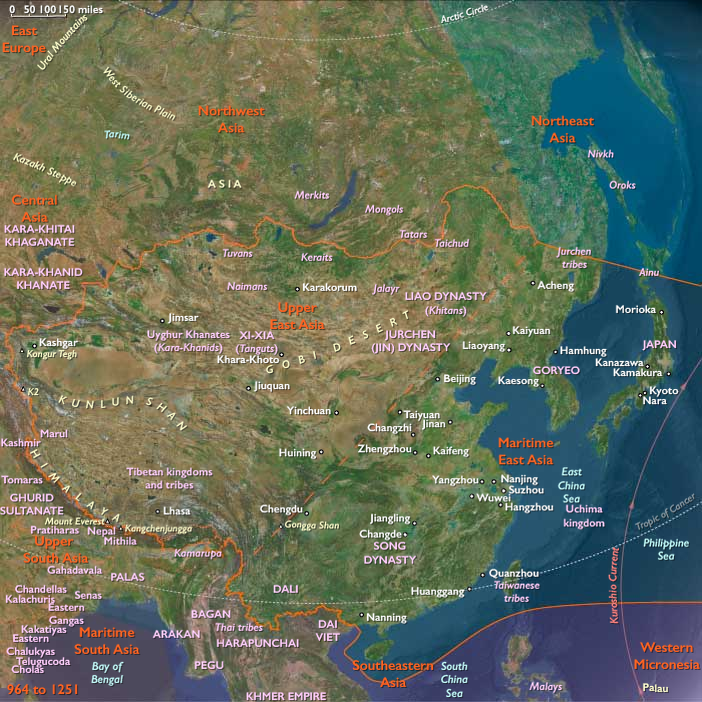
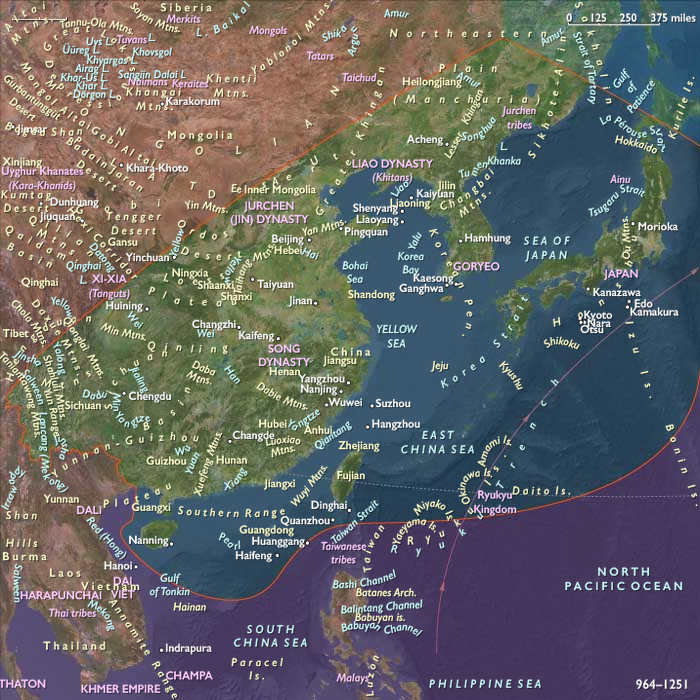
Another Jurchen invasion across the Yangtze River in 1129 causes the Nanjing-based Song government, under emperor Gaozong, to retreat south to Lin'an (in modern Hangzhou), from where the southern Song dynasty, as its rulers become known, control only a truncated southern regime.
The Jurchen conquest of northern China and shift of capitals from Kaifeng to Lin'an is the dividing line between the Northern Song Dynasty and Southern Song Dynasty.
Locations
Groups
- Chinese (Han) people
- Jurchens
- Jin Dynasty (Chin Empire), Jurchen
- Chinese Empire, Nan (Southern) Song Dynasty
Topics
Commodoties
Subjects
Regions
Subregions
Related Events
Showing 10 events out of 49220 total
Years: 1129 - 1129
Locations
Groups
- Chinese (Han) people
- Jurchens
- Jin Dynasty (Chin Empire), Jurchen
- Chinese Empire, Nan (Southern) Song Dynasty
Topics
Commodoties
Subjects
Regions
Subregions