
General George A. Custer and his troops…
November 1868 CE
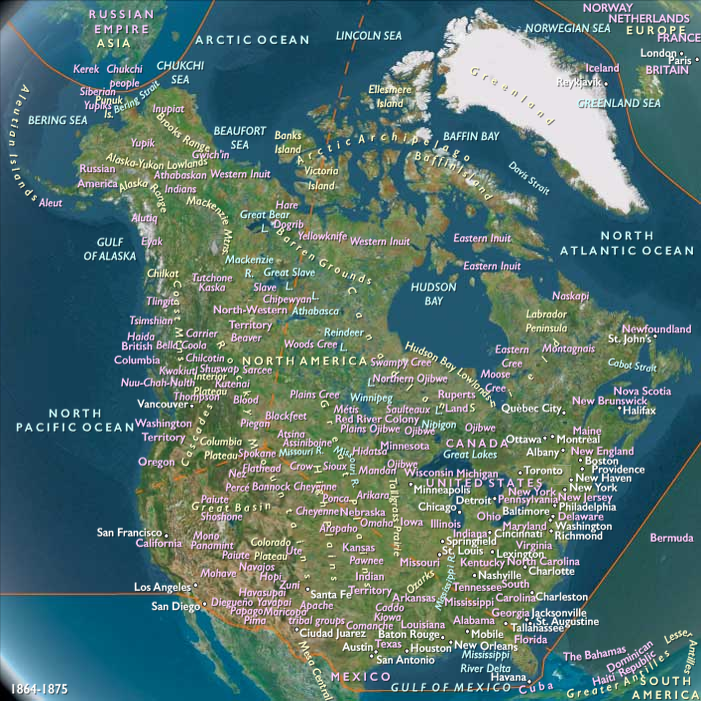
General George A. Custer and his troops attack Black Kettle's band of Cheyenne and Arapahos in Indian Territory at the Battle of Washita River on November 27, 1868.
Black Kettle has continued to desire peace and had not join in the second raid or in the plan to go north to the Powder River country.
He had left the large camp and returned with eighty lodges of his tribesmen to the Arkansas River, where he had intended to seek peace with the U.S.
Custer had chosen Osage scouts in his campaign because of their scouting expertise, excellent terrain knowledge, and military prowess.
Although his band is camped on a defined reservation, complying with the government's orders, some of its members had been linked to raiding into Kansas by bands operating out of the Indian Territory.
Custer reports killing one hundred and three warriors; estimates by the Cheyenne of their casualties are substantially lower (eleven warriors plus nineteen women and children); some women and children are also killed, and U.S. troops take fifty-three women and children prisoner.
Custer has his men shoot most of the eight hundred and seventy-five Indian ponies they had captured.
There are conflicting claims as to whether the band was hostile or friendly.
Historians believe that Chief Black Kettle, head of the band, was not part of the war party within the Plains tribes, but, he does not command absolute authority over members of his band and the European Americans do not understand this.
When younger members of the band had taken part in raiding parties, European Americans blamed the entire band for the incidents and casualties.
The Battle of Washita River is regarded as the first substantial U.S. victory in the Southern Plains War, and it helps force a significant portion of the Southern Cheyennes onto a U.S.-assigned reservation.
Custer had been court-martialed at Fort Leavenworth, Kansas, following the Hancock campaign, for being AWOL, after having abandoned his post to see his wife.
He was suspended from duty for one yea, but at the request of Major General Philip Sheridan, who wanted Custer for his planned winter campaign against the Cheyenne, Custer had been allowed to return to duty in 1868, before his term of suspension had expired.
Under Sheridan's orders, Custer had taken part in establishing Camp Supply in Indian Territory in early November 1868 as a supply base for the winter campaign.
Groups
Topics
Commodities
Regions
Northern North America
View →Subregions
