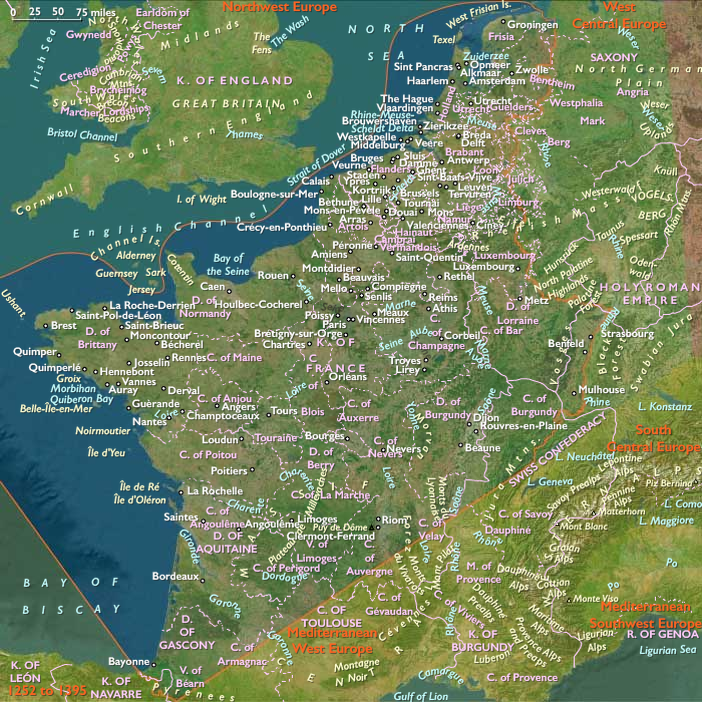
The Anglo-French Struggle for Gascony and the…
1300 CE to 1311 CE
The Anglo-French Struggle for Gascony and the Settlement of 1305
The English kings, as Dukes of Aquitaine, were vassals of the French crown, a feudal arrangement that continuously fueled conflicts over suzerainty and justice. The French monarchy, asserting its overlordship, frequently sought to undermine English authority in Gascony, while the English kings, unwilling to relinquish such a valuable possession, resisted French encroachments.
Beyond its economic and strategic importance, Gascony was a vital source of manpower at a time when prolonged warfare placed unprecedented strain on royal resources. Consequently, no English king could afford to risk a full-scale French conquest, as too much was at stake in maintaining control over the duchy.
The Truce and Its Fragile Peace
The Anglo-French war over Gascony (1294–1297), initiated by Philip IV of France, saw Edward I of England struggling to defend his continental possessions. However, by 1297, both monarchs—preoccupied with domestic and financial pressures—agreed to reestablish the status quo ante through a truce (1297–1303).
The Treaty of Paris (1303) nominally restored Gascony to Edward I, but at a cost: he was required to pay homage to Philip IV, reaffirming his feudal subordination to the French king. While the agreement temporarily de-escalated tensions, it carried the seeds of future conflict, as homage implied obligations that English kings were reluctant to accept.
The Settlement of 1305
The situation remained unsettled for two more years, with ongoing disputes over jurisdiction and territorial claims. Only in 1305 did negotiations result in a more satisfactory settlement for the English crown, clarifying the terms of Edward's rule over Gascony. However, this resolution was short-lived, as ongoing friction over feudal obligations and territorial ambition would continue to strain Anglo-French relations, ultimately contributing to the Hundred Years’ War (1337–1453).
Groups
Topics
Regions
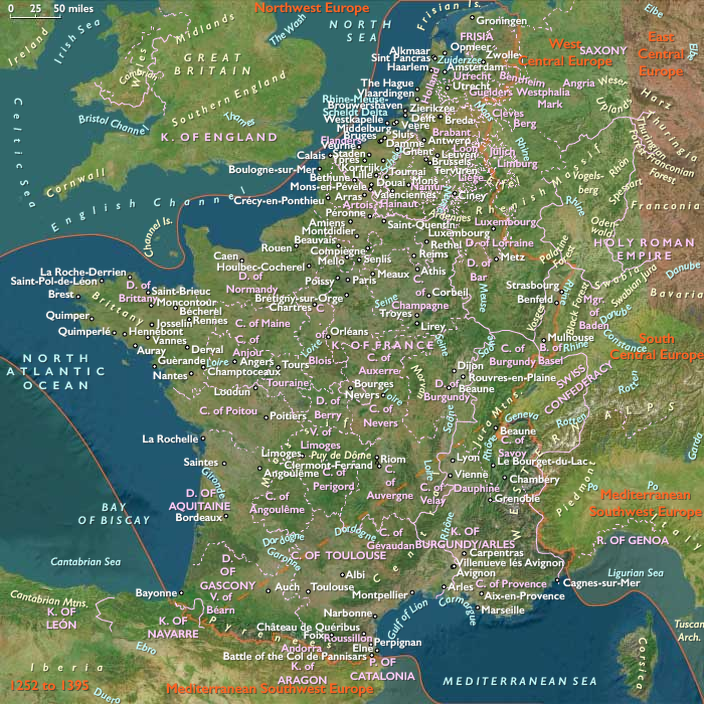
West Europe
View →Subregions