
Camas (Camassia quamash), a plant …
Years: 1878 - 1878
July
Camas (Camassia quamash), a plant with a blue or purple flower which has a nutritious bulb about the size and shape of a tulip bulb, is a major food source for many of the tribes in Idaho, Eastern Washington, Eastern Oregon, and Western Montana.
Gathered in late spring or early fall, it is either eaten raw or steamed in a pit for immediate consumption.
To preserve the camas, the bulbs are pounded in a mortar to make a kind of dough which is then shaped into loaves, wrapped in grass, and steamed again.
After cooking it for a second time, the loaves are made into smaller cakes and dried in the sun.
Without adequate stock of camas, people would be ill prepared for the cold winter months.
One of the most important camas areas in Idaho is known as Great Camas Prairie.
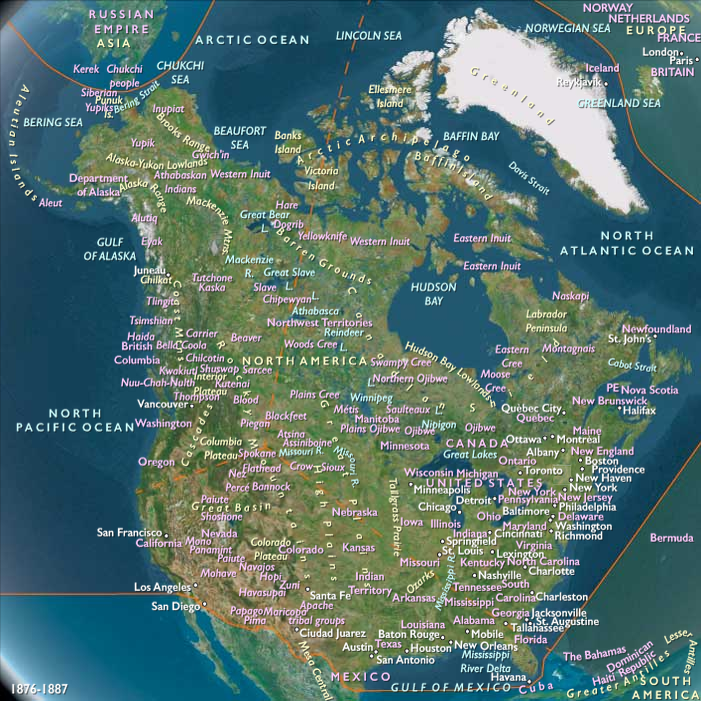
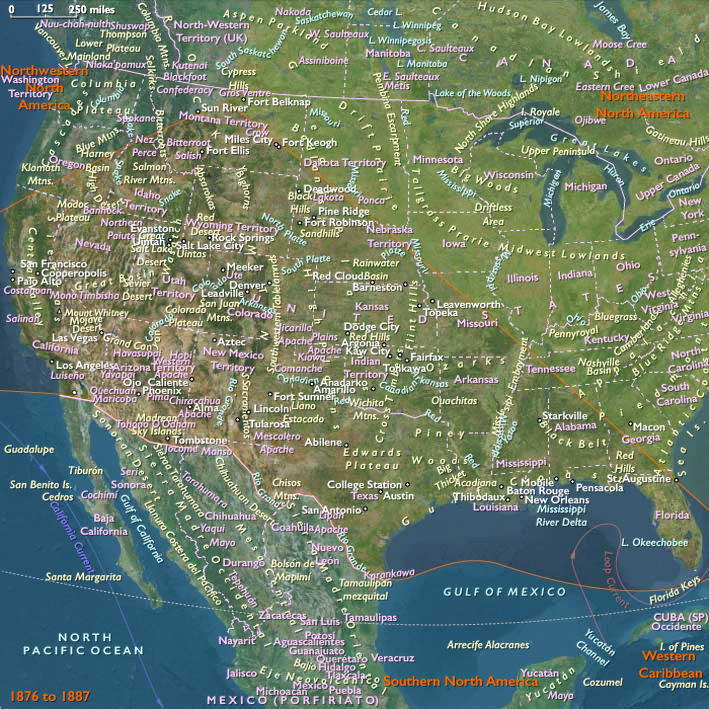
The Bannock tribe, which had been restricted to the Fort Hall Reservation in Idaho by the Fort Bridger Treaty Council of 1868, is experiencing a famine as they compete with local settlers for game, and the rations provided by the U.S government are too few to support the people on the reservation.
The Bannocks and Shoshone had traveled to nearby Great Camas Prairie in the spring of 1871 to harvest camas roots.
They discovered that settlers had grazed their hogs and livestock on the land, and many of the camas tubers.
General George Crook, a contemporary United States military officer, comments, "...it was no surprise...that some of the Indian soon afterward broke out into hostilities, and the great wonder is that so many remained on the reservation. With the Bannocks and Shoshone, our Indian policy has resolved itself into a question of war path or starvation, and being merely human, many of them will always choose the former alternative when death shall at least be glorious."
Led by Chief Buffalo Horn, the tribe leaves the reservation in 1878 and soon joins with Northern Paiutes from the Malheur Reservation under Chief Egan and the Umatilla tribes.
Chief Buffalo Horn would have known that success was highly unlikely, as he had served as a scout for General Oliver Otis Howard during the Nez Perce War the previous year.
The two tribes procure food by raiding settlements of the white settlers.
The United States government sends General Howard to aggressively quell the raids: he achieves victory in two battles.
Following a final battle in Idaho, the remaining tribe members surrender.
Locations
People
Groups
- Shoshone, Shoshoni, or Snakes (Amerind tribe)
- Paiute, Northern (Amerind tribe)
- Nez Perce (Amerind tribe)
- Bannock people (Amerind tribe)
- United States of America (US, USA) (Washington DC)
Topics
Commodoties
Subjects
Regions
Subregions
Related Events
Showing 10 events out of 11707 total
Years: 1878 - 1878
July
Locations
People
Groups
- Shoshone, Shoshoni, or Snakes (Amerind tribe)
- Paiute, Northern (Amerind tribe)
- Nez Perce (Amerind tribe)
- Bannock people (Amerind tribe)
- United States of America (US, USA) (Washington DC)
Topics
Commodoties
Subjects
Regions
Subregions