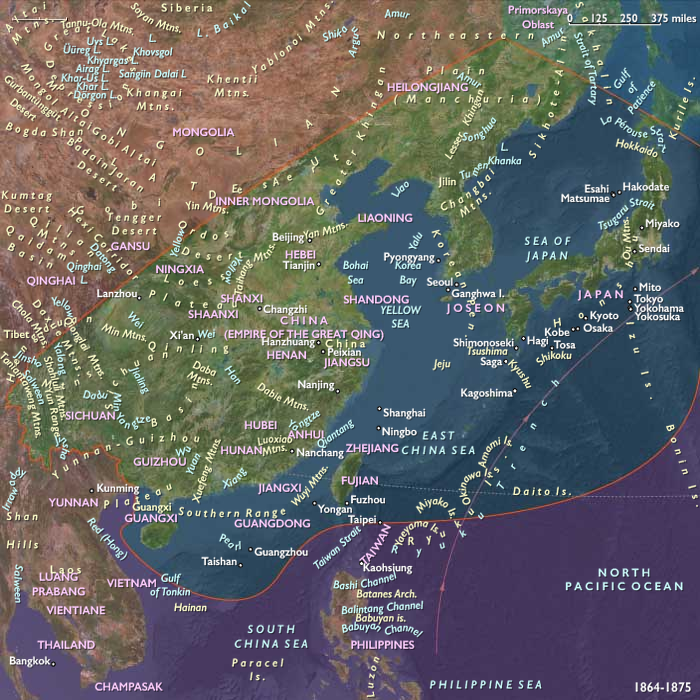
The strong measures the bakufu takes to…
1864 CE to 1875 CE
The strong measures the bakufu takes to reassert its dominance are not enough.
Revering the emperor as a symbol of unity, extremists wreak violence and death against the bakufu and han authorities and foreigners.
Foreign naval retaliation leads to still another concessionary commercial treaty in 1865, but Yoshitomi is unable to enforce the Western treaties.
A bakufu army is defeated when it is sent to crush dissent in Satsuma and Choshu han in 1866.
Finally, in 1867, the emperor dies and is succeeded by his minor son Mutsuhito; Keiki reluctantly becomes head of the Tokugawa house and shogun.
He tries to reorganize the government under the emperor while preserving the shogun 's leadership role.
Fearing the growing power of the Satsuma and Choshu daimyo, other daimyo call for returning the shogun's political power to the emperor and a council of daimyo chaired by the former Tokugawa shogun.
Keiki accepts the plan in late 1867 and resigns, announcing an "imperial restoration."
The Satsuma, Choshu, and other han leaders and radical courtiers, however, rebel, seize the imperial palace, and announce their own restoration on January 3, 1868.
The bakufu is abolished, Keiki is reduced to the ranks of the common daimyo, and the Tokugawa army gives up without a fight (although other Tokugawa forces fights until November 1868, and bakufu naval forces continue to hold out for another six months).
Locations
Groups
Topics
Regions
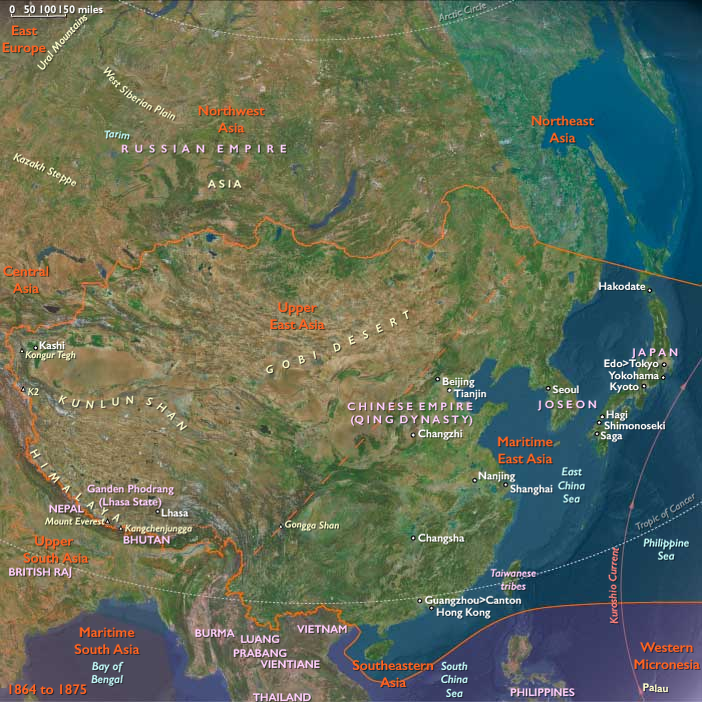
East Asia
View →Subregions