United States diplomats in Europe meet and…
October 1854 CE
Cuba's annexation has long been a goal of U.S. slaveholding expansionists, and is supported by a faction in Cuba itself.
At the national level, American leaders have been satisfied to have the island remain in weak Spanish hands so long as it does not pass to a stronger power such as Britain or France.
The Ostend Manifesto proposes a shift in foreign policy, justifying the use of force to seize Cuba in the name of national security.
It results from debates over slavery in the United States, Manifest Destiny, and the Monroe Doctrine, as slaveholders seek new territory for slavery's expansion.
During the administration of President Franklin Pierce, a pro-Southern Democrat, Southern expansionists call for acquiring Cuba as a slave state, but the outbreak of violence following the Kansas–Nebraska Act leaves the administration unsure of how to proceed.
At the suggestion of Secretary of State William L. Marcy, American ministers in Europe—Pierre Soulé for Spain, James Buchanan for Great Britain, and John Y. Mason for France—meet to discuss strategy related to an acquisition of Cuba.
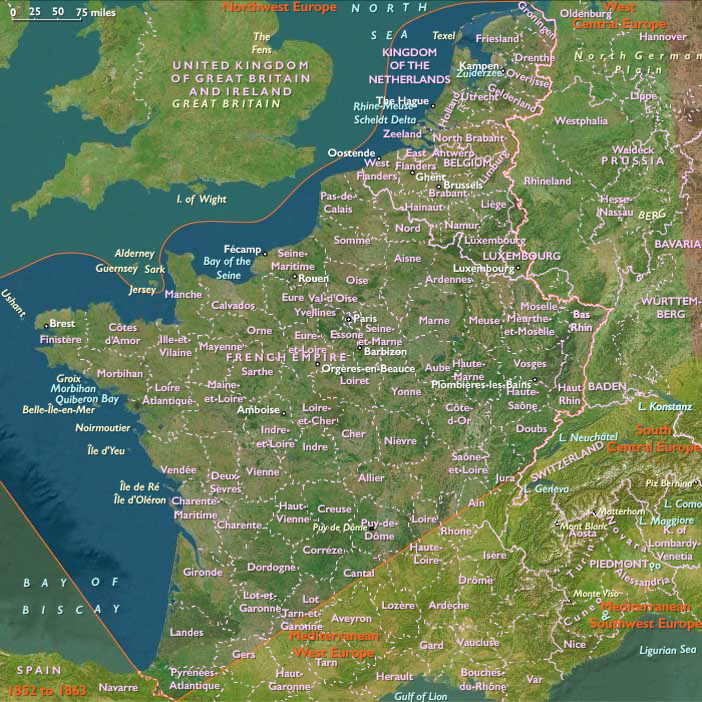
They meet secretly at Ostend, Belgium, and draft a dispatch at Aix-la-Chapelle.
The document is sent to Washington in October 1854, outlining why a purchase of Cuba would be beneficial to each of the nations and declaring that the U.S. would be "justified in wresting" the island from Spanish hands if Spain refused to sell.
To Marcy's chagrin, Soulé makes no secret of the meetings, causing unwanted publicity in both Europe and the U.S.
The administration will finally be forced to publish the contents of the dispatch, which causes it irreparable damage.
The dispatch will be published as demanded by the House of Representatives.
Dubbed the "Ostend Manifesto", it will be immediately denounced in both the Northern states and Europe.
The Pierce administration will suffer a significant setback, and the manifesto will become a rallying cry for anti-slavery Northerners.
The question of Cuba's annexation will effectively be set aside until the late nineteenth century, when support grows for Cuban independence from Spain.
Groups
Commodities
Subjects
Regions

West Europe
View →Subregions