
William Kennedy Dickson substitutes George Eastman’s tough…
1889 CE
William Kennedy Dickson substitutes George Eastman’s tough but supple celluloid film for wax cylinders in a major breakthrough in 1889.
At age nineteen in 1879, Dickson had written a letter to American inventor and entrepreneur Thomas Edison seeking employment.
He was turned down.
That same year Dickson, his mother, and two sisters moved from Britain to Virginia.
In 1883 he was finally hired to work at Edison's laboratory in Menlo Park, New Jersey.
In 1888, Edison had conceived of a device that would do "for the Eye what the phonograph does for the Ear".
That October, Edison had filed a preliminary claim, known as a caveat, with the United States Patent and Trademark Office; outlining his plans for the device.
In March 1889, a second caveat is filed, in which the proposed motion picture device is given a name, the Kinetoscope.
Dickson, now the Edison company's official photographer, is assigned to turn the concept into a reality.
Regions
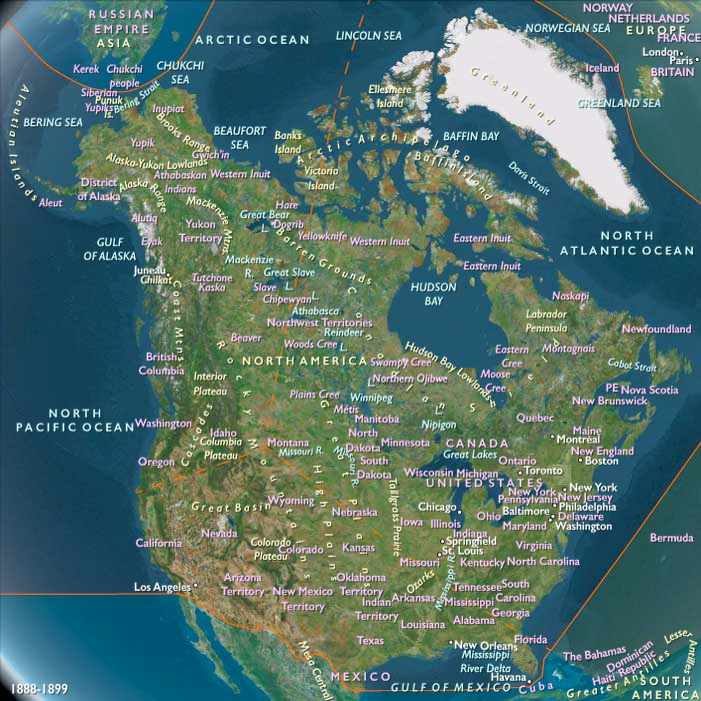
Northern North America
View →Subregions
