François-Marie Arouet, whom the world will come…
April 1718 CE
François-Marie Arouet, whom the world will come to know as Voltaire, was born in Paris, the youngest of the five children (only three of whom survived) of François Arouet (1650 – January 1, 1722), a notary who was a minor treasury official, and his wife, Marie Marguerite d'Aumart (about 1660 – July 13, 1701), from a noble family of the province of Poitou.
Some speculation surrounds his date of birth, which Voltaire always claimed to be February 20, 1694.
Arouet had been educated by the Jesuits at the Collège Louis-le-Grand (1704–1711), where he had learned Latin and Greek; later in life he will become fluent in Italian, Spanish and English.
By the time he left school, he had decided he wanted to be a writer, against the wishes of his father, who wanted him to become a notary.
Pretending to work in Paris as an assistant to a notary, he had spent much of his time writing poetry.
When his father found out, he had sent Arouet to study law, this time in Caen, Normandy.
Nevertheless, he had continued to write, producing essays and historical studies.
Arouet's wit has made him popular among some of the aristocratic families with whom he mixed.
His father had then obtained a job for him as a secretary to the French ambassador in the Netherlands, where Arouet had fallen in love with a French Protestant refugee named Catherine Olympe Dunoyer.
Their scandalous elopement had been foiled by Arouet's father and he was forced to return to France.
Most of his early life revolved around Paris.
From early on, he had had trouble with the authorities for even mild critiques of the government and religious intolerance.
These activities were to result in numerous imprisonments and exiles.
One satirical verse about the Régent led in 1717 to his imprisonment in the Bastille for eleven months; he is released in April 1718.
While there, he had written his debut play, Œdipe.
Its success establishes his reputation.
The name "Voltaire", which the author adopted in 1718, is an anagram of "AROVET LI," the Latinized spelling of his surname, Arouet, and the initial letters of "le jeune" ("the younger").
The name also echoes in reverse order the syllables of the name of a family château in the Poitou region: "Airvault".
The adoption of the name "Voltaire" following his incarceration at the Bastille is seen by many to mark Voltaire's formal separation from his family and his past.
Richard Holmes supports this derivation of the name, but adds that a writer such as Voltaire would have intended it to also convey its connotations of speed and daring.
These come from associations with words such as "voltige" (acrobatics on a trapeze or horse), "volte-face" (a spinning about to face one's enemies), and "volatile" (originally, any winged creature).
"Arouet" was not a noble name fit for his growing reputation, especially given that name's resonance with "à rouer" ("to be broken on the wheel"—a form of torture still prevalent) and "roué" (a "débauché"). (Holmes, Richard (2000). Sidetracks: explorations of a romantic biographer. HarperCollins. pp. 345–366. and "Voltaire's Grin" in New York Review of Books, November 30, 1995, pp. 49–55)
Images
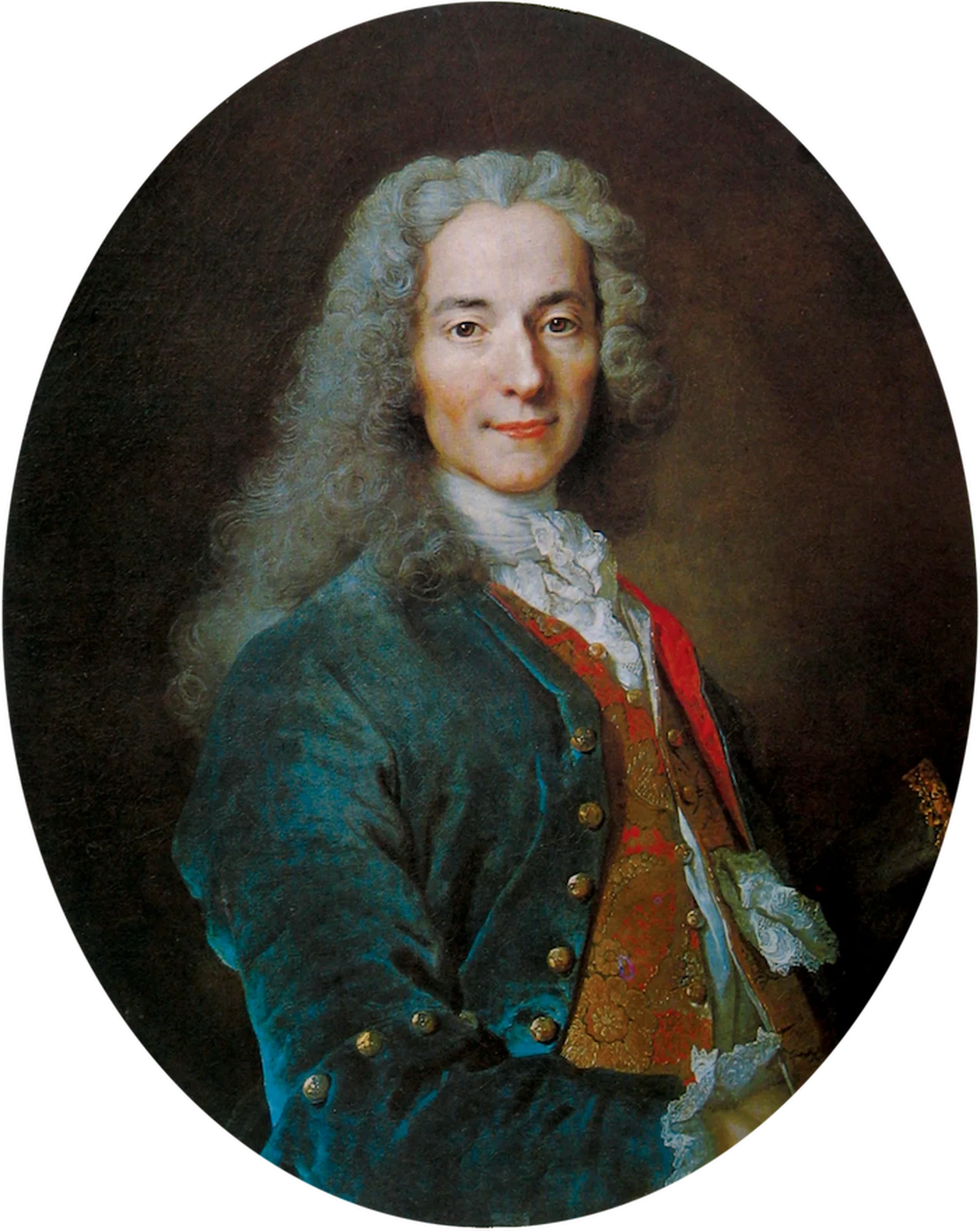
Nicolas de Largillière (1656–1746), Portrait de François-Marie Arouet, dit Voltaire (1694–1778); 1718; oil on canvas, 79 × 64 cm (31.1 × 25.2 in); Palace of Versailles
Locations
Regions
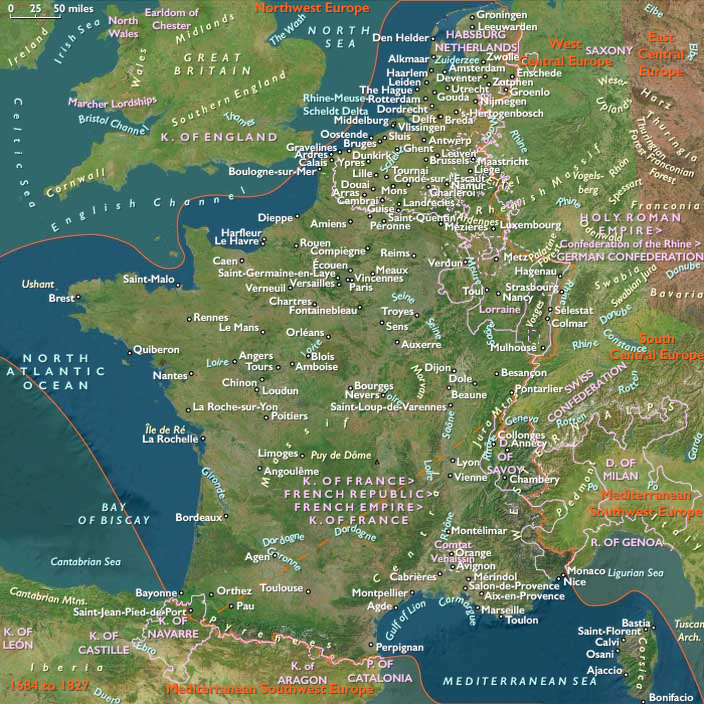
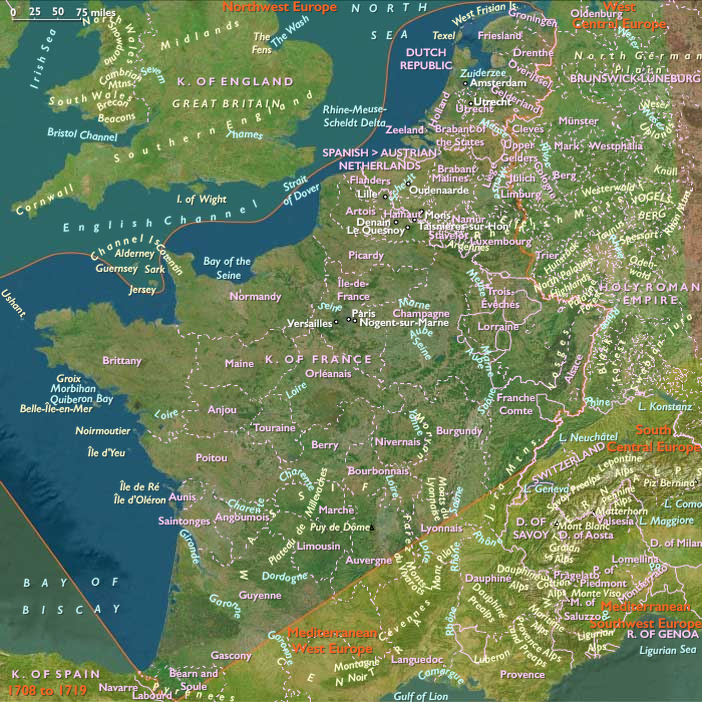
West Europe
View →Subregions