
Frederick of Simmern had been strictly educated…
September 1561 CE
Frederick of Simmern had been strictly educated in the Roman faith at his father's court and at Cologne, but, influenced by his wife, the pious princess Maria of Brandenburg, whom he had married in 1537, he had followed the Reformation, and in 1546 had made a public profession of his faith.
He had succeeded his father John II as duke of Simmern, May 18, 1557, and become elector February 12, 1559, on the death of Otto Henry.
Under his predecessor, such strict Lutherans as Tilemann Heshusius, Melanchthonians, and Calvinists had found a place in the Palatinate.
Bitter controversies had arisen among them in the summer of 1559.
Theses on the Lord's Supper prepared by the Heidelberg deacon Wilhelm Klebitz had provoked a bitter controversy between him and Heshusius.
When efforts at mediation failed, Frederick had deposed both, on September 16.
To get a clear understanding of the controversy, Frederick has spent days and nights in theological studies and has thus been led increasingly to the Reformed confession.
A disputation held in June, 1560, between the Saxon theologians Johann Stössel and Joachim Mörlin and the Heidelberg Pierre Boquin, Thomas Erastus, and Paul Einhorn had increased Frederick's dislike for the Lutheran zealots.
After the Naumburg Convention (January, 1561) Frederick had fully adopted the Reformed dogmas.
He calls Emmanuel Tremellius in March, 1561, and in September the famous Zacharius Ursinus, to Heidelberg, naming him professor in the Collegium Sapientiae.
Topics
Subjects
Regions
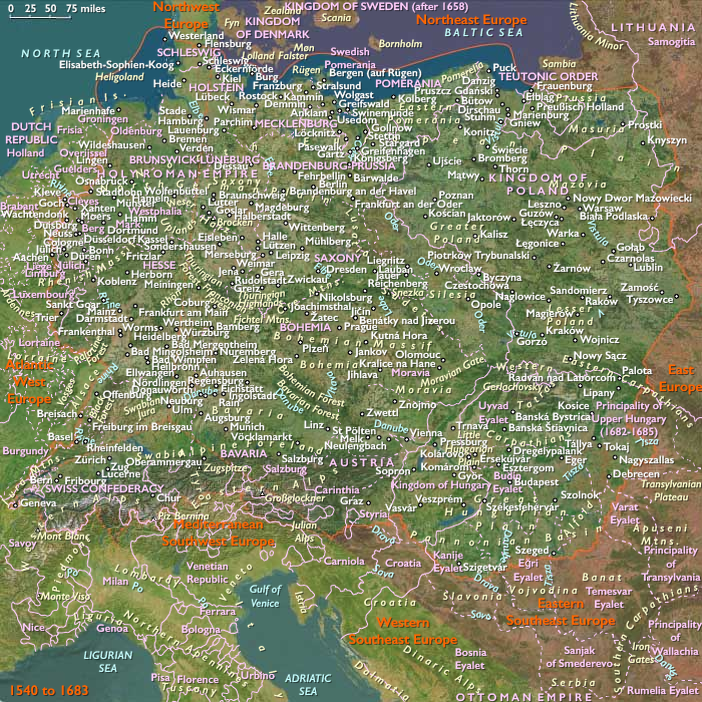
Central Europe
View →Subregions
