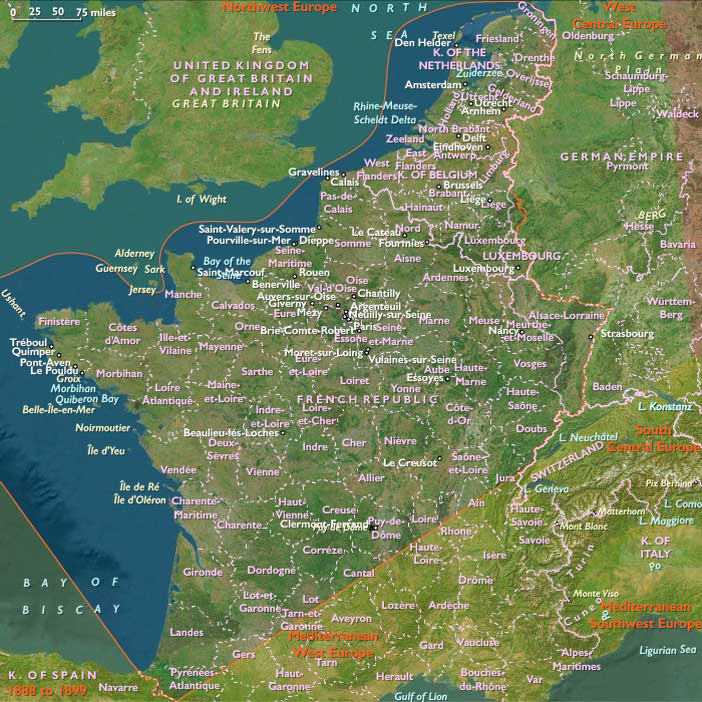
The French Third Republic is rocked by…
1888 CE to 1899 CE
An enormously popular general, he wins a series of elections in which he resigns his seat in the Chamber of Deputies and runs again in another district.
At the apogee of his popularity in January 1889, he poses the threat of a coup d'état and the establishment of a dictatorship.
With his base of support in the working districts of Paris and other cities, plus rural traditionalist Catholics and royalists, he promotes an aggressive nationalism aimed against Germany.
The elections of September 1889 mark a decisive defeat for the Boulangists.
They ae defeated by the changes in the electoral laws that prevent Boulanger from running in multiple constituencies; by the government's aggressive opposition; and by the absence of the general himself, who has placed himself in self-imposed exile to be with his mistress.
The fall of Boulanger severely undermines the political strength of the conservative and royalist elements within France; they will not recover their strength until 1940.
Revisionist scholars will argue that the Boulangist movement more often represented elements of the radical left rather than the extreme right.
Their work will become part of an emerging consensus that France's radical right is formed in part during the Dreyfus era by men who had been Boulangist partisans of the radical left a decade earlier.
Locations
Regions