
The Spanish fleet leaves Pensacola for Havana…
June 1781 CE
Gálvez appoints O'Neill the Spanish Governor of West Florida, and his Hibernia Regiment departs with the fleet.
The terms of capitulation include the entirety of British West Florida, the British garrison, large quantities of war material and supplies, and one British sloop of war.
Gálvez has the batteries and Fort Barrancas Coloradas moved nearer to the bay's entrance, and places a battery on Santa Rosa Island against British attempts to recapture Pensacola.
The Tallapoosa Muscogee Creek mission during the siege had probably been connected with or even ordered by Alexander McGillivray, a mixed-race Creek trader.
Although he is a Loyalist and holds a British commission as a colonel, he is a longtime opponent of American colonial intrusions on Creek land.
Raised as a Creek, though well educated in South Carolina, McGillivray is viewed by many Creeks a their leader.
He supplies the British in Pensacola, and had organized the British Muskogee Creek contingents who fought alongside the Choctaws.
In 1783 he will become principal Chief of the Upper Creeks, who live on the Tallapoosa River at Little Tallassee (near today's Montgomery, Alabama).
His support for Spain will later result in the 1784 Treaty of Pensacola, in which Spain guarantees to respect Creek territory.
McGillivray will personally sign the treaty and spend the rest of his life in Pensacola.
People
Groups
Waldeck, County of (later Principality of)
View →
Muscogee, or Creek, people (Amerind tribe)
View →
Choctaw (Amerind tribe)
View →
Chickasaw (Amerind tribe)
View →
New Spain, Viceroyalty of
View →
France, (Bourbon) Kingdom of
View →
Hessians
View →
Spain, Bourbon Kingdom of
View →
Britain, Kingdom of Great
View →
West Florida
View →
Louisiana (Spanish colony)
View →
Loyalists (American Revolution)
View →
Pennsylvania, Commonwealth of (U.S.A.)
View →
Maryland, State of (U.S.A.)
View →
Topics
Regions
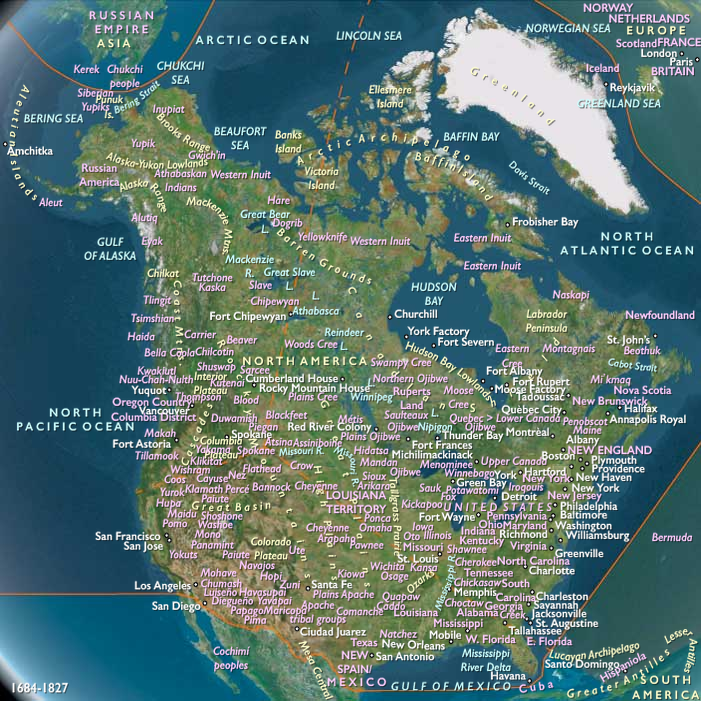
Northern North America
View →Subregions
