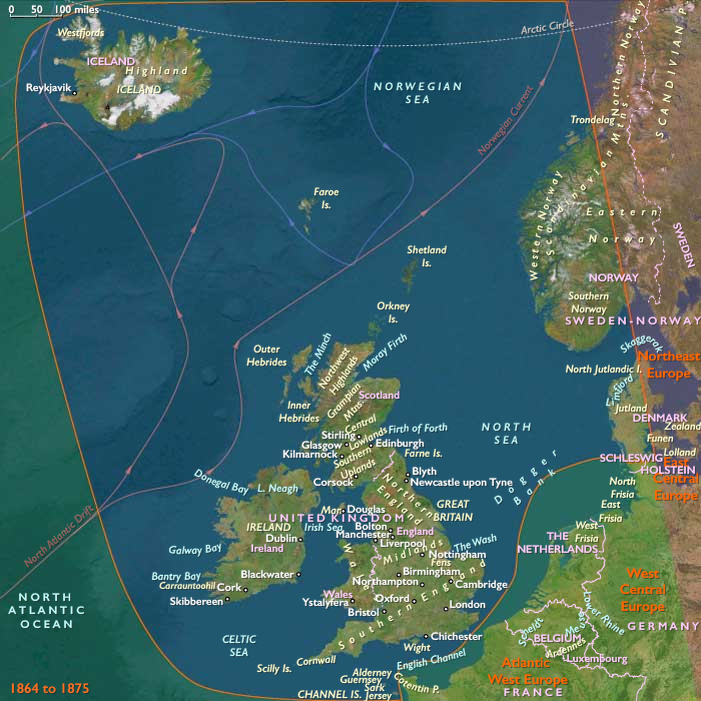
George Peabody had established the Peabody Donation…
February 1864 CE
George Peabody had established the Peabody Donation Fund, which continues to this day as the Peabody Trust, in April 1862 to provide housing of a decent quality for the "artisans and labouring poor of London".
The trust's first dwellings, designed by H.A. Darbishire in a Jacobethan style, are opened in Commercial Street, Spitalfields in February 1864.
Peabody was born in South Danvers (now Peabody), Massachusetts.
His family had Puritan antecedents in the state, but was poor, and as one of eight children George had suffered some deprivations during his upbringing: these factors influence his later philanthropic tendencies.
His birthplace at 205 Washington Street in Peabody is now the George Peabody House Museum, a museum dedicated to preserving his life and legacy.
While serving as a volunteer in the War of 1812, Peabody had met Elisha Riggs, who, in 1814, had provided financial backing for what became the wholesale dry goods firm of Riggs, Peabody & Co., specializing in importing dry goods from Britain.
In 1816, he had moved to Baltimore, where he would live for the next twenty years.
Branches had been opened in New York and Philadelphia in 1822.
Riggs had retired in 1829, and the firm had become Peabody, Riggs & Co., with Peabody as senior partner.
Peabody had first visited the UK in 1827 to purchase wares, and to negotiate the sale of American cotton in Lancashire.
He had subsequently opened a branch office in Liverpool, and British business began to play an increasingly important role in his affairs.
He appears to have had some help in establishing himself from William and James Brown, sons of another successful Baltimore businessman, the Irishman Alexander Brown, who had managed their father's Liverpool office, opened in 1810.
In 1835, Peabody had founded the banking firm of George Peabody & Co. in London to meet the increasing demand for securities issued by the American railroads, and – although Peabody had continued to deal in dry goods and other commodities – he has increasingly focused his attentions on merchant banking.
The bank has risen to become the premier American house in London.
Peabody frequently entertains and provides letters of introduction for American businessmen visiting London, and has become known for the Anglo-American dinners he hosts in honor of American diplomats and other worthies, and in celebration of the Fourth of July.
In 1851, when the US Congress had refused to support the American section at the Great Exhibition at the Crystal Palace, Peabody had advanced £3000 to improve the exhibit and uphold the reputation of the United States.
Peabody is the acknowledged father of modern philanthropy, having established the practice that will later be followed by Johns Hopkins, Andrew Carnegie, John D. Rockefeller and Bill Gates.
In the United States, his philanthropy largely takes the form of educational initiatives.
In Britain, it takes the form of providing housing for the poor.
Peabody's philanthropy is recognized and on July 10, 1862 he had been made a Freeman of the City of London, the motion being proposed by Charles Reed in recognition of his financial contribution to London's poor.
He had thus become the first of only two Americans (the other being Dwight D. Eisenhower) to have received the award.
Locations
Groups
Regions
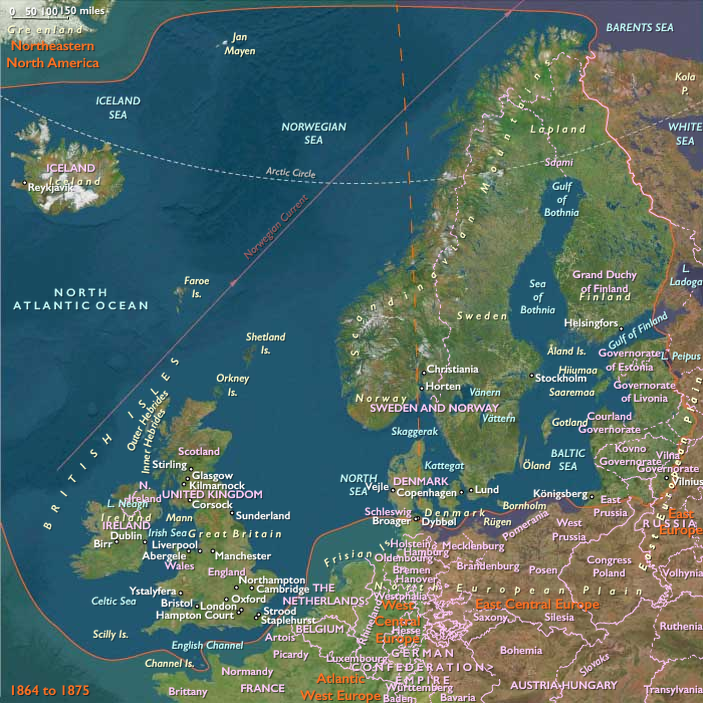
North Europe
View →Subregions