Gerard van Honthorst, initially trained at the…
1625 CE
Gerard van Honthorst, initially trained at the school of Abraham Bloemaert, who exchanged the style of the Franckens for Italianate models at the beginning of the sixteenth century, had traveled to Italy in 1616, where he had been influenced heavily by the style of Caravaggio.
Returning home in about 1620, after acquiring a considerable practice in Rome, he has set up a flourishing school in Utrecht.
Together with his colleague Hendrick ter Brugghen, he represents the so-called Dutch Caravaggisti.
He was in 1623 president of the Guild of St. Luke in Utrecht, when he also married.
He soon become so fashionable that Sir Dudley Carleton, English envoy at The Hague, recommends his works to the Earl of Arundel and Lord Dorchester.
He hosts a dinner for Rubens in 1626, and paints him as the honest man sought for and found by Diogenes.
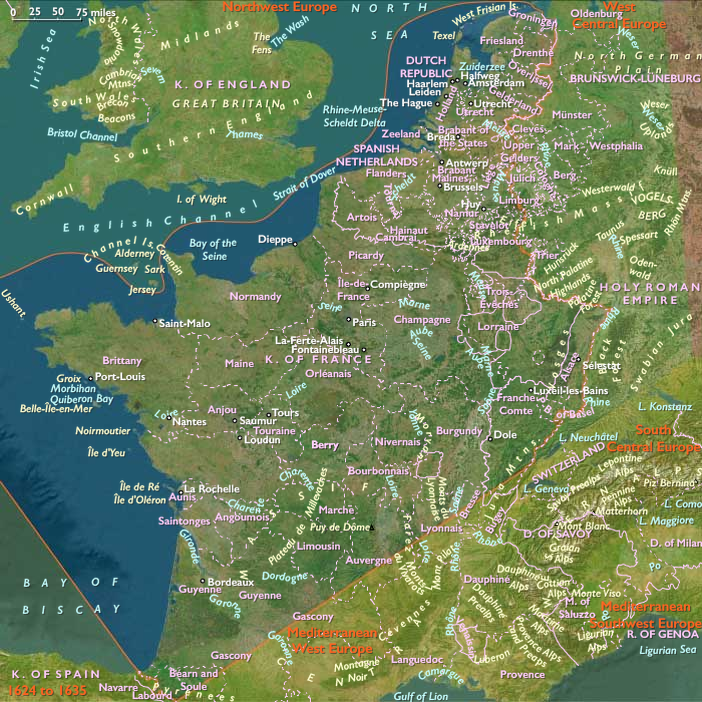
His The Matchmaker, painted in 1625, shows the use of Caravaggio-inspired chiaroscuro.
Images

Gerard van Honthorst: The Matchmaker (1625) oil on canvas, 71 cm × 104 cm, Centraal Museum, Utrecht, The Netherlands
Locations
People
Subjects
Regions
West Europe
View →Subregions