
German chancellor Otto von Bismarck has long …
Years: 1864 - 1875
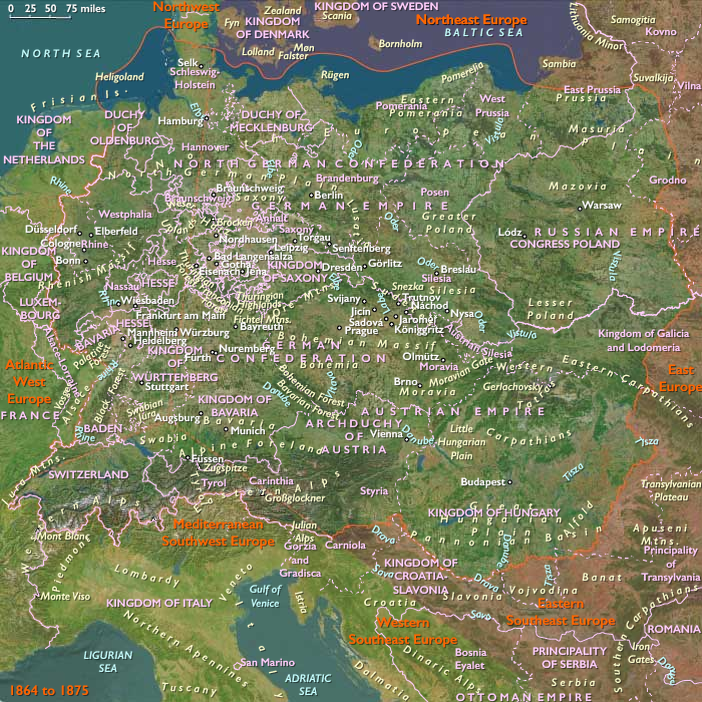
German chancellor Otto von Bismarck has long been an opponent of Austria because both states seek primacy within the same area—Germany.
Austria has been weakened by reverses abroad, including the loss of territory in Italy, and by the 1860s, because of clumsy diplomacy, has no foreign allies outside Germany.
Bismarck uses a diplomatic dispute to provoke Austria to declare war on Prussia in 1866.
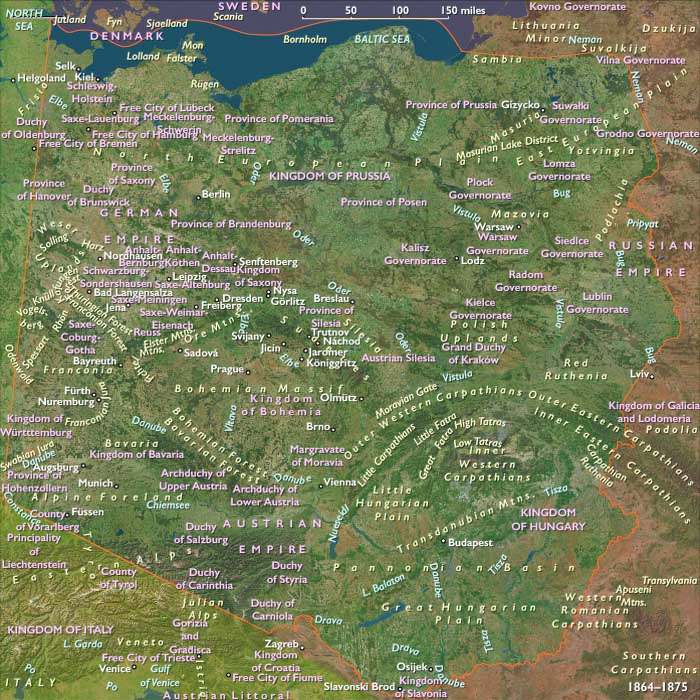
Against expectations, Prussia quickly wins the Seven Weeks' War (also known as the Austro-Prussian War) against Austria and its south German allies.
Bismarck imposes a lenient peace on Austria because he recognizes that Prussia might later need the Austrians as allies, but he deals harshly with the other German states that had resisted Prussia and
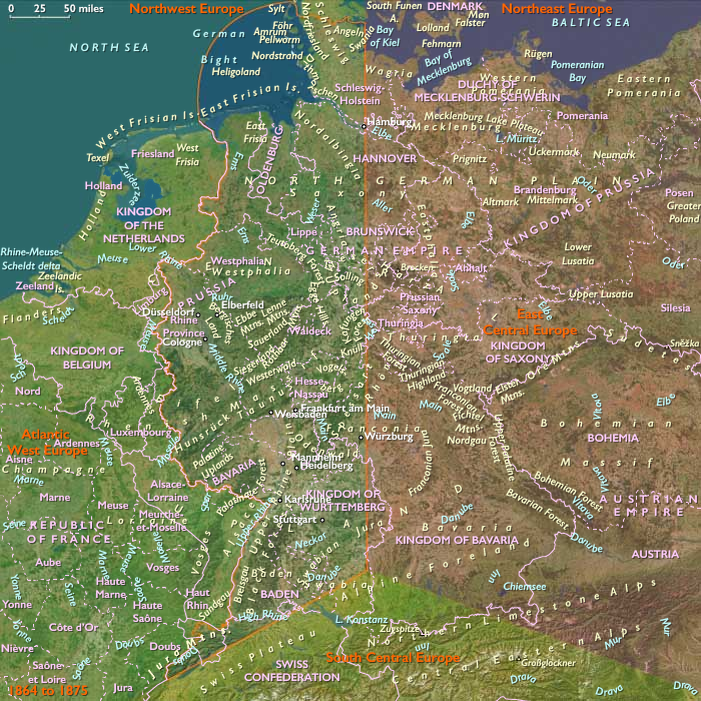
expanded Prussian territory by annexing Hanover, Schleswig-Holstein, some smaller states, and the city of Frankfurt.
The German Confederation is replaced by the North German Confederation and is furnished with both a constitution and a parliament.
Austria is excluded from Germany.
South German states outside the confederation—Baden, Wurttemberg, and Bavaria—are tied to Prussia by military alliances.
In the Seven Weeks' War, the support they had given Austria had been lukewarm.
Austria has been weakened by reverses abroad, including the loss of territory in Italy, and by the 1860s, because of clumsy diplomacy, has no foreign allies outside Germany.
Bismarck uses a diplomatic dispute to provoke Austria to declare war on Prussia in 1866.
Against expectations, Prussia quickly wins the Seven Weeks' War (also known as the Austro-Prussian War) against Austria and its south German allies.
Bismarck imposes a lenient peace on Austria because he recognizes that Prussia might later need the Austrians as allies, but he deals harshly with the other German states that had resisted Prussia and
expanded Prussian territory by annexing Hanover, Schleswig-Holstein, some smaller states, and the city of Frankfurt.
The German Confederation is replaced by the North German Confederation and is furnished with both a constitution and a parliament.
Austria is excluded from Germany.
South German states outside the confederation—Baden, Wurttemberg, and Bavaria—are tied to Prussia by military alliances.
In the Seven Weeks' War, the support they had given Austria had been lukewarm.
Locations
People
Groups
- Germans
- Schleswig, Duchy of
- Holstein, Duchy of
- Prussia, Kingdom of
- Austrian Empire
- Baden, Grand Duchy of
- Württemberg, Kingdom of
- Bavaria, Kingdom of
- Hanover, Kingdom of
- German Confederation
- Frankfurt, Free City of
- Schleswig-Holstein, Prussian Province of of
- Hanover, Prussian Province of
- German Confederation, North
Topics
Subjects
Regions
Subregions
Related Events
Showing 10 events out of 14241 total
Years: 1864 - 1875
Locations
People
Groups
- Germans
- Schleswig, Duchy of
- Holstein, Duchy of
- Prussia, Kingdom of
- Austrian Empire
- Baden, Grand Duchy of
- Württemberg, Kingdom of
- Bavaria, Kingdom of
- Hanover, Kingdom of
- German Confederation
- Frankfurt, Free City of
- Schleswig-Holstein, Prussian Province of of
- Hanover, Prussian Province of
- German Confederation, North
Topics
Subjects
Regions
Subregions