
Giulio Cesare Vanini had studied philosophy and…
February 1619 CE
Giulio Cesare Vanini had studied philosophy and theology at Rome, and after his return to Lecce had applied himself to the physical studies which had come into vogue with the Renaissance.
Like Giordano Bruno, though considered intellectually inferior to him, he is among those who have led the attack on the old scholasticism and help to lay the foundation of modern philosophy.
Vanini resembles Bruno, not only in his wandering life and in his tragic death, but also in his anti-Christian ideas.
From Naples he had gone to Padua, where he had come under the influence of the Alexandrist Pomponazzi, whom he styles his divine master.
At Padua he had studied law, and been ordained priest.
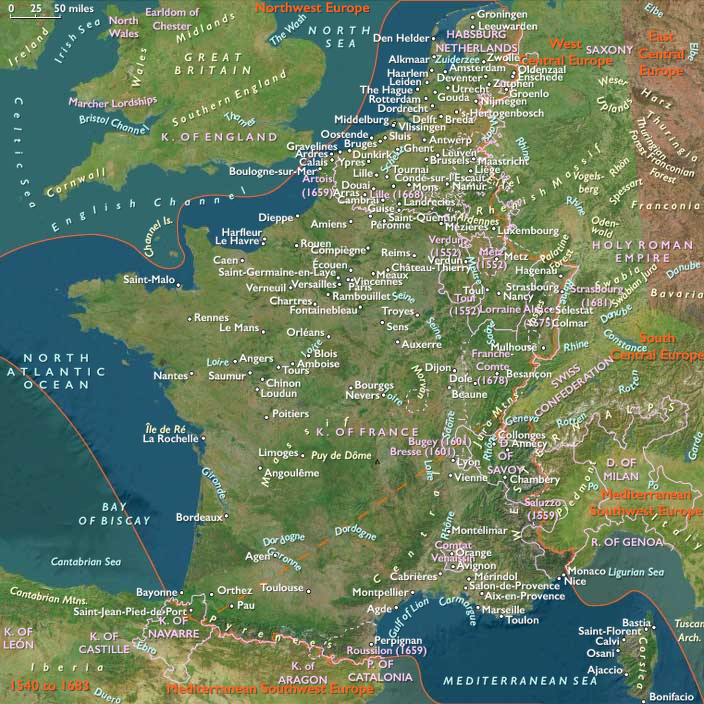
Subsequently he led a roving life in France, Switzerland and the Low Countries, supporting himself by giving lessons and disseminating anti-religious views.
He had been obliged to flee from Lyon to England in 1614.
Returning to Italy he had made an attempt to teach in Genoa, but was driven once more to France, where he tried to clear himself of suspicion by publishing a book against atheists, Amphitheatrum Aeternae Providentiae Divino-Magicum (1615).
Though the definitions of God are somewhat pantheistic, the book is sufficiently orthodox.
The arguments are largely ironic, however, and cannot be taken as expounding his real views.
He had in 1616 published a radically heterodox book in France, De admirandis naturae reginae deaeque mortalium arcanis, which, originally certified by two doctors of the Sorbonne, was later reexamined and condemned.
Vanini then left Paris, where he had been staying as chaplain to the marechal de Bassompierre, and began to teach in Toulouse.
He had been arrested in November 1618 for his opinion, as expressed in his second book, that the world is eternal and governed by immanent law, and after a prolonged trial is condemned, as an atheist, to have his tongue cut out, and to be strangled at the stake, his body to be afterwards burned to ashes.
The sentence is executed on the 9th of February 1619.
Locations
Topics
Regions
West Europe
View →Subregions
