
Guido Starhemberg, who had in 1708 been …
Years: 1710 - 1710
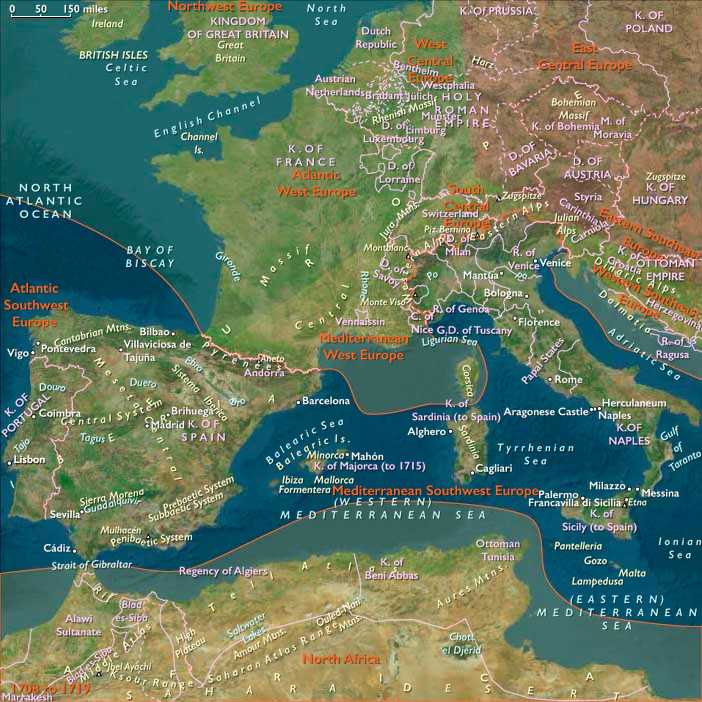
Guido Starhemberg, who had in 1708 been appointed Supreme commander of the Austrians in Spain, succeeds in conquering Madrid in 1710 together with General James Stanhope, after the victories of Almenar and Saragossa.
Philip V, having abandoned Madrid on September 9, had gone to Valladolid.
Archduke Charles, entering a very hostile and almost empty Madrid on September 28, had commented: "This city is a desert!”
The invasion of 1710 has proved to be a repetition of the invasion of 1706: the Alliance's twenty-three thousand men, reduced by a loss of two thousand in the actions at Almenara and Saragossa, by constant skirmishes with the guerrilleros, and by disease, are unequal to the task of holding their conquests and occupying the two Castiles.
The Portuguese are unable to offer help.
The Bourbon army is rapidly refitted and reorganized by French general Joseph, duc de Vendôme, who is lent to Philip V's service by the latter's grandfather, the Sun King.
Spanish volunteers and regular units are joined by the Irish brigade and by French troops secretly directed to enter Spanish service.
The dangerous strategic situation and the lack of support by the people of Madrid for the Habsburg pretender forces the Alliance to evacuates the city on November 9 and embark on a retreat to Catalonia.
Locations
People
- Charles VI, Holy Roman Emperor, King of the Romans (King of Germany)
- George I of Great Britain
- Guido Starhemberg
- James Stanhope, 1st Earl Stanhope
- Louis Joseph de Bourbon, Duke of Vendôme
- Louis XIV of France
- Philip V of Spain
Groups
- Austria, Archduchy of
- France, (Bourbon) Kingdom of
- Habsburg Monarchy, or Empire
- Portugal, Bragança Kingdom of
- Grand Alliance
- Brunswick-Lüneburg, Electorate of (Electorate of Hanover)
- Spain, Bourbon Kingdom of
- Britain, Kingdom of Great
Topics
Commodoties
Subjects
Regions
Subregions

Years: 1710 - 1710
Locations
People
- Charles VI, Holy Roman Emperor, King of the Romans (King of Germany)
- George I of Great Britain
- Guido Starhemberg
- James Stanhope, 1st Earl Stanhope
- Louis Joseph de Bourbon, Duke of Vendôme
- Louis XIV of France
- Philip V of Spain
Groups
- Austria, Archduchy of
- France, (Bourbon) Kingdom of
- Habsburg Monarchy, or Empire
- Portugal, Bragança Kingdom of
- Grand Alliance
- Brunswick-Lüneburg, Electorate of (Electorate of Hanover)
- Spain, Bourbon Kingdom of
- Britain, Kingdom of Great
Topics
Commodoties
Subjects
Regions
Subregions