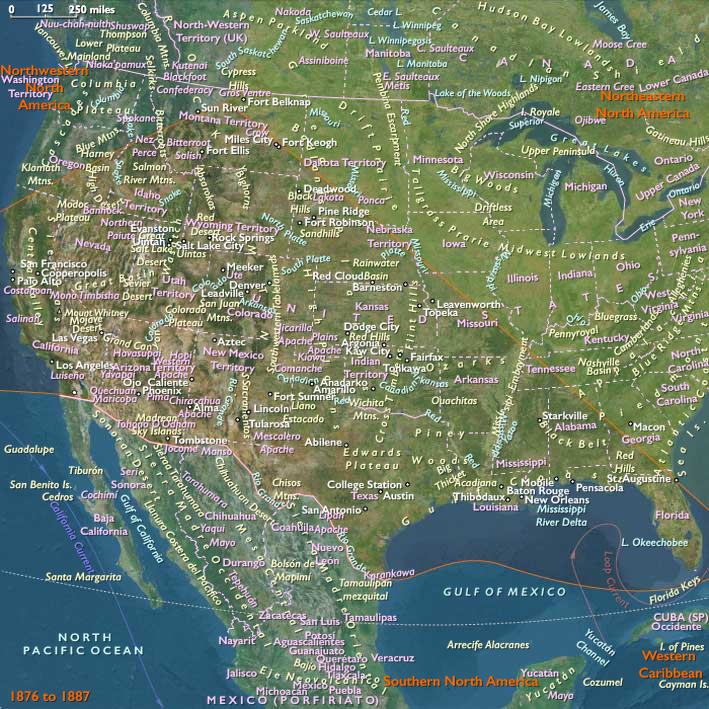
Gulf and Western North America (1876–1887 CE):…
1876 CE to 1887 CE
Gulf and Western North America (1876–1887 CE): Redemption, Conflict, and Transformation
Southern "Redemption"
Following the end of Reconstruction, southern white Democrats, calling themselves "Redeemers," regain control over southern politics. These Redeemers systematically dismantle Reconstruction-era reforms, curtail African American civil rights, and establish a framework for racial segregation and discrimination that will dominate the South for decades.
Continuing Indigenous Struggles and Reservation Policy
Indigenous peoples continue to endure conflicts and forced relocation throughout this period. The U.S. government aggressively pursues policies aimed at assimilating Native Americans into mainstream society, confining them to reservations and undermining their traditional lifestyles. Plains tribes, already devastated by the near extinction of buffalo herds, face further displacement, loss of sovereignty, and cultural erosion.
Economic and Social Shifts
Economic and social changes accelerate during this era. The completion of additional transcontinental railroad lines further spurs westward migration, settlement, and economic expansion. Settlers flood into the West, transforming the region's economy and society, but also intensifying competition over land and resources, leading to heightened tensions and further marginalization of indigenous communities.
The Closing of the Frontier
This period also witnesses the gradual "closing" of the American frontier. By the late 1880s, the U.S. Census Bureau declares that no discernible frontier line remains. The loss of this frontier marks a significant shift in American cultural identity, ending an era defined by westward expansion and frontier settlement.
Key Historical Developments
-
Redeemers dismantle Reconstruction policies, establishing a racially segregated South.
-
Ongoing displacement and assimilation efforts directed against indigenous peoples.
-
Continued economic expansion and settlement spurred by new railroad construction.
-
Official declaration of the closure of the American frontier by the end of the 1880s.
Long-Term Consequences and Historical Significance
The years from 1876 to 1887 mark a turning point in Gulf and Western North America, characterized by profound transformations in political control, indigenous displacement, and economic development. The Redeemer era shapes racial and political dynamics for generations, while the final settlement of the frontier fundamentally alters American national identity and sets the stage for future economic growth and conflicts.
Regions
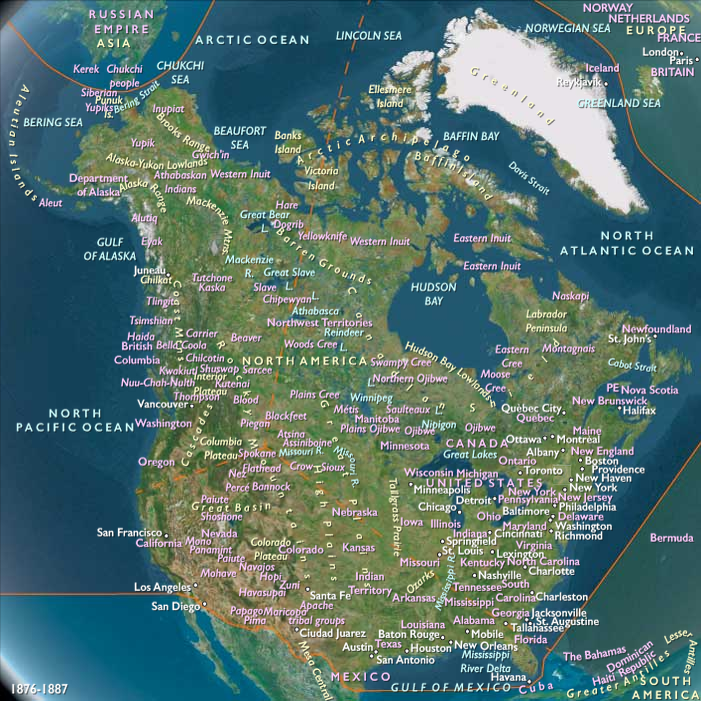
Northern North America
View →Subregions