
Gulf and Western North America (1984–1995 CE):…
1984 CE to 1995 CE
Gulf and Western North America (1984–1995 CE): Technological Revolution, Economic Integration, and Social Tensions
Technological Advancements and Digital Expansion
During the period from 1984 to 1995, technological innovations originating primarily from Silicon Valley, California, profoundly transform the global economy and everyday life. The widespread adoption of personal computers, spurred by landmark products like the Apple Macintosh (1984) and Microsoft Windows (1985), initiates the digital revolution. These innovations significantly alter business, education, communication, and entertainment across the region and beyond.
Economic Shifts and Trade Agreements
Economic strategies during this era focus heavily on globalization and regional integration. The implementation of the North American Free Trade Agreement (NAFTA) in 1994—negotiated among the United States, Canada, and Mexico—dramatically reshapes economic relationships in the Gulf region, particularly Texas and other border states. NAFTA stimulates cross-border trade, significantly expands manufacturing and trade networks, and accelerates economic integration, albeit accompanied by considerable controversy over labor standards, environmental impact, and economic displacement.
Environmental Challenges and Natural Disasters
The Gulf Coast faces serious environmental and climatic challenges, including damaging hurricanes and floods. Significant storms such as Hurricane Andrew (1992) cause extensive destruction in Florida and Louisiana, highlighting regional vulnerabilities and prompting improvements in emergency management and infrastructure resilience. Additionally, California experiences severe earthquakes, notably the devastating Loma Prieta earthquake (1989) and the Northridge earthquake (1994), which underscore vulnerabilities in urban planning and building standards.
Immigration, Multiculturalism, and Social Tensions
Immigration continues to reshape demographics and culture, particularly in California, Texas, and Florida. The growth of diverse Latin American and Asian populations contributes significantly to the multicultural fabric of urban centers such as Los Angeles, Houston, San Francisco, and Miami. However, rising immigration also prompts social tensions and heated political debates, exemplified by California's controversial Proposition 187 (1994), which attempts to restrict public services to undocumented immigrants.
Shifts in Politics and Policy
The conservative political movement remains strong, exemplified by the presidencies of Ronald Reagan (until 1989) and George H. W. Bush (1989–1993), both significantly influencing economic policies, foreign relations, and domestic governance. However, the election of President Bill Clinton in 1992 signals a shift toward centrist Democratic policies emphasizing economic reform, technology-driven economic expansion, and free trade agreements.
Cultural Dynamics and Entertainment Innovation
Hollywood, as the global capital of entertainment, continues to dominate international popular culture. The expansion of cable television, home video, and the early stages of the internet significantly alter media consumption. Simultaneously, musical innovations emerge from cities like Los Angeles and Miami, including the rise of West Coast hip-hop and Latin pop, shaping global cultural trends.
Key Historical Developments
-
Expansion of the personal computing revolution and digital technologies from Silicon Valley.
-
The establishment of NAFTA in 1994, reshaping regional economic dynamics.
-
Major natural disasters, including Hurricane Andrew (1992) and California earthquakes (1989, 1994), prompting infrastructural changes.
-
Continued immigration reshaping demographics and leading to policy debates such as Proposition 187.
-
Shifts in national politics from conservative Republican policies toward centrist Democratic governance under Bill Clinton.
-
Evolution in global entertainment and culture driven by Hollywood and emerging musical trends.
Long-Term Consequences and Historical Significance
The years 1984–1995 mark a profound era of technological advancement, economic globalization, and shifting social dynamics in Gulf and Western North America. Digital technologies developed during this period irrevocably transform global communication, commerce, and daily life. Meanwhile, policies like NAFTA significantly alter economic relationships, providing both opportunities and ongoing challenges. These transformative shifts continue to define the region economically, culturally, and politically into the twenty-first century.
Groups
Commodities
Subjects
Regions
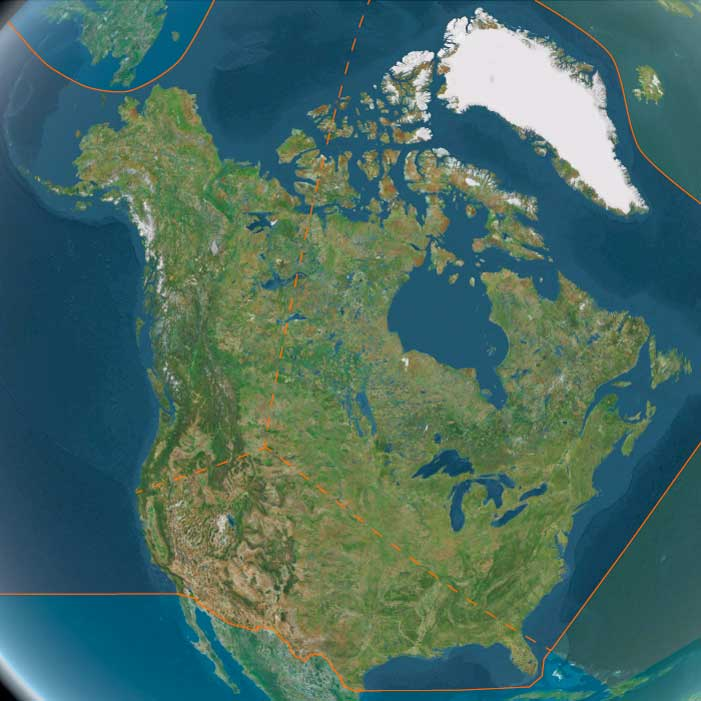
Northern North America
View →Subregions
