
Haiti's constitution forbids whites from owning land, …
Years: 1827 - 1827
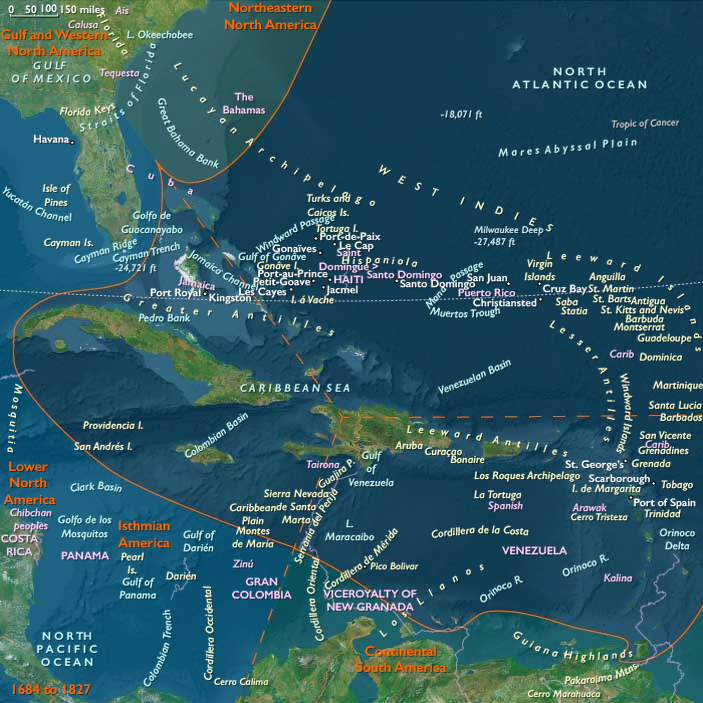
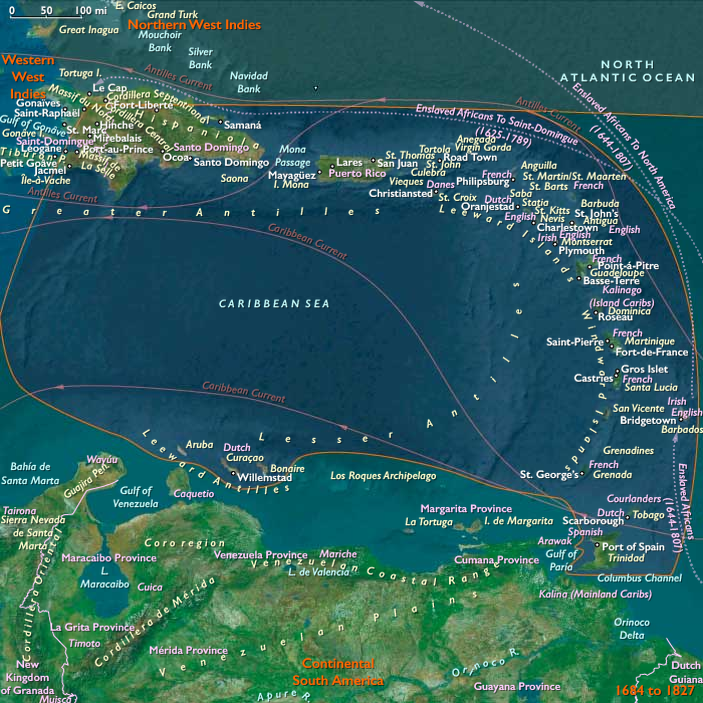
Haiti's constitution forbids whites from owning land, and the major landowning families have been forcibly deprived of their properties.
Most have emigrated to Cuba, Puerto Rico, or Gran Colombia, usually with the encouragement of Haitian officials, who acquired their lands.
The Haitians, who associate the Roman Catholic Church with the French slave-masters who had exploited them before independence, have confiscated all church property, deported all foreign clergy, and severed the ties of the remaining clergy to the Vatican.
Santo Domingo’s university, the oldest in the Western Hemisphere, lacking both students and teachers, has closed down.
In order to receive diplomatic recognition from France, Haiti has been forced to pay an indemnity of one hundred and fifty million francs to the former French colonists, which had subsequently been lowered to sixty million francs, and Haiti has imposed heavy taxes on the eastern part of the island.
Since Haiti is unable to adequately provision its army, the occupying forces largely survive by commandeering or confiscating food and supplies at gunpoint.
Attempts to redistribute land conflict with the system of communal land tenure (terrenos comuneros), which had arisen with the ranching economy, and newly emancipated slaves resent being forced to grow cash crops under Boyer's Code Rural.
Locations
People
Groups
- Papal States (Republic of St. Peter)
- Christians, Roman Catholic
- Haiti, Republic of
- Santo Domingo (Haitian-occupied)
Topics
Commodoties
Subjects
Regions
Subregions
Years: 1827 - 1827
Locations
People
Groups
- Papal States (Republic of St. Peter)
- Christians, Roman Catholic
- Haiti, Republic of
- Santo Domingo (Haitian-occupied)
Topics
Commodoties
Subjects
Regions
Subregions