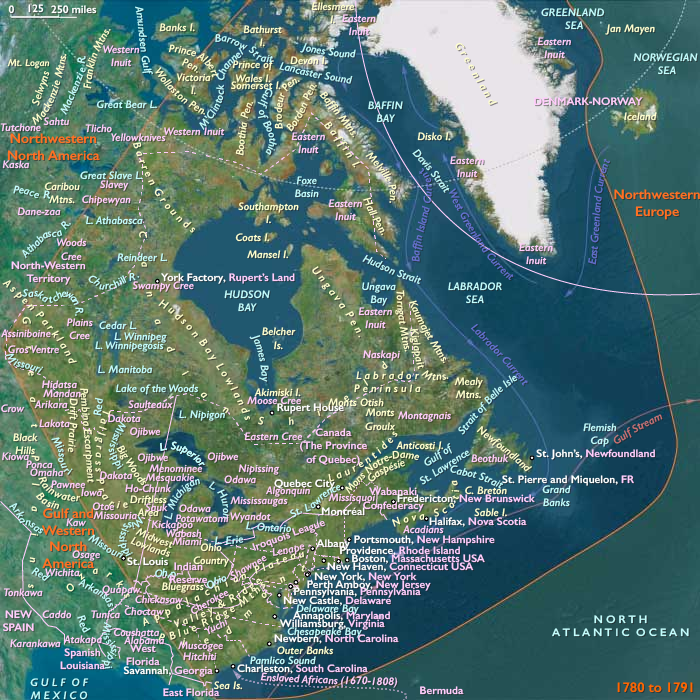
Nova Scotia has been invaded regularly by…
June 1782 CE
Throughout the war, American privateers have devastated the maritime economy by raiding many of the coastal communities.
There have been constant attacks by privateers, such as the numerous raids on Liverpool (October 1776, March 1777, September 1777, May 1778, September 1780) and on Annapolis Royal (1781).
There was also a naval engagement with a French fleet at Spanish River, Cape Breton Island (1781).
On November 17, 1775, Washington's Marblehead Regiment aboard the Hancock and Franklin had made an unopposed landing at Charlottetown, Prince Edward Island.
Three days later, they expedited to Nova Scotia and raided Canso.
In 1779, American privateers had returned to Canso and destroyed the fisheries, which were worth ₤50,000 a year to Britain.
The 84th Regiment had been defending Nova Scotia, attacking an American privateer ship off of Lunenburg, Nova Scotia (1775).
The 84th was led by Captain John MacDonald.
They boarded the warship when some of its crew were ashore seeking plunder, captured the crew, and sailed her into Halifax.
There have also been Patriot attacks on Nova Scotia by land, such as the Battle of Fort Cumberland and the Siege of Saint John (1777). There was the constant threat that American Patriots would attack Halifax by land.
Captain Noah Stoddard's vessel the Scammell had been commissioned in April 1782 and made a plan in Boston to raid Lunenburg.
Soon after, he had rescued the sixty American prisoners on board the HMS Blonde, which had been wrecked on Seal Island, Nova Scotia.
Stoddard had allowed the British crew to return to Halifax in the HMS Observer (which was involved in the Naval battle off Halifax en route).
On June 30, the day before the cheduled raid on Lunenburg, Stoddard and others are involved in gathering intelligence at Chester, Nova Scotia for the raid.
Locations
Groups
Topics
Regions
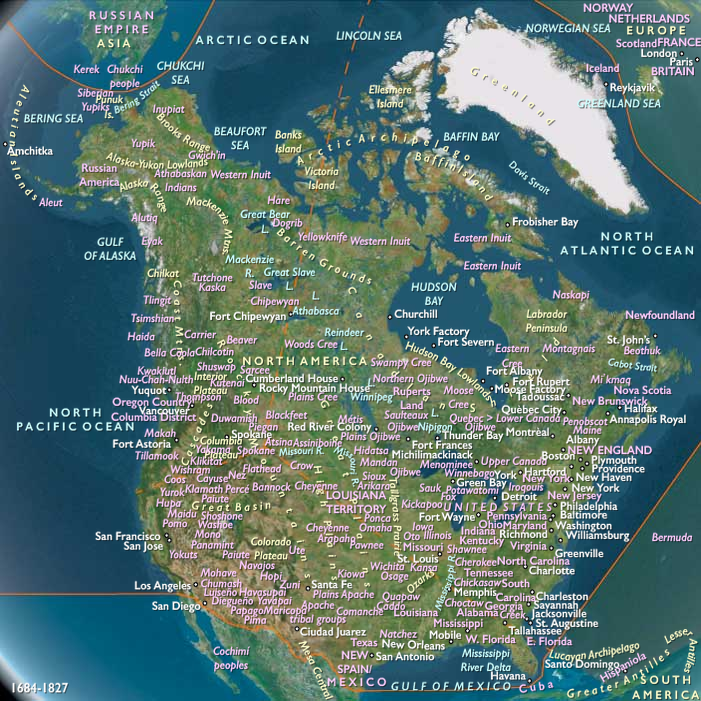
Northern North America
View →Subregions