
Filters:
Stendahl's The Charterhouse of Parma, written …
Years: 1839 - 1839
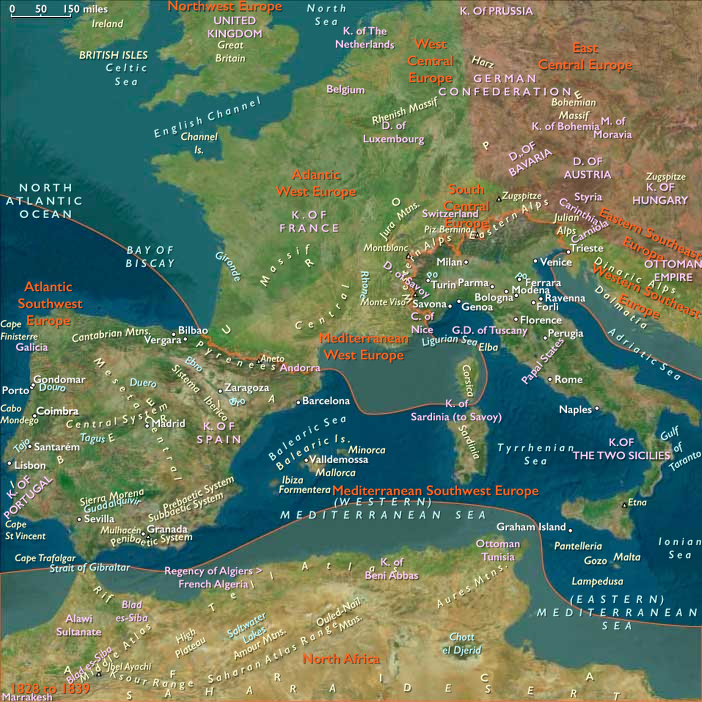
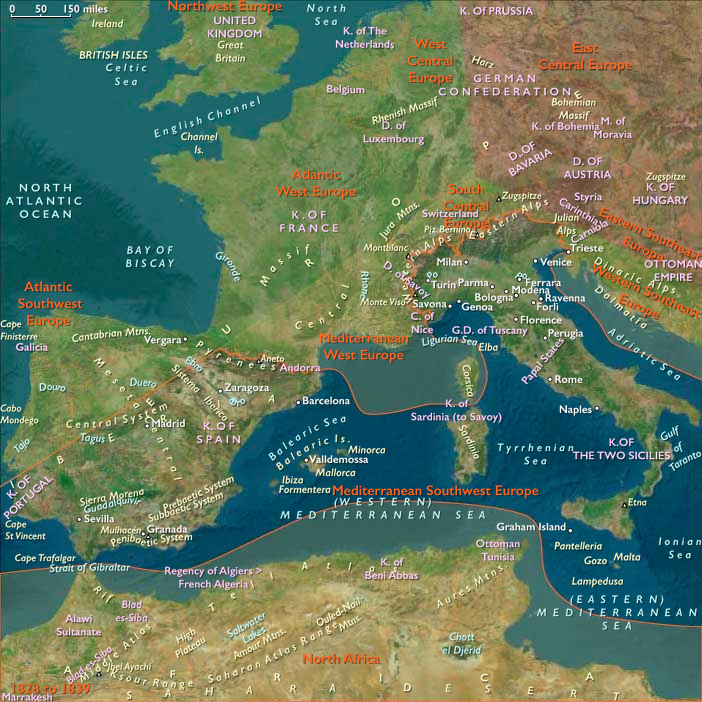
Stendahl's The Charterhouse of Parma, written in fifty-two days and published in 1839, is set in Italy, which he considers a more sincere and passionate country than Restoration France.
An aside in this novel, referring to a character who contemplates suicide after being jilted, speaks about his attitude towards his home country: "To make this course of action clear to my French readers, I must explain that in Italy, a country very far away from us, people are still driven to despair by love."
Drawing from the Napoleonic Era and the Italian Renaissance to create a fanciful setting for his reexamination of the theme of the individual against society, Stendahl tells the story of an Italian nobleman in the Napoleonic era.
Later admired by Balzac, Tolstoy, André Gide and Henry James, and eventually adapted for opera, film and television, the novel is inspired by an inauthentic Italian account of the dissolute youth of Alessandro Farnese.
Stendahl, born Henri Marie Beyle, the son of a doctrinaire, unimaginitive, well-to-do Grenoble lawyer that he grew up resenting, had entered the Polytechnic Institute in Paris in 1799.
Trained by his maternal grandfather in rationalism and emotionally close to his aunt following the death of his adored mother at seven years of age, the seventeen-year-old Beyle had dreamed of writing plays rather than attending classes.
The military and theatrical worlds of the First French Empire were a revelation to Beyle.
He had been named an auditor with the Conseil d'État on August 3, 1810, and thereafter took part in the French administration and in the Napoleonic wars in Italy.
He had traveled extensively in Germany and had been part of Napoleon's army in the 1812 invasion of Russia.
Stendhal had witnessed the burning of Moscow from just outside the city.
Appointed Commissioner of War Supplies and sent to Smolensk to prepare provisions for the returning army, he had crossed the Berezina River by finding a usable ford rather than the overwhelmed pontoon bridge, which probably saved his life and those of his companions.
Stendhal had arrived in Paris in 1813, largely unaware of the general fiasco that the retreat had become.
Stendhal had become known, during the Russian campaign, for keeping his wits about him, and maintaining his "sang-froid and clear-headedness."
He also maintained his daily routine, shaving each day during the retreat from Moscow.
After the 1814 Treaty of Fontainebleau, he left for Italy, where he has settled in Milan.
He forms a particular attachment to Italy, where he will spend much of the remainder of his career, serving as French consul at Trieste and Civitavecchia.
Stendhal's Memoirs of a Tourist, published in 1838, further contributes to the development of the cult of the self in literature.
An aside in this novel, referring to a character who contemplates suicide after being jilted, speaks about his attitude towards his home country: "To make this course of action clear to my French readers, I must explain that in Italy, a country very far away from us, people are still driven to despair by love."
Drawing from the Napoleonic Era and the Italian Renaissance to create a fanciful setting for his reexamination of the theme of the individual against society, Stendahl tells the story of an Italian nobleman in the Napoleonic era.
Later admired by Balzac, Tolstoy, André Gide and Henry James, and eventually adapted for opera, film and television, the novel is inspired by an inauthentic Italian account of the dissolute youth of Alessandro Farnese.
Stendahl, born Henri Marie Beyle, the son of a doctrinaire, unimaginitive, well-to-do Grenoble lawyer that he grew up resenting, had entered the Polytechnic Institute in Paris in 1799.
Trained by his maternal grandfather in rationalism and emotionally close to his aunt following the death of his adored mother at seven years of age, the seventeen-year-old Beyle had dreamed of writing plays rather than attending classes.
The military and theatrical worlds of the First French Empire were a revelation to Beyle.
He had been named an auditor with the Conseil d'État on August 3, 1810, and thereafter took part in the French administration and in the Napoleonic wars in Italy.
He had traveled extensively in Germany and had been part of Napoleon's army in the 1812 invasion of Russia.
Stendhal had witnessed the burning of Moscow from just outside the city.
Appointed Commissioner of War Supplies and sent to Smolensk to prepare provisions for the returning army, he had crossed the Berezina River by finding a usable ford rather than the overwhelmed pontoon bridge, which probably saved his life and those of his companions.
Stendhal had arrived in Paris in 1813, largely unaware of the general fiasco that the retreat had become.
Stendhal had become known, during the Russian campaign, for keeping his wits about him, and maintaining his "sang-froid and clear-headedness."
He also maintained his daily routine, shaving each day during the retreat from Moscow.
After the 1814 Treaty of Fontainebleau, he left for Italy, where he has settled in Milan.
He forms a particular attachment to Italy, where he will spend much of the remainder of his career, serving as French consul at Trieste and Civitavecchia.
Stendhal's Memoirs of a Tourist, published in 1838, further contributes to the development of the cult of the self in literature.
Locations
People
Groups
Topics
Subjects
Regions
Subregions
Years: 1839 - 1839
Locations
People
Groups
Topics
Subjects
Regions
Subregions