
Henry of Navarre, as the nominally king …
Years: 1589 - 1589
August
Henry of Navarre, as the nominally king of France, had quickly declared his intention to "maintain and preserve the Catholic, apostolic and roman religion" of the country (French: maintenir et conserver la religion catholique, apostolique et romaine), but the major French cities side with the Catholic League and its leader, the Duke of Mayenne, younger brother to the deceased Henry I, Duke of Guise.
Strengthened by support from outside, especially from Spain, the League is strong enough to force him to the south.
He has to set about winning his kingdom by military conquest, aided by money and troops bestowed by Elizabeth of England.
The royal army is in a shambles and Henry can only count on barely twenty thousand men to conquer a rebellious country.
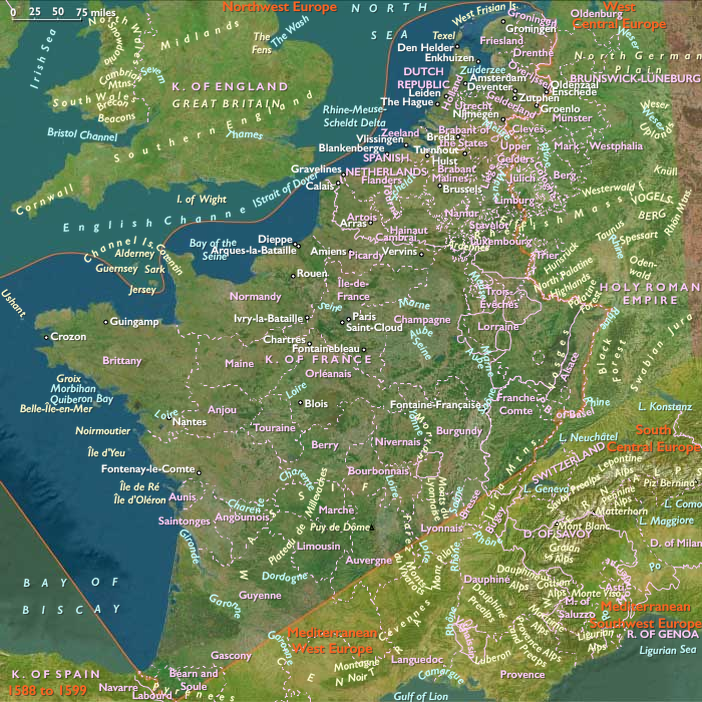
In order to accomplish this task, he divides his troops into three commands: Henri d'Orléans, duc de Longueville for Picardy, Jean VI d'Aumont for Champagne and himself for Normandy, where he awaits reinforcements from Elizabeth.
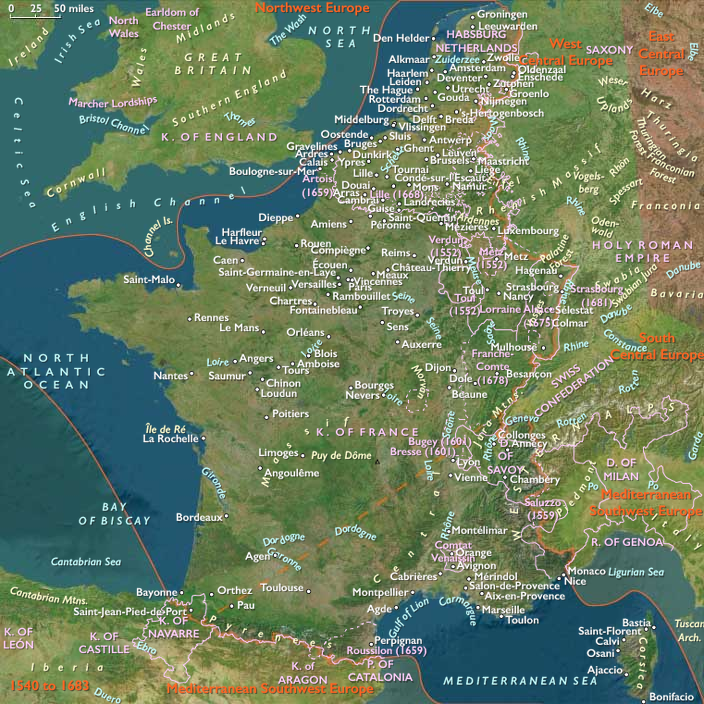
Henry sets up camp with 8,000 men at the port of Dieppe on August 6, 1589.
Locations
People
Groups
- Papal States (Republic of St. Peter)
- France, (Valois) Kingdom of
- Huguenots (the “Reformed”)
- Holy, or Catholic, League, the (French)
- France, (Bourbon) Kingdom of
Topics
- Protestant Reformation
- Counter-Reformation (also Catholic Reformation or Catholic Revival)
- Religion, Eighth War of (War of the Three Henrys)
Commodoties
Subjects
Regions
Subregions
Related Events
Showing 10 events out of 34473 total
Years: 1589 - 1589
August
Locations
People
Groups
- Papal States (Republic of St. Peter)
- France, (Valois) Kingdom of
- Huguenots (the “Reformed”)
- Holy, or Catholic, League, the (French)
- France, (Bourbon) Kingdom of
Topics
- Protestant Reformation
- Counter-Reformation (also Catholic Reformation or Catholic Revival)
- Religion, Eighth War of (War of the Three Henrys)
Commodoties
Subjects
Regions
Subregions