
Henry VIII, having commissioned Thomas Cranmer to …
Years: 1532 - 1532
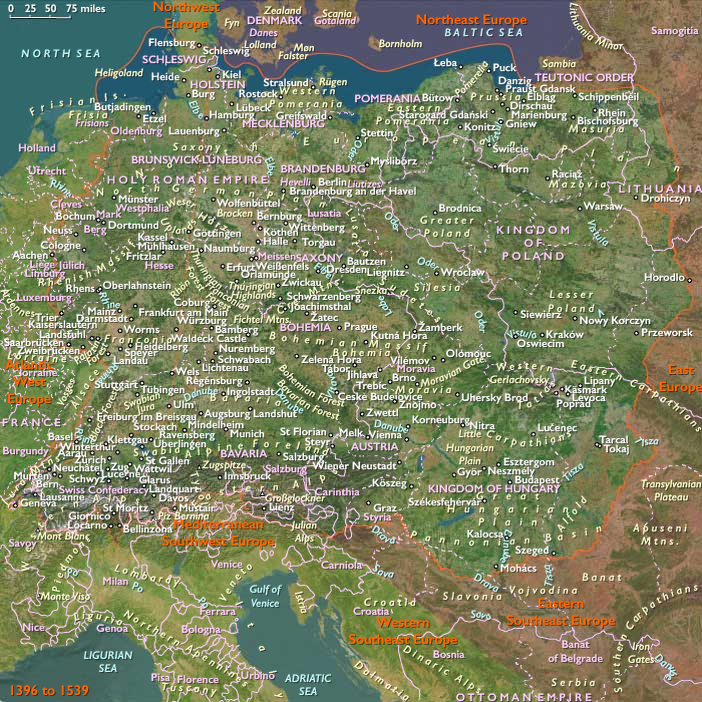
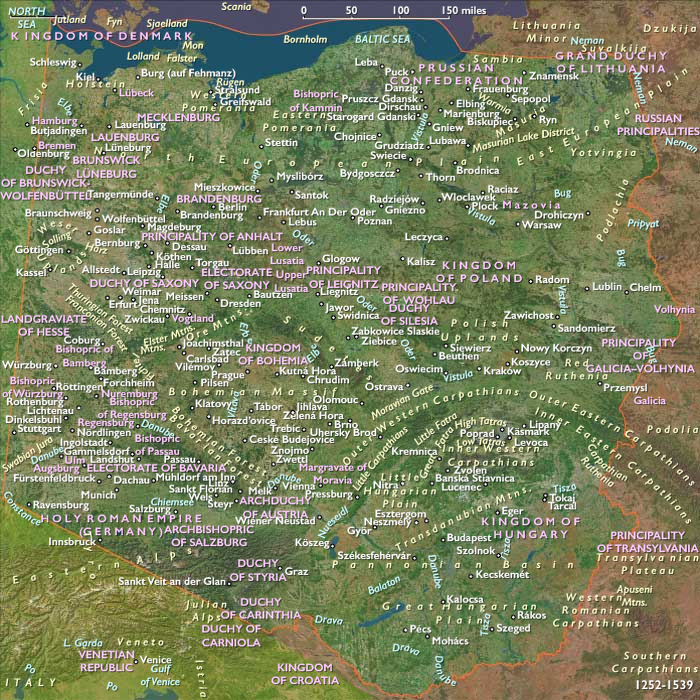
Henry VIII, having commissioned Thomas Cranmer to carry out his plan to obtain the opinion of the canonists and the universities of Europe to strengthen the English king’s biblically-derived position in his divorce proceedings, sends Cranmer to Germany in 1532 to win the support of the Protestant princes.
In January 1532, Cranmer was appointed the resident ambassador at the court of the Holy Roman Emperor, Charles V. As the emperor travels throughout his realm, Cranmer has to follow him to his residence in Ratisbon (Regensburg).
He passes through the Lutheran city of Nuremberg and sees for the first time the effects of the Reformation.
When the Imperial Diet is moved to Nuremberg in the summer, he meets the leading architect of the Nuremberg reforms, Andreas Osiander.
They become good friends, and during this July Cranmer takes the surprising action of marrying Margarete, the niece of Osiander's wife.
This is all the more remarkable given that the marriage requires him to set aside his priestly vow of celibacy.
He does not take her as his mistress, as is the prevailing custom with priests for whom celibacy is too rigorous.
Scholars note that Cranmer had moved, however moderately at this stage, into identifying with certain Lutheran principles.
This progress in his personal life, however, cannot be matched in his political life as he is unable to persuade Charles, Catherine's nephew, to support the annulment of his aunt's marriage.
Locations
People
- Andreas Osiander
- Catherine of Aragon
- Charles V, Holy Roman Emperor
- Henry VIII of England
- Thomas Cranmer
Groups
- Christians, Roman Catholic
- Cleves, Duchy of
- Saxony, Electorate of
- England, (Tudor) Kingdom of
- Hesse, Landgraviate of
- Lutheranism
- Protestantism
Topics
Subjects
Regions
Subregions
Years: 1532 - 1532
Locations
People
- Andreas Osiander
- Catherine of Aragon
- Charles V, Holy Roman Emperor
- Henry VIII of England
- Thomas Cranmer
Groups
- Christians, Roman Catholic
- Cleves, Duchy of
- Saxony, Electorate of
- England, (Tudor) Kingdom of
- Hesse, Landgraviate of
- Lutheranism
- Protestantism
Topics
Subjects
Regions
Subregions