
Herman Hollerith patents the first data processing…
January 1889 CE
Herman Hollerith patents the first data processing computer in 1889.
At the suggestion of John Shaw Billings, Hollerith has developed a mechanism using electrical connections to increment a counter, recording information.
A key idea is that a datum can be recorded by the presence or absence of a hole at a specific location on a card.
For example, if a specific hole location indicates marital status, then a hole there can indicate married while not having a hole indicates single.
Hollerith had determined that data in specified locations on a card, the now-familiar rows and columns, could be counted or sorted electromechanically.
A description of this system, An Electric Tabulating System (1889), had been submitted by Hollerith to Columbia University as his doctoral thesis.
Hollerith had left teaching and begun working for the United States Census Bureau in the year he filed his first patent application.
Titled "Art of Compiling Statistics", it was filed on September 23, 1884; U.S. Patent 395,782 is granted on January 8, 1889, which reads:
The herein-described method of compiling statistics, which consists in recording separate statistical items pertaining to the individual by holes or combinations of holes punched in sheets of electrically non-conducting material, and bearing a specific relation to each other and to a standard, and then counting or tallying such statistical items separately or in combination by means of mechanical counters operated by electro-magnets the circuits through which are controlled by the perforated sheets, substantially as and for the purpose set forth.
People
Subjects
Regions
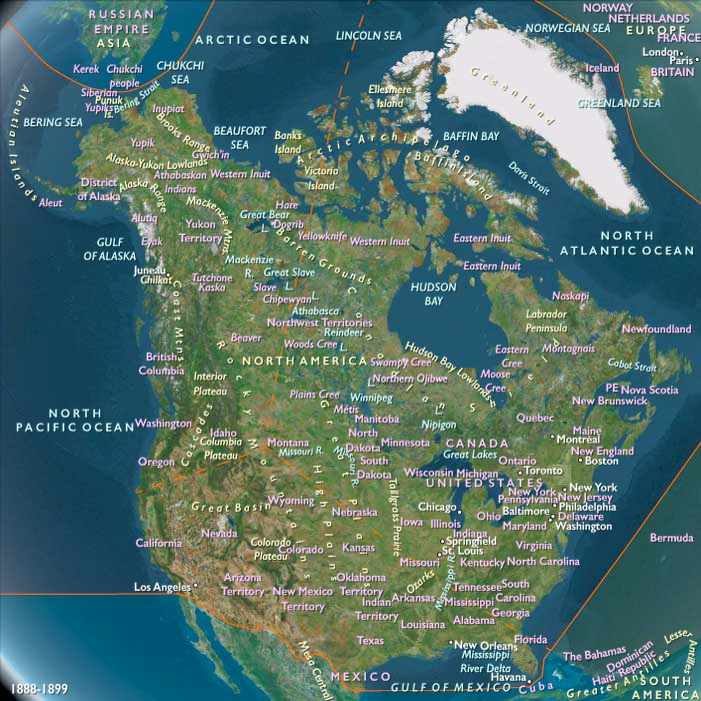
Northern North America
View →Subregions
