
Hieronymus Bosch’s The Garden of Earthly …
Years: 1500 - 1500
Hieronymus Bosch’s The Garden of Earthly Delights and The Temptation of Saint Anthony (c. 1500)
Around 1500, Flemish painter Hieronymus Bosch created his most famous and enigmatic masterpiece, The Garden of Earthly Delights, along with the similarly significant triptych, The Temptation of Saint Anthony. Bosch’s work represents an extraordinary convergence of moral allegory, visionary symbolism, and technical virtuosity, distinguishing him as one of the most original and unconventional artists in Atlantic West Europe.
The Garden of Earthly Delights
Bosch's renowned triptych, The Garden of Earthly Delights, likely commissioned for the private contemplation and enjoyment of an aristocratic patron, unfolds a vivid moral narrative across three interconnected panels. Its exterior shutters portray a solemn depiction of the Creation of the World, presented in monochromatic tones to emphasize divine order and purity.
Opening the altarpiece reveals a vibrant yet cautionary tale of humanity's moral trajectory. On the left panel, Bosch depicts Adam and Eve in Eden, symbolizing original innocence and its impending loss. The expansive central panel, from which the work derives its name, presents an exuberant and sensuous garden populated by frolicking nudes, immense fruits, exotic animals, and fantastical creatures—an allegorical depiction of humankind's indulgence in earthly pleasures and sensual excess. The final right panel starkly contrasts this imagery with a vivid, surreal representation of a nightmarish Hell, showcasing torments characterized by darkness, fire, coldness, and grotesque punishments for earthly sins.
The Temptation of Saint Anthony
In parallel, Bosch also explores human virtue and resilience in The Temptation of Saint Anthony, another significant triptych from this period. Focused on Bosch’s revered spiritual exemplar, the steadfast Saint Anthony, this work illustrates the hermit’s relentless spiritual trials and ultimate victory over temptation.
The left panel portrays harrowing physical torments inflicted upon the saint; the central scene depicts a sinister Black Mass, symbolizing profound spiritual and moral corruption. The right wing, abundant with temptations of sensuality, feasting, and earthly pleasures, contrasts sharply with Anthony’s unwavering moral resolve. Bosch reinforces Anthony’s triumph over these tribulations through associated imagery of other steadfast hermit saints and scenes of Christ’s suffering, depicted on the outer panels.
Cultural and Artistic Significance:
Bosch’s deeply symbolic and unsettling compositions represent a significant departure from contemporary artistic conventions. His imaginative, dreamlike imagery embodies late medieval anxieties about morality, spiritual salvation, and human susceptibility to temptation, providing powerful visual commentaries that resonated deeply in the religious and moral climate of the time. Bosch’s works thus illuminate complex contemporary views on sin, punishment, and redemption, integrating religious symbolism with profound psychological insight.
Long-term Consequences and Legacy:
Bosch’s imaginative and provocative art had a lasting influence, resonating throughout subsequent artistic movements and influencing generations of painters, from the Renaissance to modern surrealism. The Garden of Earthly Delightsand The Temptation of Saint Anthony remain among the most studied and debated artworks in Western art history, exemplifying the late medieval preoccupation with morality and redemption, as well as signaling a remarkable early expression of psychological depth in visual storytelling.
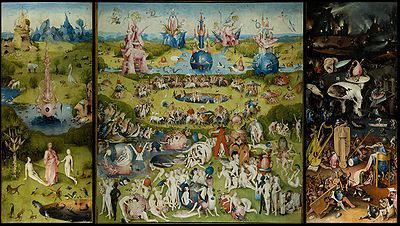
The Garden of Earthly Delights is Bosch's most widely known triptych
Locations
People
Groups
Topics
Subjects
Regions
Subregions

Related Events
Showing 10 events out of 39978 total
Years: 1500 - 1500
The Garden of Earthly Delights is Bosch's most widely known triptych
Locations
People
Groups
Topics
Subjects
Regions
Subregions