
Jheronimus Bosch and His Distinctive Artistic Legacy …
Years: 1480 - 1491
Jheronimus Bosch and His Distinctive Artistic Legacy (c. 1450–1516)
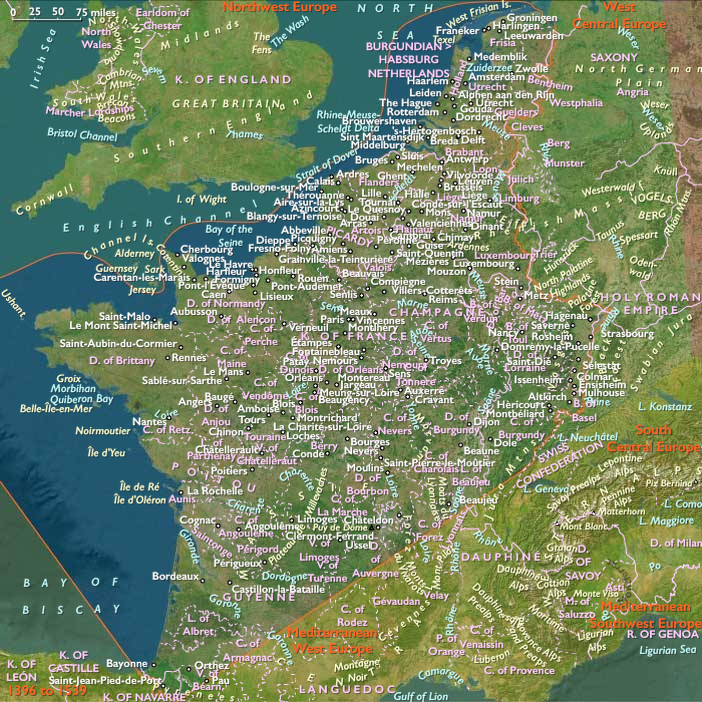
Hieronymus Bosch (c. 1450–1516), originally named Jheronimus van Aken, emerged as one of the most enigmatic and imaginative artists of the late fifteenth century. Born in the city of ’s-Hertogenbosch (commonly shortened to Den Bosch, meaning “the forest”), located in the Duchy of Brabant in the southern part of the Burgundian Netherlands, Bosch distinguished himself by creating works that stood starkly apart from the refined realism and polished elegance characterizing most Flemish painting of his era. Instead, Bosch explored moralistic and religious themes with intense originality, surreal imagination, and striking visual power.
Background and Early Influences
Little concrete is known of Bosch’s early life, training, or personality; he left no surviving diaries or correspondence. Born around 1450, Bosch belonged to a family deeply embedded in the artistic and religious community of Hertogenbosch. His grandfather, father (Anthonius van Aken), and several uncles were painters, with his father serving as an artistic adviser to the prestigious local religious confraternity, the Illustrious Brotherhood of Our Blessed Lady. Though uncertain, scholars widely assume that Bosch trained either under his father or an uncle, inheriting Flemish artistic traditions infused with strong local religious influences and a distinctly moralizing outlook.
A formative experience was likely the catastrophic fire of 1463, which devastated the town, destroying thousands of houses. This event profoundly shaped Bosch’s artistic imagination, inspiring his recurring depictions of apocalyptic scenes, moral allegories, and the transience of human life.
Artistic Career and Style
Bosch became prominent in Bruges and Hertogenbosch by the 1480s, widely respected for the unique individuality and imaginative quality of his painting. His works stood in marked contrast to the meticulous, refined, and translucent glazing techniques typical of contemporary Flemish masters such as Hans Memling or Gerard David. Instead, Bosch preferred a looser, rougher surface texture, employing early forms of impasto painting, allowing the brushwork itself to remain visible. This technique lent Bosch’s works a raw immediacy and vivid, expressive character.
His characteristic style combined detailed realism with surrealistic fantasy, creating images filled with symbolic moral warnings, nightmarish visions, and religious allegories. Bosch explored moral and religious themes through strange, dreamlike, and often unsettling visual imagery that departed significantly from contemporary artistic conventions.
Key Works: Devotion and Fantasy
By the mid-1480s, Bosch had become popular with local patrons, creating numerous religious works, including passion scenes such as the poignant Crowning with Thorns (Ecce Homo) painted about 1485. Bosch's skillful portrayal of human suffering, emotional anguish, and grotesque imagery deeply moved contemporary audiences.
Among his most celebrated creations is the elaborate reliquary triptych, The Garden of Earthly Delights (ca. 1490–1510). This masterpiece visually encapsulates Bosch’s moral vision and artistic ingenuity. Comprising three panels, the work explores humanity’s progression from innocent purity (the left panel depicting Eden), through indulgent worldly pleasures in the central panel, culminating in the nightmarish and surreal visions of torment in the hellscape depicted in the right panel. The Garden of Earthly Delights’ fantastical imagery—featuring exotic hybrid creatures, distorted figures, oversized fruits, and bizarre stone formations—remains uniquely compelling, exemplifying Bosch’s extraordinary imagination and allegorical genius.
Patronage, Popularity, and Cultural Impact
Bosch enjoyed a distinguished reputation during his lifetime, frequently commissioned by prominent religious institutions, wealthy merchants, and local nobility. Among his patrons was the prestigious Illustrious Brotherhood of Our Blessed Lady, a religious fraternity to which his father had served as artistic adviser. For them, Bosch painted several altarpieces, now lost, intended for the Cathedral of Saint John in Den Bosch.
Artistic Innovations and Influence
Bosch's unique style represented a stark departure from established Flemish artistic conventions. His visionary imagery, compelling emotional intensity, and unprecedented willingness to explore surreal and allegorical forms profoundly influenced subsequent generations of European painters. Though initially considered somewhat eccentric, Bosch’s imaginative iconography laid critical foundations for later developments in European art, significantly influencing artists ranging from Bruegel the Elder to the Surrealists of the twentieth century.
Long-Term Significance
Bosch’s career reflected larger trends in late medieval Atlantic West Europe, notably the growing complexity of religious expression, the rise of introspective piety, and increased preoccupation with morality, sin, and redemption. His distinctive artistic approach profoundly impacted subsequent European art, bridging medieval symbolism and emerging Renaissance sensibilities, making him one of the most influential figures of his time. Bosch’s work continues to captivate scholars and audiences, serving as a profound meditation on humanity’s moral complexities, fears, and aspirations, and establishing a lasting artistic legacy.
Locations
People
Groups
Topics
Subjects
Regions

Subregions
Related Events
Showing 10 events out of 40684 total
Years: 1480 - 1491
Locations
People
Groups
Topics
Subjects
Regions
Subregions