The War of the Pacific results from…
1876 CE to 1887 CE
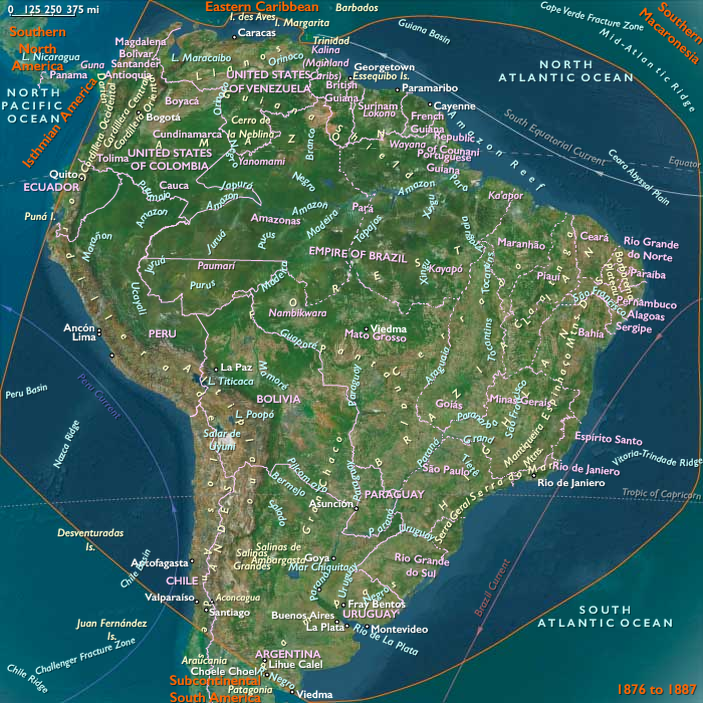
The War of the Pacific results from a dispute between Bolivia and Chile over sovereignty of the mineral-rich coastal area of the Atacama Desert.
In the mid-1860s, the two nations had come to the brink of war because of disagreement over their boundaries.
In 1874 Chile had agreed to fix the border at 24° south latitude in return for Bolivia's promise not to increase taxes on Chilean nitrate enterprises for twenty-five years, but in 1878, Daza imposes a slight increase on export taxes.
Chile immediately objects, and when Daza refuses to revoke the tax hike, Chile lands troops on February 14, 1879.
Bolivia, in alliance with Peru, declares war on Chile on March 1, but Bolivia's troops in the coastal territory are easily defeated, in part because of Daza's military incompetence.
Driven from office by a popular revolt led by Eliodoro Camacho, Daza flees to Europe with a sizable portion of Bolivia's treasury.
The attempt of General Narcisco Campero Leyes (1880-84) to come to the aid of Peru, Bolivia's ally in the war, is unsuccessful, and the combined armies are defeated by Chile in 1880.
Having lost its entire coastal territory, Bolivia withdraws from the war.
It will cede the territory officially to Chile twenty-four years later, in 1904, under the Treaty of Peace and Friendship.
Locations
Topics
Commodities
Regions
South America
View →Subregions