
West Africa (909 BCE – 819 …
Years: 909BCE - 819
West Africa (909 BCE – 819 CE) Antiquity — Sahelian Kingdom Seeds and Gold–Salt Gateways
Geographic and Environmental Context
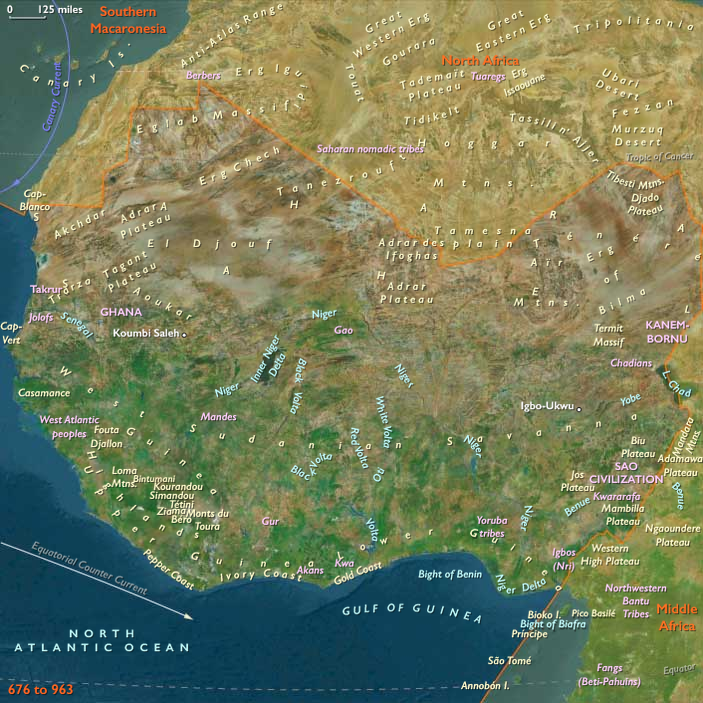
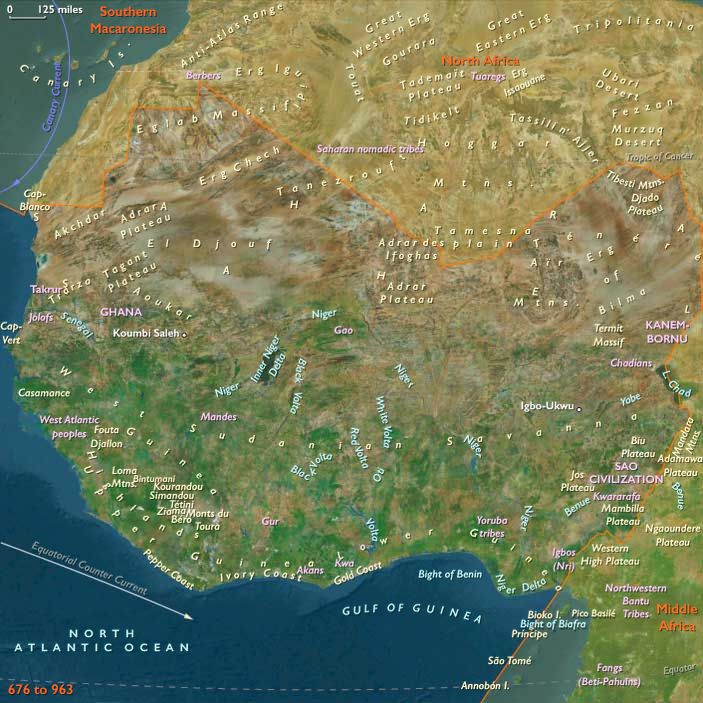
The Atlantic and inland belt from Senegal and Mauritania east through Mali, Niger, Burkina Faso, and Nigeria (western and central), plus the forest–savanna margins of Guinea, Sierra Leone, Liberia, Côte d’Ivoire, Ghana, Togo, and Benin.
Anchors: Senegal–Gambia valleys, Inland Niger Bend and Inland Delta (Timbuktu, Mopti, Gao), Middle Niger–Kainji basin, Jos Plateau, Hausaland (Kano, Katsina, Zaria), Upper Volta basin, Gold Coast forest margins, Futa Jallon highlands, Dahomey Gap.
-
Sahel and forest–savanna margin the economic heart.
-
Inland Niger Delta, Senegal Valley, Hausaland rising.
Climate & Environmental Shifts
-
Aridity pulses continued, but rivers buffered.
Societies & Political Developments
-
Proto-Ghana/Wagadu in western Sahel.
-
Takrur (Senegal valley) precursors.
-
Hausaland clustered towns.
-
Forest–savanna edge (Gold Coast, Côte d’Ivoire) linked via kola–gold trade.
Economy & Trade
-
Trans-Saharan salt–gold routes germinated.
-
Iron, livestock, grain formed regional staples.
Technology & Material Culture
-
Iron smelting widespread; Nok terracottas matured.
-
Town ramparts, craft specializations.
Belief & Symbolism
-
Ancestor cults; shrines for agriculture/fertility.
-
Early divination traditions.
Environmental Adaptation & Resilience
-
Salt–gold–grain trade and farming networks hedged against drought.
Transition
By 819 CE, West Africa hosted proto-kingdoms (Wagadu/Ghana, Takrur) and Hausaland towns, setting stage for the great empires of the medieval Sahel.
Groups
Topics
Commodoties
- Fish and game
- Weapons
- Gem materials
- Domestic animals
- Grains and produce
- Textiles
- Ceramics
- Strategic metals
- Slaves
- Salt
- Manufactured goods
Subjects
Regions
Subregions
Years: 909BCE - 819
Groups
Topics
Commodoties
- Fish and game
- Weapons
- Gem materials
- Domestic animals
- Grains and produce
- Textiles
- Ceramics
- Strategic metals
- Slaves
- Salt
- Manufactured goods
Subjects
Regions
Subregions