
Filters:
The Raid of Hygelac (Chlochilaicus) and His …
Years: 516 - 516
The Raid of Hygelac (Chlochilaicus) and His Defeat by the Franks (c. 516 CE)
According to Gregory of Tours’ History of the Franks, Hygelac, king of the Geats (known in Beowulf as Beowulf's uncle and overlord), led a raid on the Lower Rhine, only to be defeated by a Frankish army commanded by Theudebert, the son of King Theuderic I of the Merovingian Frankish Kingdom.
The Historical Context of Hygelac’s Raid
- Hygelac's attack was likely part of the Scandinavian coastal raids that targeted the Frankish realm during the early sixth century.
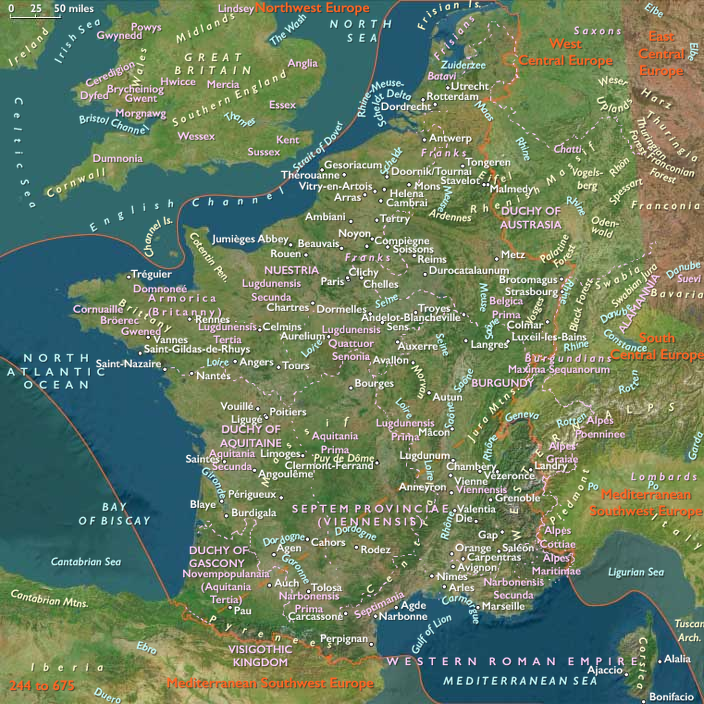
- He led his forces into Frisia, likely aiming to plunder Frankish settlements along the Lower Rhine.
- The Franks, under the leadership of Theudebert, responded swiftly, defeating and killing Hygelac.
Dating Hygelac’s Death (c. 516 CE)
- The Danish king Chlochilaicus, mentioned in Gregory’s account, is widely identified with Hygelac.
- N. F. S. Grundtvig, a Danish historian and philologist, used this raid to date Hygelac’s death to around 516 CE.
- The event aligns with the reign of Theuderic I (d. 534 CE), son of Clovis I, further supporting this timeframe.
Conflicting Identities: Geat, Dane, or Gothic King?
- Gregory of Tours calls Chlochilaicus "king of the Danes", suggesting a possible Danish connection to Hygelac.
- In the Liber Monstrorum, he is referred to as "rex Getarum" (king of the Getae), which in medieval sources often referred to the Goths or could be confused with the Geats of Scandinavia.
- The Liber Historiae Francorum calls him "rege Gotorum" (king of the Goths), which may indicate later scribal confusion between the Geats, Goths, and Getae.
The Frankish Victory and the Fate of Hygelac’s Army
- Theudebert, leading the Frankish counterattack, defeats and kills Hygelac during the raid.
- The surviving Geatish raiders are either killed, captured, or forced to retreat.
- This marks one of the earliest recorded Scandinavian raids on the Frankish territories, foreshadowing the later Viking incursions centuries later.
Hygelac’s Place in History and Legend
- Hygelac appears in Beowulf as a historical figure, supporting the idea that the poem preserves historical memory of real events.
- His defeat by the Franks aligns with early medieval accounts of Scandinavian activity along the coasts of Europe.
- Though some sources mistakenly associate him with the Goths or Danes, the core event of his raid and death remains well-documented in Frankish sources.
This raid represents one of the earliest known conflicts between the Franks and Scandinavian raiders, illustrating how Scandinavian warbands had begun testing their strength against the wealthier, Christianized kingdoms of mainland Europe—a trend that would intensify in later centuries with the Viking Age.
Locations
People
Groups
Topics
Subjects
Regions
Subregions

Years: 516 - 516
Locations
People
Groups
Topics
Subjects
Regions
Subregions