
Iasi, or Jassy, located on the Bahlui …
Years: 1504 - 1515
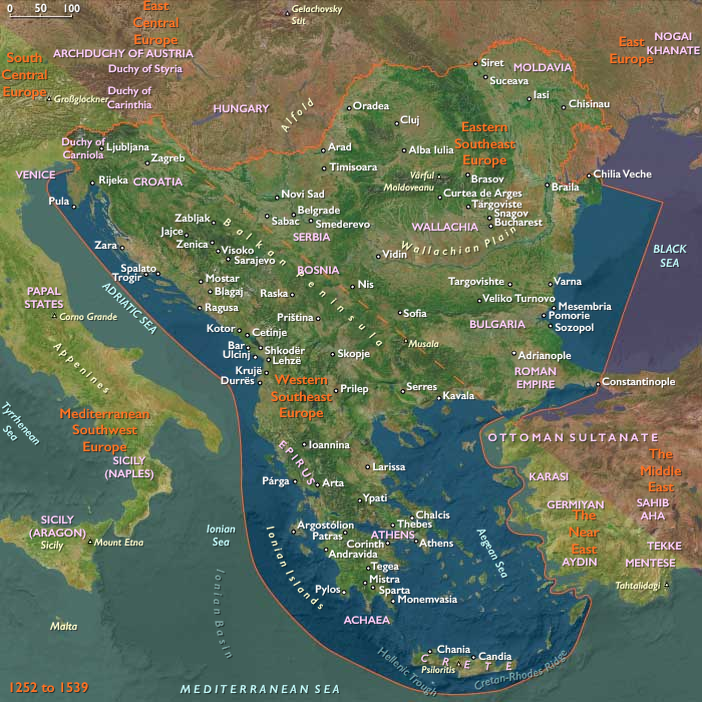
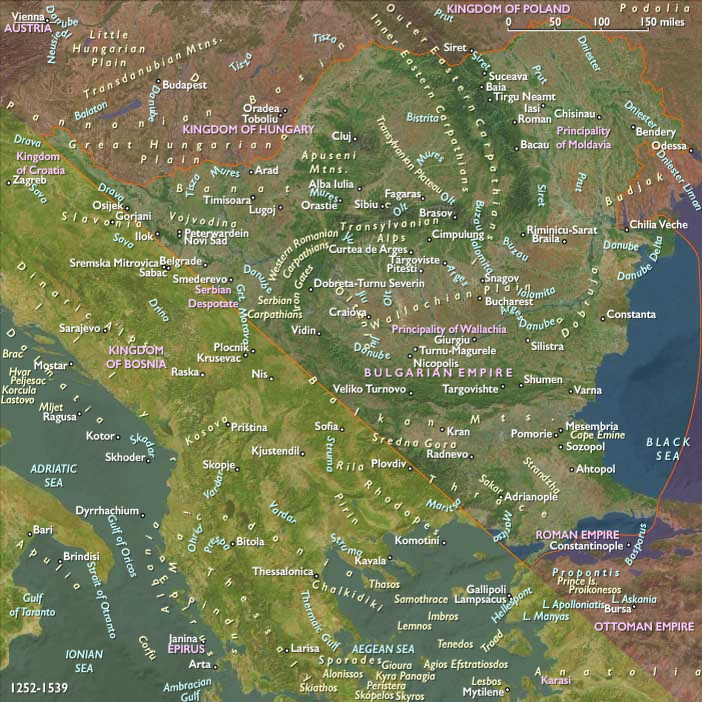
Iasi, or Jassy, located on the Bahlui River near its confluence with the Prut, first settled in the seventh century, and a fort and customs station on trade routes during the fourteenth century, suffers attacks from the Tatars in 1513.
Immediately after Bogdan comes to the Moldavian throne, he had expressed his wish to marry Elisabeth, sister of Polish King Alexander Jagiello; after being twice refused despite offering generous gifts (including territorial concessions), he raids southern Poland, and is conceded his demands—based on his promise to be more lenient towards the status of the Roman Catholic Church in Moldavia—in 1506.
Alexander's death and Sigismund's ascendancy lead to a breaking of the previous agreement, provoking further incursions on each side.
In October 1509, Bogdan is severely defeated on the Dniester river; a peace is signed on January 17, 1510, when the ruler finally renounces his pretensions.
In the same year, Moldavia suffers two major Tatar invasions (they are alleged to have carried away seventy-four thousand as slaves).
In 1511, the Tatars even manage to occupy most of the country.
The events force Poland, still recovering from the great invasion of 1506, to send troops as aid, helping Bogdan regain his lands after a victory in May 1512.
In 1514, in order to block the Tatar threat by enlisting the help of a powerful overlord, Bogdan sends chancellor Tăutu to negotiate the terms of Moldavia's submission to the Ottoman Empire, now under the rule of Sultan Selim.
The Porte demands that a certain sum (initially expressed as four thousand gold coins) be paid yearly, together with a ceremonial gift of forty horses and forty falcons, additional expenses (such as for the celebration of Eid ul-Fitr) and assistance in case of war—princes themselves are required to lead a four thousand-strong army that will place itself under the orders of the Sultan.
In exchange for these, Moldavia is allowed a high level of autonomy.
Locations
People
Groups
- Christians, Roman Catholic
- Christians, Eastern Orthodox
- Moldavia, Principality of
- Tatars
- Poland of the Jagiellonians, Kingdom of
- Ottoman Empire
Commodoties
Subjects
Regions
Subregions
Years: 1504 - 1515
Locations
People
Groups
- Christians, Roman Catholic
- Christians, Eastern Orthodox
- Moldavia, Principality of
- Tatars
- Poland of the Jagiellonians, Kingdom of
- Ottoman Empire
Commodoties
Subjects
Regions
Subregions