
A specially designated native territory is established…
June 1834 CE
A specially designated native territory is established in what is now the eastern part of Oklahoma in 1834; it is described as being "…all that part of the United States west of the Mississippi and not within the states of Missouri and Louisiana, or the territory of Arkansas…"
This is the land that is to become known as Indian Territory.
The Indian Territory is to serve as the destination for the policy of Indian Removal, a policy pursued intermittently by American presidents early in the nineteenth century, but aggressively pursued by President Andrew Jackson after the passage of the Indian Removal Act of 1830.
The Five Civilized Tribes in the South—the term applied to five native nations, the Cherokee, Chickasaw, Choctaw, Creek, and Seminole, considered civilized by white settlers because they have adopted many of the colonists' customs and have generally good relations with their neighbors—are the most prominent tribes displaced by the policy, a relocation that will come to be known as the Trail of Tears.
There are already many Native Americans living in the territory, as well as whites and escaped slaves.
Other tribes, such as the Delaware, Cheyenne, and Apache will also eventually be forced to relocate to the Indian territory.
In all, Native American tribes will sign ninety-four treaties during Jackson's two terms, ceding thousands of square miles to the Federal government.
Throughout the 1830s, the federal government will forcibly deport the southeastern tribes to less fertile territories to the west.
People
Groups
Topics
Regions
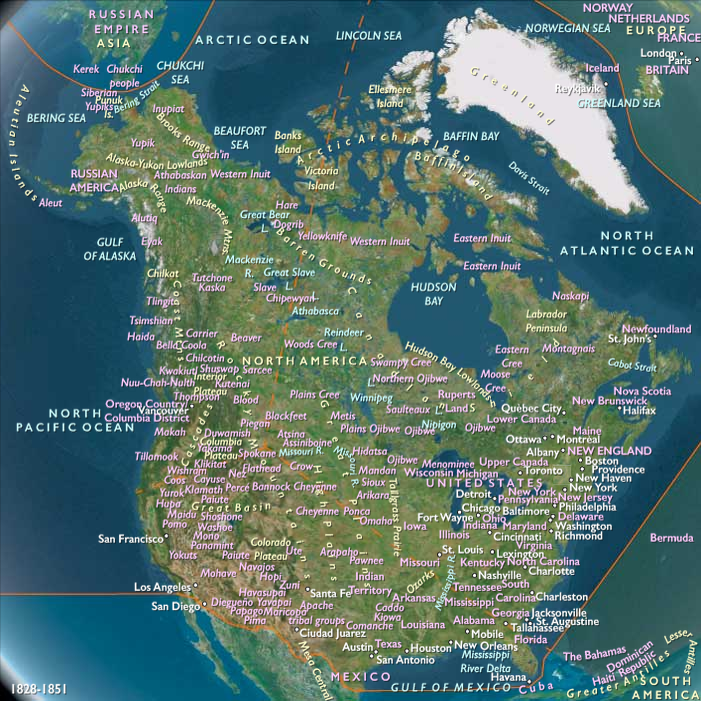
Northern North America
View →Subregions
