A large fire begins to burn on…
November 1872 CE
A large fire begins to burn on November 9, 1872, on Lincoln Street in Boston.
The city's building regulations have not been not enforced, and there is no authority to stop faulty construction practices.
Buildings are often insured at full value or above value.
Over-insurance means owners have no incentive to build fire-safe buildings, and insurance-related arson is common.
Flammable wooden French Mansard roofs are common on most buildings; the fire is able to spread quickly from roof to roof, and flames even leap across the narrow streets onto other buildings.
Flying embers and cinders start fires on even more roofs.
Fire alarm boxes in Boston are locked to prevent false alarms, therefore delaying the Boston Fire Department by twenty minutes.
Merchants are not taxed for inventory in their attics, therefore offering incentive to stuff their wood attics with flammable goods such as wool, textiles, and paper stocks.
Most of downtown has old water pipes with low water pressure, and fire hydrant couplings are not standardized.
Moreover, the number of fire hydrants and cisterns is insufficient for a commercial district.
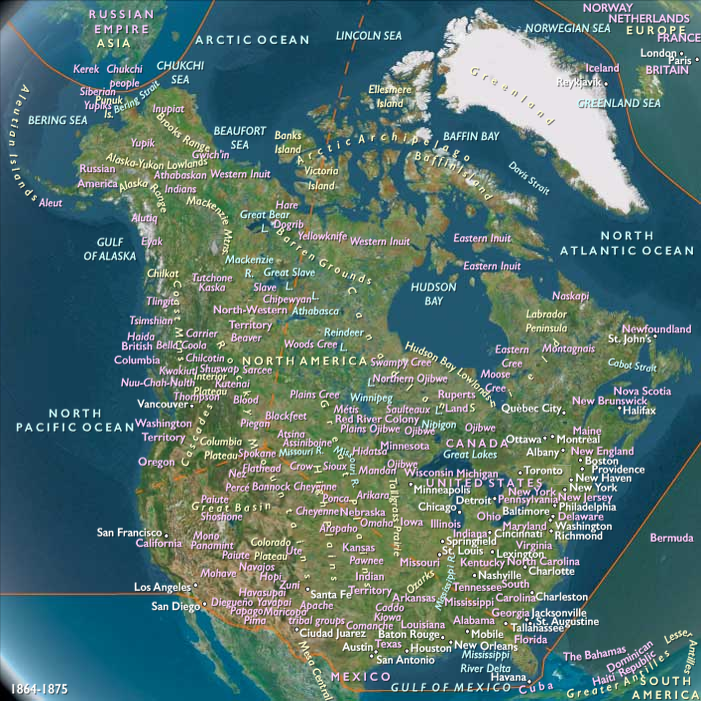
A horse flu epizootic that has spread across North America this year has immobilized Boston's fire department horses.
As a result, all of the fire equipment has to be pulled to the fire by teams of volunteers on foot.
This is often cited as the leading cause of this fire growing out of control, but the city commission investigating the fire will find that fire crews' response times had been delayed by only a matter of minutes.
Looters and bystanders interfere with fire fighting efforts, and steam engine pumpers are not able to draw enough water to reach the wooden roofs of tall downtown buildings.
Gas supply lines connected to street lamps and used for lighting in buildings cannot be shut off promptly; gas lines explode, feeding the flames.
Groups
Commodities
Regions
Northern North America
View →Subregions