The Stamp Act Congress, or First Congress…
1765 CE
Parliament had on March 25, 1765, finally passed the Stamp Act, which imposed direct taxes on the colonies for the first time, requiring the use of specially stamped paper for legal documents, playing cards, calendars, newspapers and dice for virtually all business in the colonies.
It is to go into effect on November 1.
The colonists do not object that the taxes are high; they are actually low.
They object to the fact that they have no representation in the Parliament, and thus no voice concerning legislation that affects them.
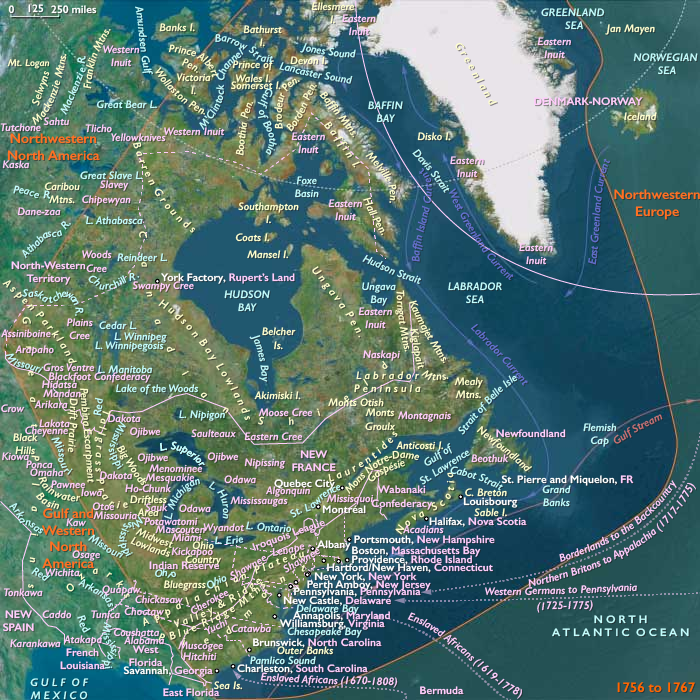
The Congress is organized in response to a circular letter distributed by the colonial legislature of the Province of Massachusetts Bay, and consists of delegates from nine of the eighteen British colonies in North America.
All nine of the attending delegations are from the Thirteen Colonies that will eventually form the United States of America.
Although sentiment is strong in some of the other colonies to participate in the Congress, a number of royal governors have taken steps to prevent the colonial legislatures from meeting to select delegates.
The Congress meets in the building now known as Federal Hall, and is held at a time of widespread protests in the colonies, some of which are violent, against the Stamp Act's implementation.
The delegates discuss and unite against the act, issuing a Declaration of Rights and Grievances in which they claim that Parliament does not have the right to impose the tax because it does not include any representation from the colonies.
Members of six of the nine delegations sign petitions addressed to Parliament and King George III objecting to the Act's provisions.
The extra-legal nature of the Congress causes alarm in Britain, but any discussion of the congress's propriety are overtaken by economic protests from British merchants whose business with the colonies suffer as a consequence of the protests and their associated non-importation of British products.
These economic issues prompt the British Parliament to repeal the Stamp Act, but it passes the Declaratory Act the same day, to express its opinion on the basic constitutional issues raised by the colonists; it states that Parliament can make laws binding the American colonies "in all cases whatsoever."
Groups
Commodities
Subjects
Regions
Northern North America
View →Subregions