
The VOC and the court of Mataram, …
Years: 1684 - 1827
The VOC and the court of Mataram, at the same time rivals and allies, are by the mid-eighteenth century exhausted by war.
The dying ruler, Pakubuwono II (r. 1726-49), with his kingdom still threatened by rebellion from within and his court deeply divided over the proper course for the future, cedes Mataram to the company, perhaps thinking in this way to save it.
The treaty is of little importance because it cannot be enforced and the VOC is incapable of ruling Java, but it is followed in 1755 by the Treaty of Giyanti, which imposes a different solution.
Mataram is to be ruled by two royal courts, one at Surakarta (also known as Solo) and one at Yogyakarta, out of which the junior courts of Mangkunegaran (1757) and Pakualaman (1812), respectively, later evolve by apportioning appanage rights among them.
This division produces an extended period of peace lasting well into the nineteenth century, from which the Javanese populace benefits economically.
The courts, particularly that of Yogyakarta, make use of their considerable autonomy and grow in prosperity and power, while the VOC consolidates its control over the Pasisir and pursues its commercial ventures.
Although clearly recognized (and often resented) as the paramount power, the company interests itself in the courts' affairs and plays a role in choosing who reigns but refrains from meddling too deeply.
It is a strange conquest.
Locations
People
Groups
- Bugis
- Hinduism
- Buddhism
- Indian people
- Malays, Ethnic
- Javanese people
- Acehnese people
- Osing people
- Dutch people
- Islam
- Bali, Kingdom of
- English people
- Tidore, Sultanate of
- Aceh, or Atjeh, Sultanate
- Blambangan, Kingdom of
- Ternate, Sultanate of
- Balinese
- Makassar people
- Banjarmasin, Sultanate of
- Banten Sultanate
- Mataram, Sultanate of
- Netherlands, United Provinces of the (Dutch Republic)
- East India Company, British (The Company of Merchants of London Trading into the East Indies)
- Dutch East India Company in Indonesia
- Dutch East India Company (Vereenigde Oostindische Compagnie or VOC in Dutch, literally "United East Indies Company")
- England, (Stuart) Kingdom of
Topics
Commodoties
Subjects
Regions
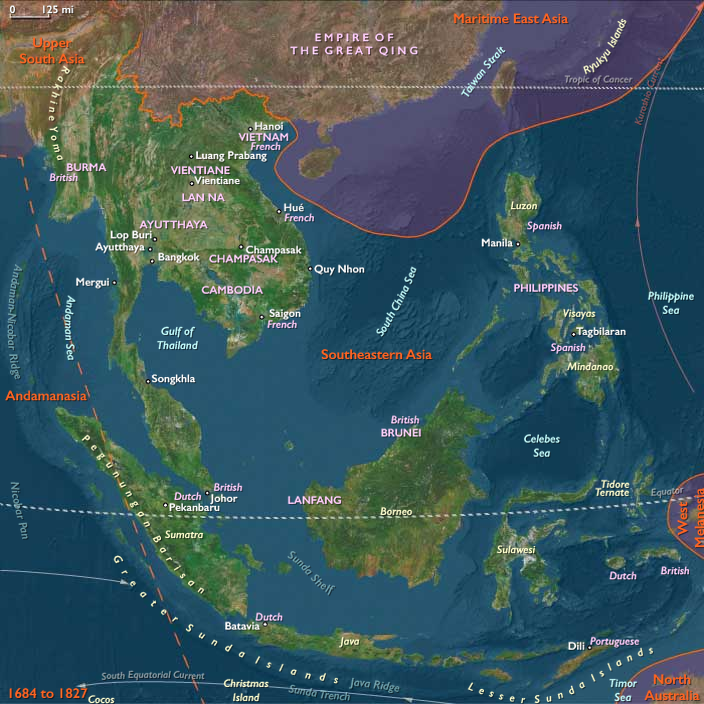
Subregions
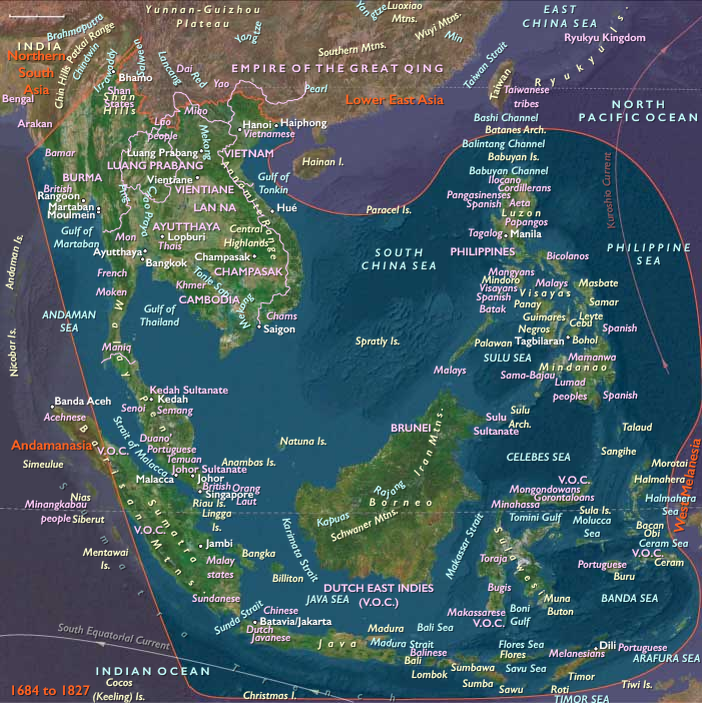
Related Events
Showing 10 events out of 30218 total
Years: 1684 - 1827
Locations
People
Groups
- Bugis
- Hinduism
- Buddhism
- Indian people
- Malays, Ethnic
- Javanese people
- Acehnese people
- Osing people
- Dutch people
- Islam
- Bali, Kingdom of
- English people
- Tidore, Sultanate of
- Aceh, or Atjeh, Sultanate
- Blambangan, Kingdom of
- Ternate, Sultanate of
- Balinese
- Makassar people
- Banjarmasin, Sultanate of
- Banten Sultanate
- Mataram, Sultanate of
- Netherlands, United Provinces of the (Dutch Republic)
- East India Company, British (The Company of Merchants of London Trading into the East Indies)
- Dutch East India Company in Indonesia
- Dutch East India Company (Vereenigde Oostindische Compagnie or VOC in Dutch, literally "United East Indies Company")
- England, (Stuart) Kingdom of
Topics
Commodoties
Subjects
Regions
Subregions