Deodoro da Fonseca's dissolution of the Brazilian…
1888 CE to 1899 CE
Deodoro da Fonseca's dissolution of the Brazilian Congress, his resignation, Peixoto's assumption of power, and the outbreak of civil war split the officer corps and lead to the arrest and expulsion of several senior officers.
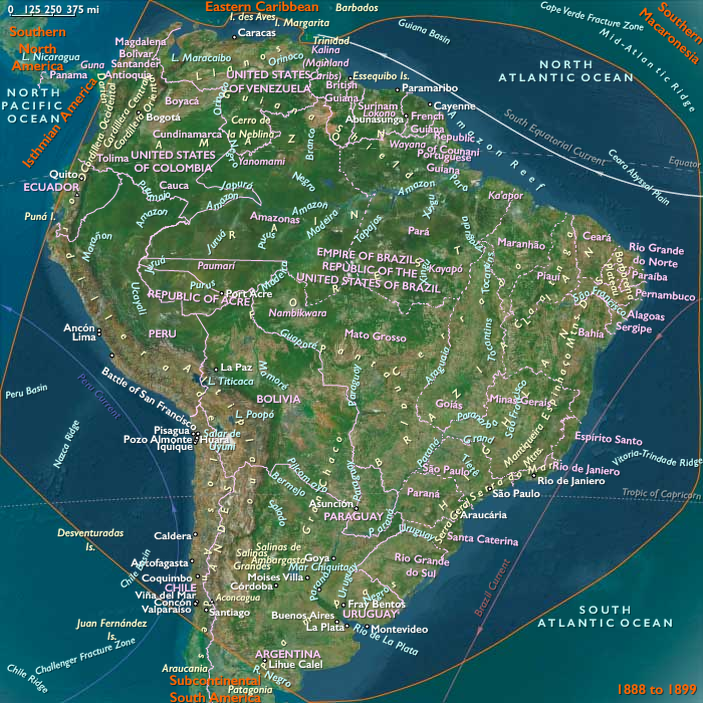
Although the power struggles that produce the fighting in Rio Grande do Sul during 1893-95 are local in origin, Peixoto makes them national by siding with republican Governor Julio de Gastilhos.
The savage combat and the execution of prisoners and suspected sympathizers, in what historian Jose Maria Bello will call the "crudest of Brazil's civil wars," is shameful on both sides.
Peixoto's fierce defense of the republic makes him the darling of the Jacobins and from now on a symbol of Brazilian nationalism.
In November 1894, because of his ill health (he dies in 1895) and the military's disunity, Peixoto turns the government over to a spokesman for the agrarian coffee elite, São Paulo native Prudente Jose de Morais Barros, also known as Prudente de Morais, the first civilian president (1894-98).
Prudente de Morais negotiates an end to the war in the South and grants amnesty to the rebels and the expelled officers.
He weakens the army's staunchest republicans and seeks to lower the military's political weight.
He promotes officers committed to creating a professional force that will be at the disposal of the national authorities, who will determine how it is to be employed.
A General Staff (Estado Geral), established in 1896 on the German model, is to shape this new army.
Regions
South America
View →Subregions